
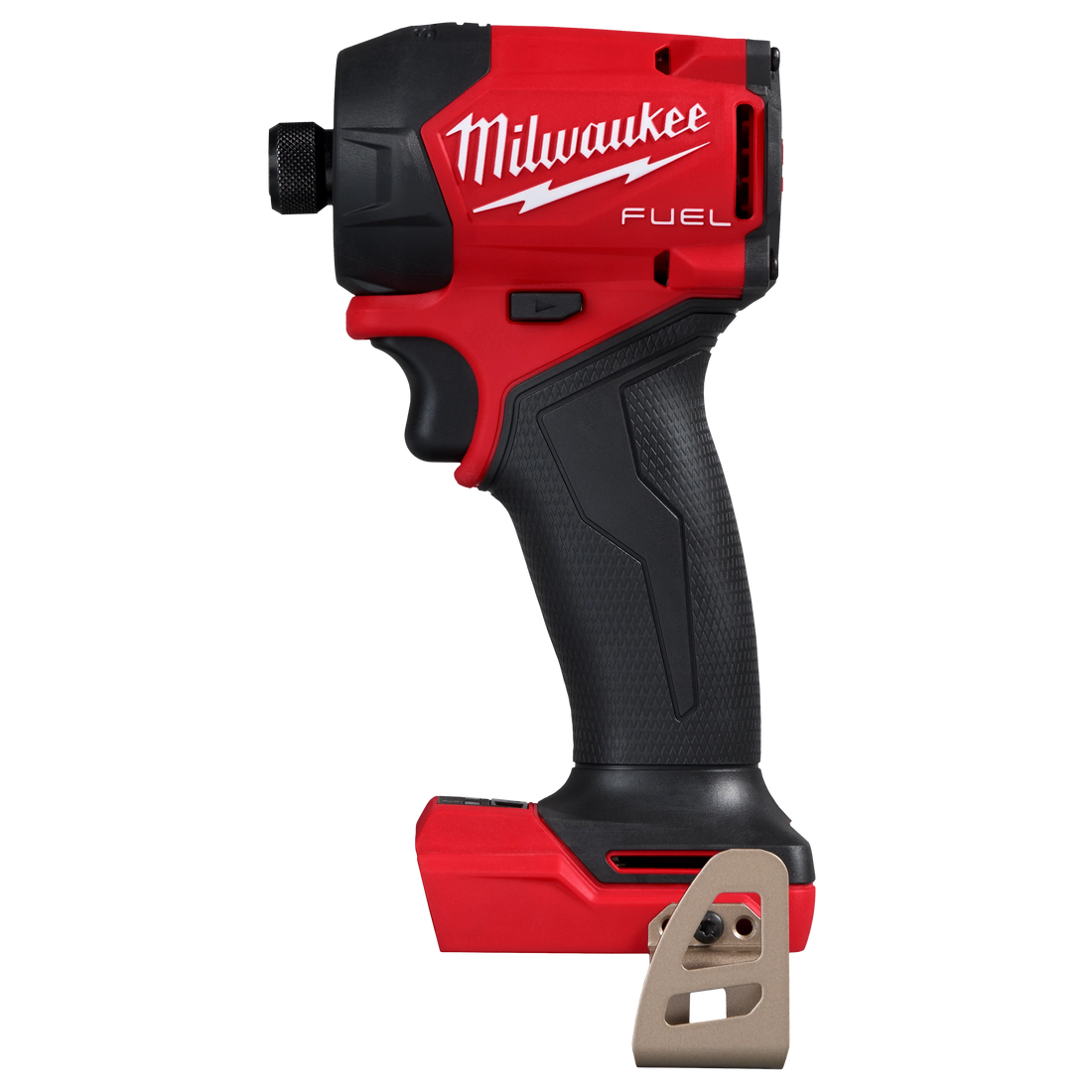
Milwaukee M18 FUEL SURGE Gen 2 Bits: What Fits, What Lasts, and What to Skip
The Milwaukee M18 FUEL SURGE Gen 2 (FIDRQ) takes any standard 1/4-inch hex shank bit — the same size used by every M18 impact driver Milwaukee makes. No proprietary format, no adapter. What sets this tool apart: it runs a hydraulic mechanism, not a mechanical hammer. That design is meaningfully gentler on bits than a standard impact driver, which changes which bit grade you actually need for the job at hand. Here's the full breakdown.
What Bits Fit the Milwaukee M18 FUEL SURGE Gen 2?
1/4-inch hex — the universal impact driver standard
Any 1/4-inch hex bit fits. Phillips, Torx, square drive, hex, specialty bits — from Milwaukee, Bosch, DeWalt, or any other brand making 1/4-inch hex shank bits. The SURGE Gen 2 chuck is standard issue. If you're unclear on why hex shank matters for impact drivers specifically, this comparison covers the difference.
What "FIDRQ" means on the label
You'll see FIDRQ stamped on the tool body and on the box. It's Milwaukee's internal model designation for the M18 FUEL SURGE hydraulic driver. Milwaukee hasn't published a letter-by-letter breakdown of the designation. What matters for bit selection: FIDRQ = 1/4-inch hex chuck, same as any M18 impact driver on the shelf.
Quick compatibility reference
| Spec | Value |
|---|---|
| Bit shank | 1/4" hex |
| Bit lengths that fit | 1", 2", 3" (longer with a bit holder) |
| Impact-rated bits required? | No — recommended for heavy sustained use, not required |
| Magnetic bit holders compatible? | Yes — standard 1/4" hex chuck accepts them |
| Gen 1 bits work in Gen 2? | Yes — same chuck, same bits |
Why the Hydraulic Mechanism Changes Which Bits You Need
Hydraulic vs. mechanical impact — one real difference
A standard impact driver uses a spinning hammer that slams against a metal anvil, hundreds of times per minute. Each strike sends a concussive shock wave through the bit shank. That's the primary reason bits snap — not torque, but shock. Our detailed guide breaks down that mechanism in detail if you want the full picture.
The SURGE Gen 2 works differently. It uses a hydraulic cell that absorbs torque energy internally, then releases it as a smooth rotational surge — there's no metal-on-metal anvil strike. The bit still receives torque — but without the concussive slam that destroys standard bits in a mechanical impact driver. For a direct comparison of the two, see our comparison.
Non-impact bits in the SURGE — when they're fine
For light-to-medium driving, standard bits hold up. Trim screws, cabinet hardware, drywall, deck screws into softwood — the SURGE won't beat up a regular Phillips 2 bit the way a hard-hitting mechanical impact driver would. Bit breakage from standard bits is a real edge case in this tool, not a daily problem.
When to reach for impact-rated bits anyway
Sustained heavy driving is a different story. Self-tapping screws into steel, lag pilots through hardwood, a full day of framing — cycle count adds up fast. Impact-rated bits are engineered with flex zones for higher fatigue tolerance. The SURGE's mechanism is gentler, but it's not frictionless. For heavy use, impact bits win on lifespan. It's not about preventing snapping — it's about how many hundreds of drives you get before the tip rounds off.
Best Bits for the SURGE Gen 2 by Job
| Job type | Recommended bit type | Impact rating needed? |
|---|---|---|
| Finish work / cabinetry | Phillips or Torx, standard or impact | Not required |
| General fastening (wood, composite) | Torx or Phillips 2", impact-rated | Preferred |
| Decking / framing | Impact-rated 2" Torx (T20/T25) | Yes |
| Self-tapping into metal | Impact-rated hex or square drive | Yes |
| Tight-space driving | 1" impact-rated Phillips or Torx | Preferred |
For finish work and light fastening, standard bits save money with no meaningful downside in this tool. For decking, framing, and metal, buy impact-rated — the durability gap is real over a full day of driving.
Bit Length — 1", 2", 3" and When Each Matters
2-inch bits are the go-to. Standard for impact drivers, they seat securely and cover 90% of everyday fastening.
1-inch bits are for tight angles — congested framing bays, cabinet interiors, anywhere you're working close to an obstruction. Shorter means less flex and more direct drive in confined spaces.
3-inch and longer bits extend your reach through thick material or for deep drives. Run them with a bit holder or extension rather than bare in the chuck — Milwaukee specifies no maximum bit-length restriction for the Gen 2 chuck.
Bit Holders with the SURGE Gen 2
Standard 1/4-inch hex magnetic bit holders seat in the SURGE Gen 2 chuck the same as any bit. They're most useful for two things: extending effective reach for deep drives and keeping bits from dropping during overhead work or in tight spots.
Our magnetic bit holder — the Magnetic Silicon Bit Holder — is confirmed compatible with Milwaukee latest generations and pairs cleanly with the SURGE for exactly that use. The powerful magnets hold the bit through the rotational torque of the hydraulic cell without slipping.
Flex-shaft extensions also fit the 1/4-inch hex chuck. Fair warning: a flex shaft reduces peak torque transfer. Fine for trim and light fastening; not the call for heavy sustained driving.
SURGE Gen 1 vs Gen 2 — Do Bits Change?
No. Both generations use the same 1/4-inch hex chuck. Any bit that fit the Gen 1 fits the Gen 2, no adapter needed.
The Gen 2 update is the FLUID-DRIVE™ Hydraulic Powertrain redesign — the primary internal change Milwaukee made between generations. Bit compatibility is unchanged across both generations.
FAQ — Milwaukee M18 SURGE Gen 2 Bit Questions
What bits does the Milwaukee M18 FUEL SURGE Gen 2 take? Any standard 1/4-inch hex shank bit. Same shank as all M18 impact drivers. No proprietary format required.
What does FIDRQ mean on Milwaukee tools? FIDRQ is the model code Milwaukee stamps on the SURGE Gen 2 — it identifies the tool family internally. Milwaukee hasn't published a letter-by-letter breakdown of the designation. For bit selection, it doesn't matter: 1/4-inch hex chuck, same as any M18 impact driver.
Can I use regular (non-impact) bits in the Milwaukee SURGE Gen 2? Yes, for light-to-medium work. The hydraulic mechanism doesn't hit bits with the same concussive force as a mechanical impact driver, so standard bits are much less likely to snap. For sustained heavy driving, impact-rated bits outlast standard ones on cycle count — step up when the job calls for it.
What's the difference between the SURGE Gen 1 and Gen 2? The chuck is unchanged — 1/4" hex on both, same bits work. Gen 2's primary change is the FLUID-DRIVE™ Hydraulic Powertrain redesign, delivering up to 3× faster application speed than Gen 1.
Does the Milwaukee SURGE Gen 2 come with bits? The Gen 2 comes in two SKUs: the 2761-20 bare tool (no batteries or charger) and the 2761-22 kit, which includes two M18 XC5.0 batteries, a charger, and a carrying case. Neither SKU includes SHOCKWAVE bits.
Are Milwaukee SHOCKWAVE bits worth it for the SURGE? SHOCKWAVE Impact Duty bits are built to absorb the shock of a mechanical impact driver — that's their primary engineering purpose. In the SURGE, that shock protection matters less because the hydraulic mechanism is already gentler. For heavy sustained driving, SHOCKWAVE bits still outlast cheaper bits on cycle count. For finish work and occasional driving, standard bits are fine and cost less.
What is the best bit length for the M18 FUEL SURGE Gen 2? 2-inch bits are the most versatile for general use. 1-inch for tight quarters. 3-inch or longer with a bit holder or extension for thick material and deep drives.
If you're running the SURGE Gen 2 regularly, having the right bits sorted by job type saves more time than it might seem — especially when finish work and heavy fastening are the same day. Browse the Milwaukee collection for accessories stocked for the M18 platform. And if you haven't got a magnetic bit holder yet, the Magnetic Silicon Bit Holder is worth adding to your kit — overhead work and tight bays are where you'll thank yourself for it. For a broader look at which bits hold up across impact drivers, this comprehensive guide covers the field.