
Hex Shank vs Round Shank Drill Bits: Which Fits an Impact Driver?
Impact drivers take 1/4-inch hex-shank bits only. The collet is a spring-loaded quick-change hex sleeve — not a 3-jaw chuck — so a round-shank twist bit won't seat in it at all. You *can* run a round-shank bit off an impact driver with a hex-to-3-jaw chuck adapter, but only for light work in wood or soft metal. Under real impact loads, a smooth round shank spins loose in the adapter's jaws, and a non-impact-rated bit snaps at the flute neck. For anything serious, use hex-shank impact-rated bits, or pick up a drill/driver with a real chuck.
| Shank type | Fits an impact driver? | Best use case |
|---|---|---|
| 1/4-inch hex — impact-rated (torsion zone) | Yes — drops right into the collet | Driving screws, drilling holes up to ~1/4" in most materials |
| 1/4-inch hex — standard (no torsion zone) | Fits, but will snap under hard impact | Light screw driving only |
| Round shank (with hex-to-3-jaw adapter) | Sort of — with hard limits | Small pilot holes in wood or soft metal, light trigger only |
What's the Difference Between a Hex Shank and a Round Shank?
Hex Shank
A hex shank is six-sided — 1/4-inch across the flats, the same 1/4-inch hex quick-change chuck standard used across every major impact driver — with a detent groove cut into it near the base. That groove is where an impact driver's spring-loaded ball bearing snaps in to lock the bit. Drop it in, give it a quarter-turn, and it's seated. Pull the collar back and it releases. Works fast with gloved hands, which is why every major impact driver uses this system.
The 1/4-inch hex form factor is a universal industry standard shared across all major manufacturers, so bits from Milwaukee, DeWalt, Bosch, Makita, and every other brand all interchange. Buy bits from anyone, run them in anything.
Round Shank
A round shank is a smooth cylinder. The diameter varies by bit size — small twist bits run narrow, large spade bits run wide — and a drill's three jaws clamp around it. No flats, no detent groove, nothing for an impact driver's collet to lock onto.
How to Tell Them Apart at a Glance
Look at the end that goes into the tool:
- Hex shank: six flat sides and a visible groove (ring) about 1/4-inch from the tip
- Round shank: smooth cylinder, no flats, no groove, just a circle where it terminates
Sorting a mixed pile? The groove is the fastest tell. No groove = round shank = needs a chuck, not a collet.
Why Do Impact Drivers Only Accept Hex Shank?
Two reasons, both mechanical.
First, retention. The impact driver's collet has a spring-loaded detent ball that drops into the hex bit's groove and holds under load. A round shank has no groove — nothing for the ball to catch. The bit would pull right out.
Second, torque transfer. The six flat sides of the hex shank give the rotational hammering a flat surface to push against. That's how the tool generates torque. A round shank is smooth all the way around; the hammering action has nothing to drive against, so the shank would spin in place while the collet hammers away.
These impact drivers aren't running light loads. A Milwaukee M18 FUEL 2853-20 puts out 2,000 in-lbs of torque; a DeWalt 20V MAX XR DCF887 hits 1,825 in-lbs. Even if you could somehow wedge a round-shank bit into an impact driver, a 3-jaw chuck would back off under that hammering — the jaws open slightly with each impact pulse. It's not a design the chuck was ever meant for.
Can You Use Round-Shank Drill Bits in an Impact Driver With an Adapter?
Yes — a hex-to-3-jaw chuck adapter is a real product, it works, and there are situations where it makes sense. The adapter has a 1/4-inch hex shank that seats in your impact driver's collet, and a small keyed or keyless drill chuck on the business end that grips a round-shank bit.
When it's fine:
- Pilot holes under 1/4-inch diameter in wood, plastic, or thin sheet metal
- Light trigger pressure — you're barely pulling
- Bits shorter than about 3 inches (less wobble, less leverage on the adapter's jaws)
When it's not:
- Steel thicker than thin sheet — the bit will wander, and under impact loads it'll either spin in the adapter jaws or snap
- Masonry — standard twist bits aren't built for the rotary hammering, and you'll mushroom the tip fast
- Bits longer than ~3 inches — length amplifies any play in the adapter jaws
- Full trigger — at full impact you're asking the adapter to do the job a real chuck does, and it won't
Two failure modes to know before it happens: the round shank spins free in the adapter jaws — you'll hear a chattering sound and feel the bit stop biting while the tool keeps hammering. Or the bit shears at the flute neck — a sharp crack, and you're fishing a broken stub out of the workpiece. For a full breakdown of how and why this happens, see how bits fail under impact.
A hex-to-3-jaw adapter is worth owning for occasional use. It's not a substitute for a drill/driver on work that needs one.
Hex-Shank Impact-Rated Bits vs Standard Hex-Shank Bits
This is where most people get caught out. "Hex shank" means the bit *fits* an impact driver. It does not mean the bit *survives* one.
Grab a cheap hex-shank bit set and look at the shanks. Most go straight hex from the collet area all the way to where the flutes start. Those are standard hex bits. Fine in a drill/driver, fine for light driving. Under hard sustained impact — lag screws through hardwood, long runs in dense material — they snap at the transition from shank to flute for the same reason a round-shank bit does.
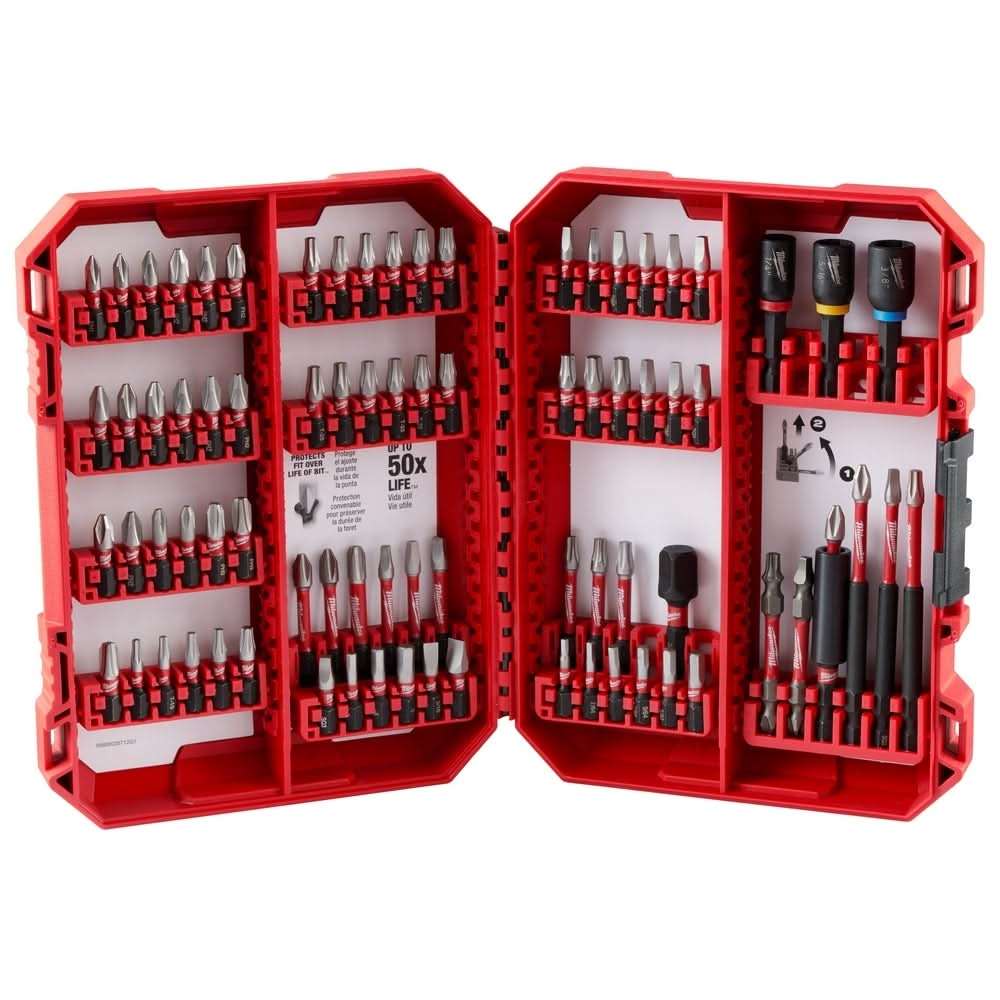
Impact-rated bits have a torsion zone: a visibly necked-down section on the shank between the collet area and the bit body. That reduced section flexes elastically under impact pulses, absorbing the shock before it reaches the bit tip. Milwaukee brands this section the SHOCKZONE™, engineered to absorb peak torque; DeWalt applies the same principle in their MAX Impact™ and FLEXTORQ® lines. The flex prevents the stress concentration that snaps a straight-shank bit.
How to spot them:
- The narrowed section is visible — you can see the diameter drop between the groove and the bit body
- Usually labeled SHOCKWAVE (Milwaukee), MaxFit or Flextorq (DeWalt), Impact Tough (Bosch)
- Often color-coded — Milwaukee red tips, DeWalt gold
If you're using an impact driver for anything heavier than occasional trim screws, impact-rated bits are worth the upgrade. They last meaningfully longer and they don't leave a broken stub in your work.
When to Skip the Impact Driver and Grab a Drill/Driver Instead

An impact driver handles screw driving and drilling holes up to about 1/4-inch well. Past that, a drill/driver with a 3-jaw chuck is the right tool.
Use the drill/driver for:
- Larger holes — spade bits, hole saws, large-diameter twist bits all need a chuck. Running them through an adapter in an impact driver is rough on the bit, the adapter, and your accuracy.
- Masonry — unless you're using a dedicated rotary hammer with an SDS chuck, which is a different machine entirely.
- Precision pilot work — countersinks, step bits, anything where you need clean speed control without hammering.
- Quality round-shank bits you already own — a good set of cobalt round-shank bits belongs in the tool it was designed for.
The short version: *drilling* (removing material precisely) = drill/driver. *Driving* (threading a fastener under torque) = impact driver with hex-shank impact-rated bits.
What to Buy (Compatibility-First)
1/4-inch hex impact-rated bit sets
Look for the torsion zone, not just a hex shank. Milwaukee SHOCKWAVE, DeWalt MaxFit, and Bosch Impact Tough all use the flex-zone design and are widely available. For a detailed look at which set makes sense for your work, see our guide to choosing the right impact driver bits.
A magnetic bit holder
Every impact driver should have one. A 1/4-inch hex magnetic bit holder lets you stage a bit at the tip, swap one-handed, and keep bits from disappearing into wall cavities on overhead work. The magnetic bit holder fits Milwaukee, DeWalt, and every other brand running the 1/4-inch hex standard — same cross-platform fit this whole article is about.
Hex-to-3-jaw adapter
If you occasionally need to run round-shank bits off your impact driver, grab one — any hardware store carries them. Use it for small pilot holes in wood, keep the trigger light, and know where the limits are.
One thing we don't stock yet: an impact-rated hex drill bit set. That's a gap in the catalog we're filling — check the Milwaukee and DeWalt accessory pages when it's available.
Frequently Asked Questions
Can you use regular drill bits in an impact driver?
Not directly. Standard drill bits have round shanks and won't seat in the 1/4-inch hex collet on an impact driver. With a hex-to-3-jaw chuck adapter, you can run round-shank bits for small holes in wood or soft metal at low trigger pressure. For serious work, you want hex-shank impact-rated bits.
What's the difference between hex shank and round shank?
Hex shank is a 1/4-inch six-sided shank with a detent groove, designed to drop into an impact driver's quick-change collet. Round shank is a smooth cylinder that a drill chuck's three jaws grip. They're not interchangeable without an adapter.
Why do impact drivers use hex bits?
The 1/4-inch hex collet uses a spring-loaded detent ball to lock the bit, and the six flat sides give the rotational hammering a flat surface to drive against. A round shank has neither — no detent groove, no flats — so it would spin loose or pull free under impact.
Do round-shank bits work with a hex-to-3-jaw adapter on an impact driver?
For holes under 1/4-inch in wood, plastic, or thin sheet metal at light trigger pressure, yes. For steel over 1/4-inch, masonry, or full-impact use, no — the bit will spin in the adapter's jaws or snap at the flute neck.
Will an impact driver break a regular drill bit?
Often, yes. Non-impact-rated bits don't have a torsion zone, so the rotational hammering concentrates stress at the thin flute-to-shank transition and shears it. Hex-shank bits without the torsion zone fail the same way under hard sustained use.
Are all hex-shank bits impact rated?
No. Hex shank means it fits. Impact-rated means it survives. Look for the visibly necked-down torsion zone on the shank — that's the tell. "Impact ready" on packaging without a visible flex zone is marketing, not engineering.
Is the 1/4-inch hex collet the same on every brand?
Yes. Milwaukee M18, DeWalt 20V MAX, Makita 18V, Bosch 18V, Ryobi One+, Ridgid, Hilti — all run the same 1/4-inch hex quick-change standard. Both the Makita XDT16 and Bosch GDX18V spec a 1/4-inch hex quick-change chuck, confirming the cross-brand fit. Any hex-shank bit or bit holder that fits one fits all of them.
Browse impact-driver accessories for Milwaukee M18 at our Milwaukee collection or DeWalt 20V MAX at our DeWalt collection, or grab the universal magnetic bit holder that works across both platforms and every 1/4-inch hex-shank bit you'll put on it.