
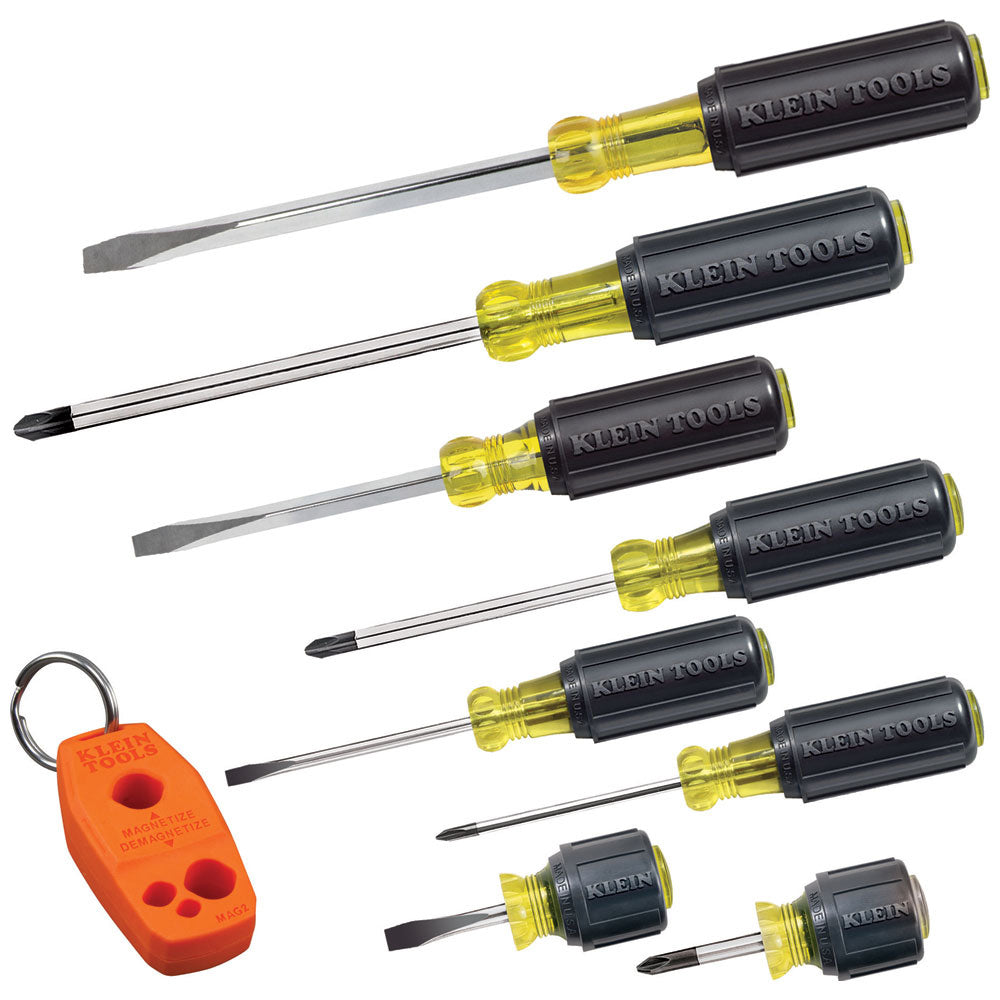
Klein vs Wiha Screwdrivers: Which Is Better for Real Work?
Klein vs Wiha screwdrivers — both are worth every dollar over the import stuff. But they aren't interchangeable, and buying the wrong one for your work is a real mistake. The short answer: buy Klein if you're an electrician or general tradesperson who wants a USA-made daily driver you can grab at the supply house, with a solid insulated 1000V lineup and a friendlier price. Buy Wiha if you need the finest tip machining, the deepest insulated and torque-controlled ranges, and German engineering — and you're willing to pay a bit more for it. Neither brand is universally "better." The right pick depends on what you're driving.
Klein vs Wiha at a Glance
| Klein | Wiha | |
|---|---|---|
| Blade steel | Hardened alloy, chrome-plated tips | CRM72 chrome-vanadium-molybdenum |
| Handle system | Cushion-Grip (dual-material); Journeyman on some lines | SoftFinish; PicoFinish on precision line |
| Made in | Many lines USA-made; some imported — verify per SKU | Pro lines made in Germany — verify per line |
| Insulated 1000V line | Yes — IEC 60900 rated | Yes — IEC 60900 rated; deeper range |
| Precision/electronics | Limited range | Deep — PicoFinish + precision sets |
| Warranty | Limited lifetime on hand tools | Limited lifetime on hand tools |
| Price band (single driver) | $9.99 | $7–$14 each |
| Price band (set) | $269.99 | varies; check current listings |
*Verify current SKU-level prices at Amazon, Acme Tools, or Home Depot at publish time.*
Who Makes Klein and Wiha — and Where Are They Made?
Klein Tools has been an American company since 1857. A lot of their core lines — especially the electrical tools they built their reputation on — are USA-made. That matters to buyers who want domestic manufacturing, and to tradespeople who buy local at the supply house. But not every Klein product is made in the USA. Check the product page or the package for the origin on any specific SKU before assuming.
Wiha is a German company, founded in 1939 in Schönach, Baden-Württemberg. Their professional screwdriver lines — SoftFinish, PicoFinish, and the insulated sets — are made in Germany. That German engineering pedigree is real, not just marketing. But like Klein, not every item in their catalog ships from the home country. Verify the origin by line before it's a deciding factor for you.
If "Made in USA" is a hard requirement, Klein is the easier pick — but verify the specific line. If German manufacturing is what you're after, Wiha's pro screwdriver sets generally deliver it.
Steel and Tip Durability: Klein vs Wiha
Wiha uses CRM72 — their proprietary chrome-vanadium-molybdenum tool steel — on most of their professional drivers. The tip machining is tight. If you've ever driven a Wiha into a Phillips head and felt it sit square with no wobble, that's the precision tolerancing. Less cam-out, less rounding.
Klein's blade steel is AUS-8 Stainless Steel at 58–59 Rc, chrome-plated at the tips. Klein doesn't publicize a proprietary steel designation the way Wiha does. What they do publish is that the tips are hardened and chrome-plated for corrosion resistance. In practice, Klein screwdrivers are rugged, grip hard, and hold up on a working jobsite. They're not precision instruments the way a Wiha PicoFinish is — and they don't need to be.
For most electrical and general-trade work, both are tough enough that the difference in tip life won't matter. Where it *does* matter is precision electronics, tight-tolerance fasteners, and situations where cam-out costs you a board or a stripped machine screw. That's where Wiha earns its price premium.
Both brands make magnetized tips available across most of their lines — worth checking the specific SKU.
Handles — Klein Cushion-Grip vs Wiha SoftFinish

Klein's Cushion-Grip is a dual-material handle that's been around forever. Wide, slightly oval, grippy. Designed for high-torque driving on standard screw sizes. It's comfortable over a long shift, doesn't slip in a damp hand, and the shape telegraphs where your wrist is on the handle. Klein also has the Journeyman line with a different handle profile on some tools — check the product page.
Wiha's SoftFinish is a multi-component ergonomic handle. Narrower than Cushion-Grip, which is intentional — it's engineered for torque control and feel over raw torque output. The surface texture is excellent in oily or sweaty conditions. If you're doing fine work where control matters more than muscle, SoftFinish wins. The PicoFinish handle on Wiha's precision line is even smaller and better-balanced for delicate work.
Neither handle is universally better. It depends on the work:
- High-torque electrical rough-in: Klein Cushion-Grip is the comfortable workhorse.
- Detail and precision fastening: Wiha SoftFinish gives you more feedback.
Klein vs Wiha Insulated 1000V Screwdrivers — Safety First
This section matters. If you're working near live conductors, do not trust an uninsulated screwdriver or one that doesn't carry the 1000V / VDE / IEC 60900 mark. The rating isn't a label; it means the tool has been individually tested to 10,000V before it ships, and it's rated for 1000V AC / 1500V DC in service. That double-insulated construction has a specific design standard behind it.
Both Klein and Wiha make IEC 60900-rated insulated screwdrivers. Both carry the 1000V mark on their insulated lines. Verify on the product page before you buy — not every screwdriver in their catalog is insulated, and the mark must be on the tool itself, not just the packaging.
Where they differ:
- Wiha's insulated lineup is deeper. They offer more handle sizes, more tip types, nut drivers, and torque-limited versions specifically designed for work near voltage. Their insulated sets are the default recommendation in a lot of European electrical trade work, and that reputation has carried over in North America.
- Klein's insulated line is solid, easier to source domestically, and generally less expensive. For most electricians in the US, it's the practical choice. The 11-in-1 is NOT a substitute for a purpose-built insulated driver — you want the dedicated insulated screwdrivers if you're working live.
Bottom line on insulated: Both meet the spec when they carry the mark. Wiha has more options at the upper end of the range. Klein is the easier domestic source. If you're stacking a dedicated insulated kit for live work, either is safe — verify the IEC 60900 mark on every tool.
Klein vs Wiha for Precision and Electronics Work
This one isn't close. Wiha dominates this category.
Wiha's PicoFinish and precision-series sets span a broad range of tip types and sizes — tiny slotted, Phillips from #000 up, JIS, Torx, pentalobe, and more across a deeper lineup than most brands offer. The tip machining at small sizes is tight enough that it matters on sensitive electronics — a loose-fitting Phillips in a smartphone screw strips threads faster than any other mistake.
Klein makes precision screwdrivers — their electronics line covers Slotted 1/16" to 1/8", Phillips #00–#0, and Tamperproof TORX T6H–T15H. But it's not a market they've led. The range is narrower and the category focus has historically been electrical work, not electronics repair or precision instrument work.
If precision or electronics work is your main use, buy Wiha. If it's occasional, Klein's precision offering may cover what you need — check the specific sizes against the tip size ranges you actually use.
Price and Warranty: Klein vs Wiha
Klein backs their hand tools with a Lifetime warranty; Wiha offers a 12-month No Hassle Guarantee, providing replacements (not refunds) on most tools, with bits, nutsetters, and tweezers excluded. Read the terms on each brand's site — the coverage and process differ in details.
On price: Wiha runs higher than Klein across comparable SKUs, typically by a meaningful margin on sets — on a 6-piece insulated set, for instance, Klein runs $39.97 against $62.38 for the Wiha equivalent. For a single insulated driver or a standard SoftFinish/Cushion-Grip compared head to head, the gap is real but not shocking. For a full insulated set or a comprehensive precision set, the difference adds up.
Klein's price advantage is part of its case for electrical trades work. The quality gap isn't large enough to justify Wiha premium for general daily driving. Where Wiha earns it is the precision range and the depth of the insulated/torque lineup.
Which Should You Buy? Verdict by Job
Electrician (daily driver + insulated set) → Klein. USA-made availability, strong IEC 60900 insulated lineup, supply-house convenience, and a lower price of entry. Cushion-Grip handles are built for all-day use. Buy the dedicated Klein insulated set — not an 11-in-1 substitute.
Mechanic / general shop → Klein or Wiha, depending on what you're working on. For standard slotted, Phillips, and square drive, Klein Cushion-Grip handles are rugged and comfortable. If you're frequently in tight spaces requiring a delicate touch, Wiha SoftFinish rewards control. Either beats anything import at the same price point.
Electronics / precision repair → Wiha. PicoFinish line covers the range and the tip machining is in a different class. Don't use a standard-duty driver where a precision driver belongs.
Tight budget, getting into hand tools → Klein. You're not leaving quality on the table — you're getting a genuinely professional tool at the right price for the job. Buy the Wiha upgrade when the precision work demands it.
When Wiha is overkill: Standard electrical rough-in, framing tasks, everyday hardware. You're paying for precision you won't use. When Klein falls short: Fine electronics work, torque-limited work near voltage, situations where tip fit at small sizes matters.
Frequently Asked Questions
Are Wiha screwdrivers better than Klein? Not universally. Wiha leads on tip precision and the depth of their precision and insulated/torque ranges. Klein leads on USA-made availability, price, and practicality for electrical trade work. The better brand depends on what you're driving.
Are Klein screwdrivers made in the USA? Many Klein lines are USA-made, but not all. Klein imports some products. Check the product page or packaging for country of origin on the specific SKU you're buying — origin varies by line and isn't consistent across the full catalog.
Where are Wiha screwdrivers made? Wiha's professional screwdriver lines — SoftFinish, PicoFinish, insulated — are primarily made in Germany, which covers the largest portion of their catalog. Their SoftFinish Multi-Driver line is manufactured in Minnesota, USA, and their electronic pliers come from Italy. Verify by line on the product page.
What steel does Wiha use? Wiha uses their High Performance CRM-72 Modified Tool Steel on most professional driver lines. Klein's blade steel is 9CR13MoV; Klein doesn't publish a proprietary branded designation, and their tips are chrome-plated for corrosion resistance.
Are Klein or Wiha insulated screwdrivers better for electricians? Both make 1000V-rated (IEC 60900) insulated drivers, and both are safe for live work when they carry the mark. Wiha's insulated range is deeper. Klein is easier to source in the US at a lower price. Confirm the IEC 60900 mark on any driver you're using near live conductors — don't assume it's there.
Is Wiha worth the extra money? For precision and electronics work, yes — the tip machining and range depth justify the cost. For general electrical or shop use, Klein delivers most of the performance for less money.
Which brand's tips last longer? Both hold up well in normal use. Wiha has a reputation for tight tip tolerances that resist cam-out. Klein is built for rugged daily-driver use. Neither brand's tip life is a practical concern if you're using the right driver for the right fastener — that's where most tips get damaged anyway.
What's the warranty on Klein vs Wiha? Klein's warranty coverage ranges from normal product life on hand tools to 2 years on test equipment depending on product class, with consumables covered only at delivery. Wiha offers a 12-month No Hassle Guarantee — satisfaction-based replacements on most tools, excluding bits, nutsetters, and tweezers. Read the current terms before you buy — the coverage details matter.
If you're comparing the broader screwdriver market — including Wera and PB Swiss alongside these two — our full screwdriver guide is the full breakdown. For insulated-specific buying between Klein and Wera, our comparison goes deeper on the 1000V category. If you're building out a precision repair kit, this precision guide covers what matters at the small end. And for multi-bit versatility, ratcheting drivers and multi-bit alternatives cover adjacent ground.