
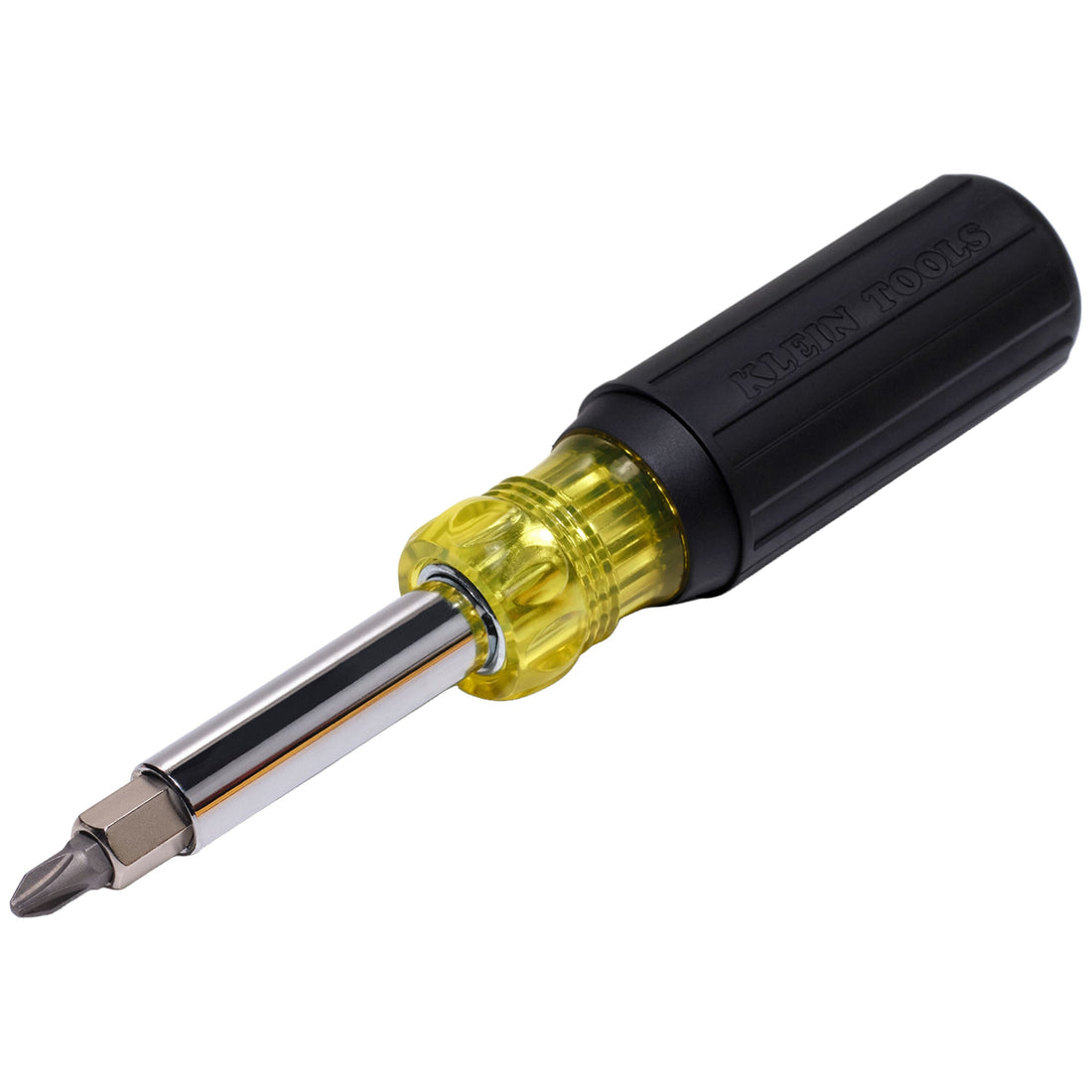
Best Multi-Bit Screwdriver: 5 Picks for Every Trade
The Klein 32500 11-in-1 is the right call for most tradespeople. Positive-locking chuck, covers every common fastener a sparky or HVAC tech hits in a day, slim enough to clear a 4-inch electrical box. That's your default. If your hand is aching by noon from holding a screwdriver all shift, step up to the Wera Kraftform Kompakt — the multi-zone handle geometry genuinely cuts fatigue at volume. Both beat any 32-in-1 with a sloppy friction-fit chuck. Below are five multi-bit screwdrivers worth buying and exactly who each one is for.
What Separates a Good Multi-Bit Driver from a Gimmick
A multi-bit screwdriver is a single tool with a quick-change 1/4" hex chuck that accepts interchangeable bits — usually stored in the handle or a sleeve — so you carry one driver instead of six. The concept is solid. The execution ranges from professional-grade to junk, and bit count tells you almost nothing about which side a tool falls on.
Chuck Retention: Positive Lock vs. Friction-Fit
This is the spec that matters most and gets ignored in most roundups.
Friction-fit chucks hold bits with spring tension or a magnet. For light work at a comfortable angle, that's fine. Put real torque on a tight screw — or work overhead — and the bit wobbles, slips sideways, and cams out. You strip the head and lose time.
A positive-locking chuck clicks into place mechanically and stays there until you tell it to release. Klein's mechanism uses a metal collar you push forward to eject. Wera's system — called Rapidaptor — clicks in and locks; push the bit forward to release. Either way, there's no radial play under load.
If product copy just says "magnetic bit retention," that's friction-fit. Look for explicit "positive-locking" language or confirm mechanically before you buy.
Handle Geometry: Diameter, Zones, and Material
Wider handle equals more torque leverage for the same hand effort. It also means a fatter profile that won't fit inside a 4-inch electrical box or tight switch location.
Most quality multi-bit handles run 1.25"–1.5" at the widest point — usable in most trade situations. Where Klein and Wera separate themselves is with distinct grip zones: a softer rubber zone where your palm contacts the butt, a harder compound in the middle for rotation. It sounds like marketing until you've used a single-material handle through a full shift and your palm tells you otherwise.
Bit Selection: Which Drive Types Actually Matter
The five drive types that cover most trade work: Phillips (#1, #2, #3), flathead (3/16" and 1/4" matter most), Torx (T10, T15, T20 cover the HVAC and auto service trio; T25 shows up in decking and some appliances), Robertson/square (#1, #2 — essential for Canadian trades, useful everywhere for deck screws), and a 1/4" nut driver.
A good 10-in-1 covers all of this. A 32-in-1 also covers it — and adds a dozen sizes you'll reach for twice a year. More bits isn't better; matched bits are.
Profile and Length: Does It Fit the Spaces You Work In?
Standard multi-bit drivers run 7"–9" overall. That's fine on open walls. Working in a 4-inch device box, the shaft profile matters more than overall length — a bulkier handle prevents full rotation even when the shaft itself fits. The Klein 70010 compact runs meaningfully shorter than the 32500 — a difference you'll notice immediately when maneuvering inside a 4-inch device box or confined switch location.
The 5 Best Multi-Bit Screwdrivers
Best Overall — Klein 32500 11-in-1
Who it's for: Electricians, HVAC techs, general contractors. Anyone doing mixed fastener work across a full trade day.
The 32500 is the benchmark. Klein's positive-locking collar is crisp and holds up under real use. The handle is comfortable without being oversized — it clears most standard electrical boxes. The included drive list covers every fastener you'll commonly hit — 11 functions in total, spanning the full Phillips, flathead, Torx, Robertson, and nut driver range.
That built-in 1/4" nut driver function makes this relevant if you only need nut driver capability occasionally — see our nut driver selection if your work runs heavier on hex fasteners.
Retail: $15.97
Best Compact — Klein 70010 10-in-1
Who it's for: Electricians doing device work in tight boxes, anyone who works in confined spaces daily.
The 70010 gives up one function compared to the 32500 — typically Ph3 — and gains meaningful clearance in tight quarters. Same positive-locking chuck. If your day is heavy on 4-inch boxes, switch replacement, or outlet work, this is the smarter grab over the 32500.
Its bit selection covers the same daily-driver fastener categories as the 32500 — Phillips, flathead, Torx, and Robertson — retaining the built-in nut driver and dropping only the one function least needed for device work.
For tight-quarters work where you need ratcheting action the 70010 can't deliver, our ratcheting screwdriver guide covers those options.
Retail: Available at kleintools.com and major hardware retailers.
Best for All-Day Use — Wera Kraftform Kompakt

Who it's for: Anyone gripping a screwdriver for four or more hours a day — service techs, finish carpenters, electricians running trim-out.
The current US-market model is the Kraftform Kompakt 60 Imperial (05051042001).
The Kraftform handle is Wera's real argument. Multiple zones of different hardness — engineered for the difference between turning torque and pushing pressure — with an ergonomic shaping that reduces hand fatigue over time. It's easy to dismiss as branding. After the third hour with a screwdriver, it's not.
Wera's chuck — called Rapidaptor — is a positive-locking system: bits click in, eject by pushing the bit forward. It's as secure as Klein's collar; no wobble in normal use. Wera charges a premium over the Klein and it's earned for high-volume work. For DIY or occasional use, it's probably more tool than you need.
For a broader comparison across the German screwdriver brands, our full German screwdriver comparison covers that territory.
Retail: Priced at a premium over the Klein options; check wera.de or major online retailers for the current figure.
Best Budget — Milwaukee 48-22-2307 10-in-1
Who it's for: DIYers, homeowners, new apprentices. Anyone doing occasional mixed-drive work who doesn't need to spend $35–50 on the Klein.
Its bit selection covers all the standard daily-driver fasteners — Phillips, flathead, Torx, and Robertson — in a practical lineup suited to the mixed fastener work homeowners and apprentices encounter most.
The 48-22-2307 is a legitimate tool. Milwaukee's chuck retention is solid for the price — it's not Klein-level crispness, but it doesn't have the floppy wobble of a generic friction-fit. The handle material is decent. The bit selection covers daily fasteners.
Where it gives ground: the handle geometry is less refined, and the chuck feel softens faster over time than the Klein or Wera. For a tradesperson running it all day, spend the extra for the 32500. For a homeowner doing weekend projects or a first-year apprentice buying their own kit, the Milwaukee is genuinely good enough.
Retail: Priced well below the Klein and Wera options; check milwaukeetool.com or a major hardware retailer for the current figure.
Best Insulated / VDE — For Live-Circuit Electrical Work
Who it's for: Electricians working near or on live circuits. This is a distinct safety product, not a premium upgrade.
A standard multi-bit screwdriver — even a Klein or Wera — is not rated for live-panel work. Full stop. You need a VDE/IEC 60900-certified model rated to 1,000V AC. That certification means the insulation was tested and verified to that standard. An "insulated handle" label without IEC 60900 certification provides no meaningful protection.
Two options worth specifying:
Klein insulated multi-bit: Klein offers a current IEC 60900-certified model rated to 1,000V AC; confirm the active model number at kleintools.com before ordering, as the lineup is periodically updated.
Wera Kraftform VDE: The 817 VDE Kraftform blade-holding handle is Wera's current IEC 60900-certified multi-bit driver for live-circuit work.
Both carry IEC 60900 certification and are rated to 1,000V AC. Both cost more than standard models. For work near live circuits, that's the cost of working safely.
See our complete guide to insulated screwdrivers for the full comparison.
Retail: Both models are priced above their standard (non-insulated) equivalents; check kleintools.com and wera.de for current pricing.
Side-by-Side Comparison
| Model | Functions | Chuck Type | Insulated (VDE) | Approx. Price | Best For |
|---|---|---|---|---|---|
| Klein 32500 11-in-1 | 11 | Positive-lock collar | No | $15.97 | Daily trade carry |
| Klein 70010 10-in-1 | Full daily-driver set | Positive-lock collar | No | See manufacturer | Tight-space device work |
| Wera Kraftform Kompakt | Broad selection | Rapidaptor (positive-lock) | No (standard) | Premium-priced | All-day volume use |
| Milwaukee 48-22-2307 10-in-1 | Full daily-driver set | Positive-lock | No | Budget-priced | Budget / DIY |
| Klein insulated (confirm model) | Varies — see manufacturer | Positive-lock collar | Yes — IEC 60900, 1,000V AC | See manufacturer | Live-circuit electrical work |
*Wera also offers a Kraftform VDE model — the 817 VDE Kraftform blade-holding handle — for those who want the ergonomic handle and live-circuit rating in one tool.*
FAQ
What is a multi-bit screwdriver?
A screwdriver with a quick-change 1/4" hex chuck that accepts interchangeable bits stored in the handle or a sleeve. You carry one driver instead of six, swap bits in a couple seconds, and get the same familiar grip every time.
How many bits does a multi-bit screwdriver typically come with?
Most carry 6–12 bit configurations covering Phillips (#1–#3), flathead, Torx (T10, T15, T20), Robertson/square, and a nut driver. The Klein 32500 covers 11 functions. For trade work, 10–12 is the practical sweet spot — more than that and you're carrying bits you'll use a few times a year.
Are multi-bit screwdrivers worth it?
Yes, for mixed fastener work. You cut the tool-swap routine without carrying six separate screwdrivers. The one real trade-off: bit changes take two seconds. If you're driving the same fastener all day — a full day of deck screws, say — a dedicated driver is still faster. For service calls, repair work, or any situation with multiple drive types, a good multi-bit driver is one of the most useful tools on your belt.
What's the difference between the Klein 10-in-1 and 11-in-1?
The 11-in-1 (32500) adds Ph3 Phillips and has a longer handle. The 10-in-1 compact (70010) is noticeably shorter and fits tighter spaces better. Heavy device-box work points to the 70010; general mixed trade work points to the 32500. For the most current bit configurations on either model, check kleintools.com directly — Klein occasionally refreshes its lineup.
Can I use a multi-bit screwdriver for electrical work on live panels?
Not unless it's VDE/IEC 60900-certified and rated to 1,000V AC. That certification is tested and marked on the tool — it's not a marketing label. A standard screwdriver from any brand, Klein and Wera included, is not rated for live-circuit contact. The picks for that work are the Klein insulated multi-bit (verify the current model number at kleintools.com) and the Wera 817 VDE Kraftform blade-holding handle. See our complete guide to insulated screwdrivers for the full comparison.
Why do some multi-bit screwdrivers wobble?
Friction-fit and magnet-only chucks have measurable radial play. On a tight fastener, at an angle, or working overhead, that play causes cam-out and stripped heads. The fix is a positive-locking mechanism — Klein's collar, Wera's Rapidaptor — that holds the bit mechanically until you release it. Quick test: seat a bit and push it sideways. If it wiggles, it's friction-fit. If it doesn't move until you actuate the release, it's positive-lock.
The Klein 32500 handles most trade scenarios without compromise. If you're running a screwdriver through a full shift, the Wera handle is the one upgrade that earns its price through repetition. And for live-circuit work, the insulated pick isn't a preference — it's a requirement. Check back for comprehensive hand tool coverage as our guides expand.