
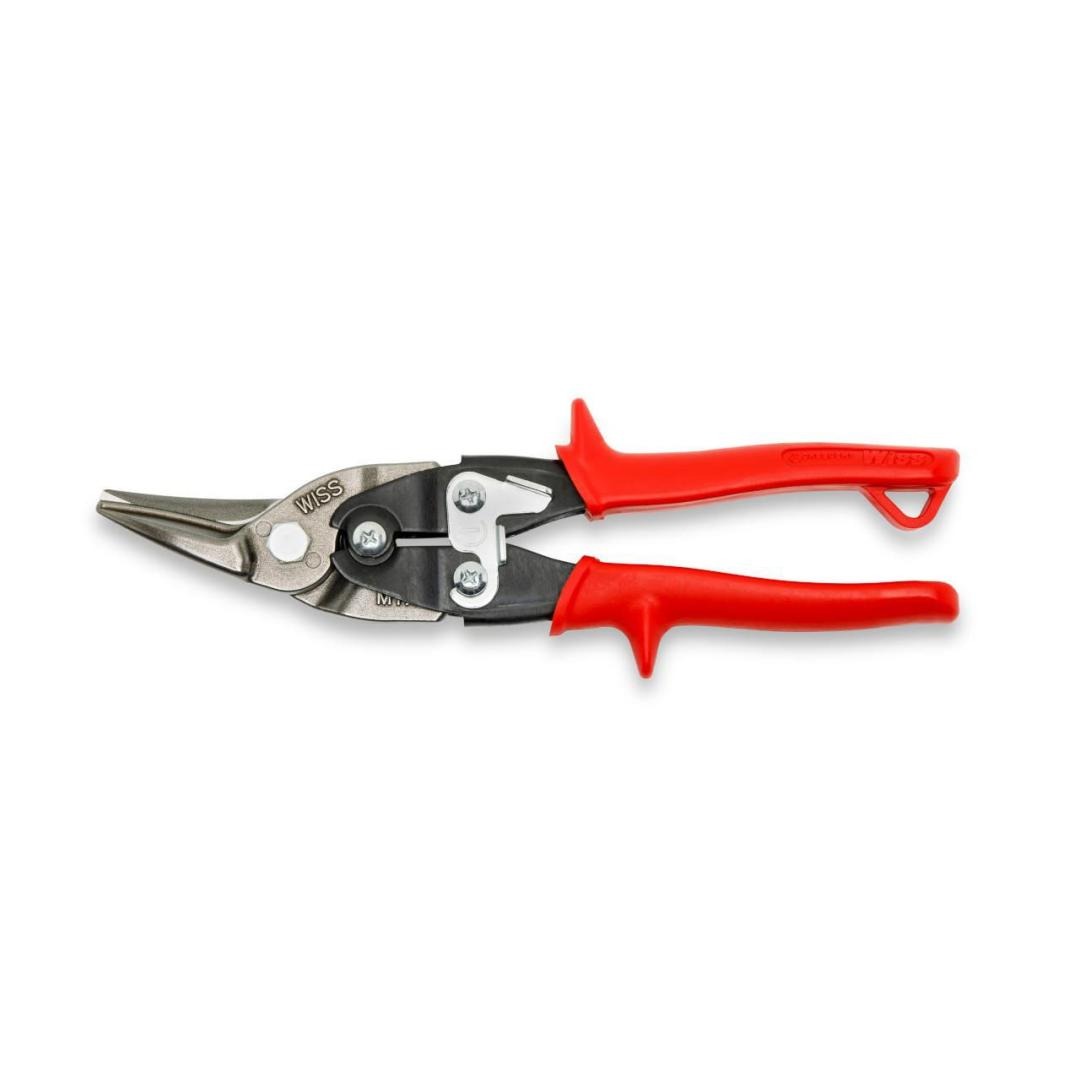
Midwest vs Wiss Aviation Snips: Which Pair Actually Holds Up?
Midwest and Wiss aviation snips both use compound-leverage action, cut the same gauges, and share the same red/green/yellow color code. The difference comes down to three things: where the blades are forged, how deep the offset lineup goes, and how your hand feels after a full day of cutting duct. Buy Midwest if you cut sheet metal for a living, need offset snips, or want US-forged blades. Buy Wiss if you need a solid workhorse pair stocked at every hardware counter. Here's what that actually means.
The Short Answer
| Pick this if… | |
|---|---|
| Midwest | You cut galvanized sheet and duct all day, need offset or upright snips, or want US-forged blades |
| Wiss | You need a proven pair available at Home Depot today, or you're outfitting a general-purpose kit |
Neither is a bad tool. But "both are great" doesn't help you pick one, so read on.
First: The Color Code Means the Same Thing on Both Brands
Lock this in before you order anything. The handle color tells you the cut direction — it's universal across Midwest, Wiss, and every other aviation snip on the market.
- Red = cuts left and straight
- Green = cuts right and straight
- Yellow = cuts straight and wide curves
Most right-handed HVAC mechanics reach for a green pair as their primary cutter. Red handles inside curves and left-side cuts on fittings. Yellow is the straight-and-circle workhorse. You can pair a red-handled Midwest with a green-handled Wiss and they work together perfectly — the color, not the brand, is what matters for ordering the right direction.
Left-handers: a right-cut (green) snip fights you all day. Buy red.
Midwest vs Wiss at a Glance
| Feature | Midwest | Wiss |
|---|---|---|
| Blade steel | Molybdenum alloy, hot-drop forged | Molybdenum alloy |
| Capacity — cold-rolled steel | ~18 ga | ~18 ga |
| Capacity — stainless | Thinner than mild steel | Thinner than mild steel |
| Handle | KUSH'N-POWER cushion grips | Cushion grip, compound leverage |
| Offset / upright models | Full lineup (offset, upright, hawk's-bill) | Limited — confirm before buying |
| Country of manufacture | Sturgis, MI (most models) | Varies by model |
| Parent company | Midwest Tool & Cutlery (independent) | Crescent / Apex Tool Group |
| Availability | Specialty tool suppliers + online | Home Depot, Lowe's, most hardware stores |
Both the Midwest 6510/6716 series and the Wiss M1R/M2R/M3R are rated for 18-gauge cold-rolled steel, though exact ratings can vary by specific model — always confirm the spec page for the pair you're buying.
Where They're Made — What HVAC Guys Actually Argue About
This is the question on every contractor forum thread, and it's worth answering straight.
Midwest Tool & Cutlery is based in Sturgis, Michigan. Their aviation snips are hot-drop forged in the USA across all models. For working pros, that matters — not out of sentiment alone, but because US forging tends to correlate with tighter blade tolerances and spring tension that stays consistent over thousands of cuts.
Wiss has a legitimate old-school pedigree — founded in 1848. But today Wiss is a Crescent brand under Apex Tool Group, and country of origin varies across the broader product line. The M-series aviation snips are Made in the USA — check the packaging on the specific pair you're buying, as not every Wiss product carries the same origin. If "Made in USA" is a hard line for you, Midwest is the cleaner answer across the entire catalog.
Neither brand deserves to be called a throwaway import wholesale. But the question isn't unfair, and it doesn't have the same answer for both.
Handle Comfort and All-Day Cutting
On a long day of cutting spiral duct, fitting wraps, and register boot openings, handle ergonomics stop being a nice-to-have and start being the real differentiator.
Midwest's KUSH'N-POWER grips have a cushioned, slightly tacky texture that absorbs fatigue on repetitive cuts. The compound lever action reduces the hand force per cut — you're not squeezing as hard through 16-gauge galvanized as you would with a basic pivot snip.
Wiss cushion-grip handles also use compound leverage and have been the standard on jobsites for decades. Mechanics who've used them for 20 years aren't unhappy. The grips are comfortable by any normal measure.
The latch mechanism is worth paying attention to in both cases. A sticky latch slows you down when you're moving fast through a stack of duct blanks. Both brands are generally solid here, though individual pairs can vary — the kind of thing you notice by handling them in person before you buy a half-dozen.
Pro consensus across r/HVAC and HVAC-Talk consistently favors Midwest for all-day volume cutting. "Great snips, but I switched to Midwest" shows up more often than the reverse. That's pro sentiment, not a controlled test — but it's consistent enough to be worth noting.
Blades: Steel, Edge, and What They'll Actually Cut
Midwest blades are made from molybdenum alloy steel, hot drop forged and Austemper® heat-treated; Wiss M-series uses precision-cast molybdenum blades — both hard, wear-resistant, and built to stay sharp through serious work on galvanized sheet, aluminum flashing, and copper.
Serrated vs. smooth edge: Some models come serrated — the teeth grip the metal and reduce blade wander mid-cut, which is exactly what you want on galvanized duct. Smooth-edge models leave a cleaner, lower-burr cut, which matters more on aluminum flashing or copper where the cut surface is visible. Wiss M-series snips come exclusively with CNC-ground serrated blades. Midwest offers edge options that vary by model — check the product page for the specific pair you're buying. Know what you're cutting before you decide.
Stainless steel: Both brands can handle it, but stainless cuts at a noticeably thinner gauge than mild steel. Midwest aviation snips are rated for stainless steel up to 22 gauge (the Bulldog model is rated to 18 gauge stainless). For Wiss, stainless capacity varies by model and is lighter than their cold-rolled steel rating in all cases — check the spec page before buying. Keep that expectation calibrated whether you're shopping Midwest or Wiss.
Offset Snips: Where Midwest Pulls Ahead for Ductwork
Standard aviation snips require your hand to travel underneath the sheet as you cut. That's fine for flat benchtop work, miserable when you're cutting duct on a concrete floor or working inside a tight mechanical room.
Offset (upright) snips have a bent jaw that keeps the handles elevated and your knuckles clear of the work surface. If you're doing volume ductwork — cutting full sheets, fitting wraps, or running seam cuts on long transitions — offset snips aren't a bonus feature, they're how you protect your hands for the second half of the day.
Midwest's catalog spans a broad range of configurations — offset, upright, and hawk's-bill models across multiple cut directions — making it the deeper option for dedicated HVAC work.
Wiss does offer offset models — the M6R, M7R, and M8OS aviation snips, the WDF10O tinner snips, and the M6M7R 2-piece set, all with 30° offset handles cutting up to 18-gauge steel — but the selection is narrower than Midwest's. If offset cutting is a regular part of your workflow, confirm that Wiss makes the specific configuration you need before committing to the brand.
Model-to-Cut-Direction Mapping
Ordering the wrong cut direction is the most common snips mistake. Here's the map:
Wiss M-series:
- M1R = cuts straight and left (red equivalent)
- M2R = cuts straight and right (green equivalent)
- M3R = cuts straight, left, and right (all-direction)
Midwest divides its lineup between the 6716 series — regular inline aviation snips available in 6716S (straight), 6716L (left), and 6716R (right) — and the 6510 series, which are offset aviation snips in the same S/L/R configuration. Both series are available as 3-piece sets covering all three cut directions.
When in doubt: buy by handle color, not model number. Red cuts left, green cuts right, yellow cuts straight. Every distributor stocks and ships by color — it's the universal language.
Price, Availability, and Warranty
Both brands land in the professional hand-tool price range — more than house-brand big-box snips, less than premium European cutters. You're buying a tool that'll outlast several cheaper pairs, not a one-season consumable.
Availability: Wiss wins this category outright. M-series snips are on the shelf at Home Depot, Lowe's, and most local hardware suppliers. Midwest is easy to find online — Amazon, Zoro, Grainger all stock them — but you'll work harder to find them in person outside of a specialty trade supply house.
Warranty: Both brands back their snips with a Limited Lifetime Warranty — Midwest covers blade or spring breakage from manufacturing defects (excluding wear, dullness, or damage from misuse/abuse), while Wiss covers defects in materials and workmanship for the life of the tool to the original end-user purchaser in the United States. The specifics differ, so read the fine print for the model you're buying.
Which Should You Buy?
Buy Midwest if:
- You cut galvanized sheet and duct for a living
- Offset or upright snips are part of your regular workflow
- You want US-forged blades and care about consistent quality over time
- You're equipping a professional tool bag, not a homeowner's drawer
Buy Wiss if:
- You need snips from the hardware store today
- You want a proven workhorse for general-purpose sheet work or occasional HVAC jobs
- You've run Wiss for years without complaints and see no reason to change
Both tools are legitimate. The choice is about how much volume you're cutting, whether offset options matter for your setup, and how much weight you put on country of manufacture.
Frequently Asked Questions
Are Midwest Snips Made in the USA?
Yes — Midwest Tool & Cutlery is based in Sturgis, Michigan, and their aviation snips are hot-drop forged in the USA across all models. Midwest is the more consistently US-made option of the two brands compared here.
Are Wiss Aviation Snips Still Made in the USA?
The M-series aviation snips are Made in the USA. Wiss is now a Crescent brand under Apex Tool Group, so country of origin can vary across the broader product line — check the packaging on the specific pair before buying.
What Do the Red, Green, and Yellow Snips Mean?
Red = cuts left and straight. Green = cuts right and straight. Yellow = cuts straight and wide curves. This is universal across every aviation snip brand on the market, including both Midwest and Wiss.
Which Aviation Snips Are Best for HVAC and Ductwork?
Midwest — particularly if you're doing volume cutting and need offset models to keep your knuckles off the work surface. The KUSH'N-POWER grip holds up better for all-day use, and the offset lineup covers more scenarios.
What's the Difference Between Wiss M1R, M2R, and M3R?
The M1R cuts straight and left (the red-handle equivalent), the M2R cuts straight and right (the green-handle equivalent), and the M3R cuts straight, left, and right — making it an all-direction snip. Match the model to the standard color code — M1R = red, M2R = green, M3R = all-direction — and you'll always order the right direction.
Can Aviation Snips Cut Stainless Steel?
Yes, but at a thinner gauge than cold-rolled mild steel. Midwest aviation snips handle stainless steel up to 22 gauge (the Bulldog model is rated to 18 gauge stainless). For Wiss, stainless capacity varies by model and is lighter than their cold-rolled rating — check the spec page before buying. Don't expect your 18-gauge CRS rating to carry over to stainless on either brand.
What Gauge Steel Can Aviation Snips Cut?
Both the Midwest 6510/6716 series and the Wiss M1R/M2R/M3R are rated for 18-gauge cold-rolled steel. The exact rating can vary by model — always check the spec page for the specific pair before buying.
For a broader look at aviation snip options across more brands, the complete snips guide is the right starting point. If you're also shopping for other cutting tools, diagonal cutters and bolt cutters cover the adjacent decisions. And if you're working through brand comparisons on cutting tools more generally, the utility knife comparison applies the same format to utility knives.