
Best Bolt Cutters: Pick the Right One for What You're Actually Cutting
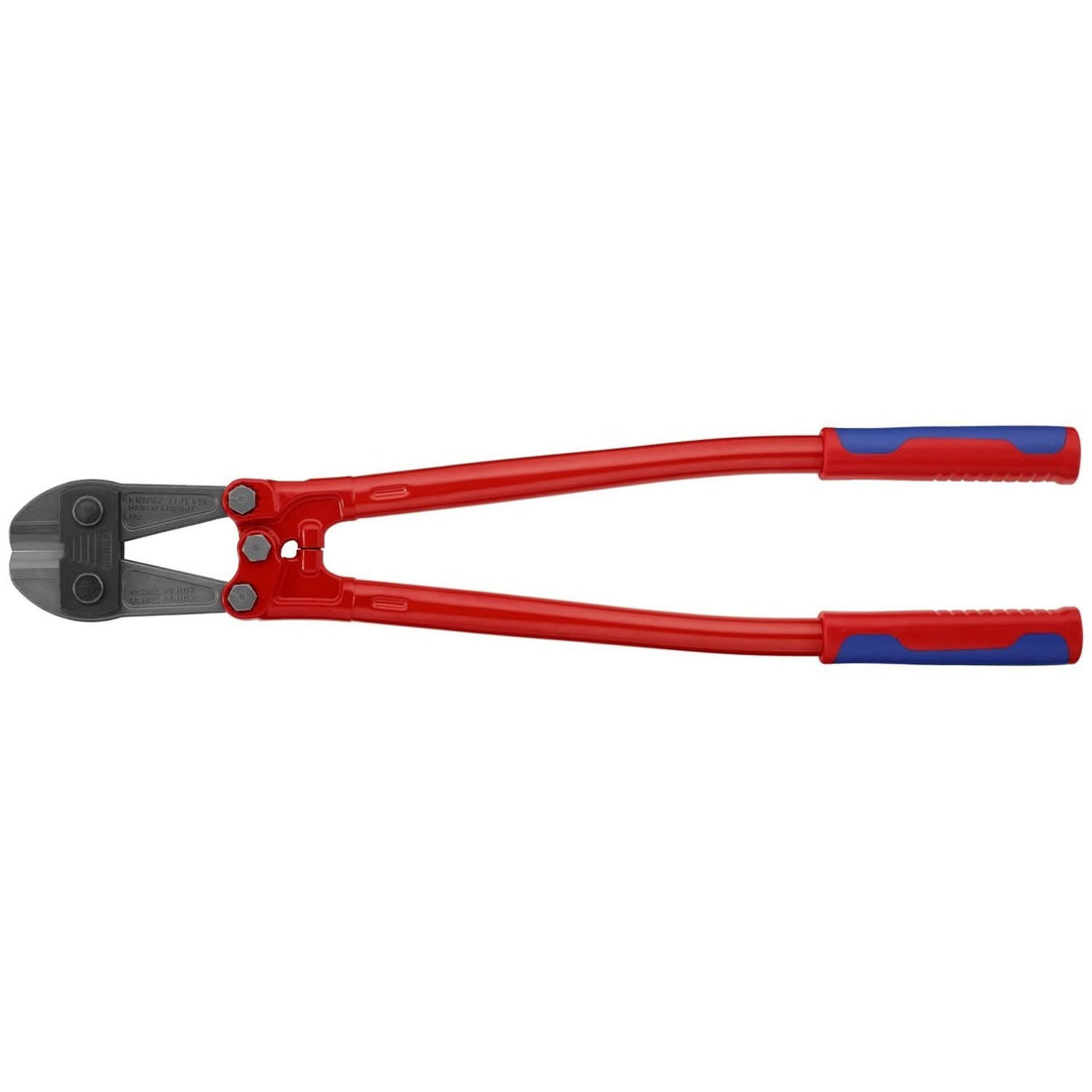
The best bolt cutter for most people is a 24-inch compound-action model with induction-hardened blades — the Knipex 71 72 600 is the benchmark. But "best" depends entirely on what you're cutting. A $25 big-box cutter handles chain-link fence and soft wire without complaint. It will not touch a hardened padlock shackle or grade-70 transport chain. Here's what every buying guide gets wrong: the cutting capacity printed on the box is rated for *soft annealed wire*. For security work, the hardened-steel capacity is what matters — and it's typically 40–60% smaller than the headline number.
What Are You Cutting? (Quick-Reference Table)
Start here. Buy the cutter for your material, not the biggest one you can afford.
| Material | Minimum Length | Jaw Type | Budget Tier | Pick |
|---|---|---|---|---|
| Chicken wire, soft cable, thin wire | 18" | Center-cut or angled | Budget, $15–$30 | Channellock, Tekton, or Stanley 18" |
| Chain-link fence, soft coil chain | 24" | Center-cut | Mid-range, $40–$70 | Irwin 24" or equivalent |
| Standard padlock (5/16" or smaller shackle) | 24" | Center-cut, compound-action | Mid/premium, $80–$130 | Knipex 71 72 600 |
| Hardened padlock / security chain | 30"+ or dedicated shackle cutter | Compound-action, center-cut | Premium, $150+ | Knipex 71 72 760 |
| Rebar, threaded rod, bolt | Sized by diameter | Center-cut required | Depends on diameter | Match jaw capacity to diameter |
If you're cutting soft wire, stop reading and buy the cheapest 18" cutter on the shelf. If you're cutting a padlock or security chain, keep going — this is where the spec-sheet math actually matters.
Best Bolt Cutters for Padlocks and Security Chain
Why Hardened Steel Is the Hard Use Case
A standard padlock shackle is hardened steel. So is any chain marketed as "security chain" or "anti-theft." The hardness of the shackle or link — measured on the Rockwell C scale (HRC) — needs to be *lower* than the hardness of your cutter's blade, or the blade will chip and the shackle won't give.
Cheap bolt cutters fail on hardened shackles not because they're small, but because the blades are softer than what they're trying to cut. The mechanism wears out, the blade deforms, and nothing shears. That's the trade-off you'll feel immediately.
Compound-Action vs. Single-Pivot: Why It Matters
Standard bolt cutters use a single pivot. The blade force is determined by your grip strength multiplied by the handle-to-jaw ratio. That's it.
Compound-action cutters add a second pivot point in the handle linkage. The result: the input force gets multiplied twice before it reaches the blade. For the same hand pressure, a compound-action cutter generates significantly more jaw force.
This is why compound-action cutters can handle hardened material that single-pivot cutters of the same length cannot — it's not marketing, it's leverage math.
Pick 1 — Best Overall: Knipex 71 72 600 (24")
The Knipex 71 72 600 is the standard against which other 24-inch bolt cutters get measured. It uses a compound-action linkage and induction-hardened blades. The three-tier cutting capacity on the spec sheet breaks down like this:
- Soft/annealed wire: handles a broad range of soft wire diameters — the headline capacity figure, and not the critical spec for security work
- Medium-hard wire: rated for a substantially larger diameter than the hardened-steel tier, covering typical hardware-store chain and medium fence wire
- Hardened steel: 7 mm — this is the number that matters for padlock shackles
- Weight: appropriately sized for a 24-inch compound-action tool; the build is solid without being unwieldy for field carry
It's not cheap. Whether it's worth it: for one-off cuts on standard padlocks, probably not. For regular use or hardened shackles, absolutely yes. Blade replacement is worth considering for long-term ownership — however, replacement blades for the 71 72 600 are not currently available through Knipex's US catalog, and the model does not appear in their current lineup. Verify availability and confirm the exact model number before purchasing.
Pick 2 — Step Up: Knipex 71 72 760 (30")

The 30-inch version covers larger shackles and heavier security chain. More handle length means more leverage — more jaw force at the cut. The three capacity tiers scale up accordingly:
- Soft wire: Ø 11 mm
- Medium-hard: 9 mm
- Hardened: 8 mm (5/16")
The trade-off is portability. A 30-inch cutter doesn't go in a standard tool bag; it's a dedicated carry. Buy the 30" if the 24" hardened capacity comes up short for what you're cutting.
One hard limit worth stating: Grade-100 security chain — used in anchor and high-security applications — is engineered specifically to defeat bolt cutters. No bolt cutter reliably cuts it. If you're up against Grade-100, the right tool is an angle grinder, not a bolt cutter.
Best Bolt Cutters for Fence, Soft Chain, and Wire
Single-pivot is fine here. Don't spend compound-action money on material that doesn't need it.
Pick 3 — Best Value: Irwin 24"
Irwin makes a solid mid-range 24-inch cutter suited for chain-link fence, soft coil chain, and wire. The current catalog model is the T924H (also listed as the BC924H), with a jaw capacity of 7.9 mm (5/16 in), aluminum handles, and a weight of 2.672 lb — light and easy to carry for its size.
Note: If the current Irwin model doesn't publish a three-tier capacity table (soft / medium-hard / hardened), that means they don't test or publish hardened-steel capacity. That's fine for this use case — soft and medium-hard is all you need for fence work. Don't use this cutter on a hardened padlock.
Pick 4 — Budget / Light Duty: 18" from Channellock, Tekton, or Stanley
For occasional wire, zip ties, or thin cable, any 18-inch cutter from a recognized brand will do. Channellock, Tekton, and Stanley all make serviceable options in this class. The Stanley 14-318 is a solid representative — 18 inches long with a 6 mm cutting capacity, it handles soft wire, zip ties, and light chain without fuss.
If tight spaces are the issue — cutting fence close to a post or reaching into a cabinet — the 18" length is a genuine practical advantage, not just a budget compromise. For that situation, also consider whether diagonal cutters are the better tool: our diagonal-cutter guide.
What Size Bolt Cutter Do You Need? — The Length-to-Force Guide
Longer handles = more mechanical advantage = more force at the jaw. Here's how that maps to real-world use:
| Length | Typical Use | Portability |
|---|---|---|
| 14"–18" | Soft wire, light chain, zip ties | Fits in a bag; easy one-handed carry |
| 24" / 600mm | Standard padlocks, chain-link fence, soft-to-medium chain | Shoulder carry, fits most tool bags |
| 30" / 760mm | Heavy-duty residential, larger shackles, transport chain | Requires separate carry |
| 36" / 900mm | Industrial and heavy-security chain | Jobsite tool, not a grab-and-go |
| 42"+ | Structural and specialized applications | Rarely needed outside industrial settings |
Jaw capacity scales with length, but not perfectly — mechanism design matters too. A 24-inch compound-action cutter generates more jaw force than a 30-inch single-pivot in many configurations.
Jaw Type and Blade Material — What the Specs Actually Predict
Center-Cut, Angled-Cut, or Side-Cut: Which Jaw Do You Need?
Center-cut: Both blades meet symmetrically at the center of the jaw. Produces the cleanest shear on rod, bolt, and padlock shackle. This is the right geometry for security applications and for cutting round stock. Most bolt cutters you'll see are center-cut.
Angled-cut: The blades are offset slightly so the jaw can angle into tighter spots — close to a post, inside a tight chain link. Slightly less shear efficiency but more practical in confined spaces. Good for fence work.
Side-cut: One blade is fixed; the other moves against it. Used for wire only. Lowest versatility, lowest cutting force at the blade. Skip this type for anything other than soft wire.
Induction-Hardened vs. Chrome Vanadium: Blade Metallurgy That Matters
Induction-hardened: The blade surface is hardened using an induction process — hard at the cutting edge, tough through the body. The result is a blade that holds its edge on hardened material without becoming brittle. This is the spec to look for in any cutter you plan to use on a padlock.
Chrome vanadium: A steel alloy with good toughness and edge retention for medium-duty work. Standard on mid-range bolt cutters. Adequate for fence and soft chain; marginal on hardened shackles.
Drop-forged steel: Refers to the manufacturing process, not the alloy. Drop-forged tools are dense and well-shaped, but the term doesn't tell you blade hardness — a drop-forged blade could still be softer than what you're cutting.
HRC (Rockwell hardness): The number you want to see. Induction-hardened bolt cutter blades typically land in the HRC 58–62 range; standard padlock shackles run lower than that, which is why a properly hardened cutter can shear them. Knipex, for example, publishes a blade hardness of 62 HRC on their bolt cutter product pages — at the top of that standard range.
The practical rule: if the blade isn't harder than the material, the material wins.
Maintenance
Keep the hinge pivot clean and apply a drop of oil to it periodically. A dry or gritty hinge makes the cutter feel weaker than it is and accelerates wear on the linkage. Blades that have been used for prying (don't do this) bend and misalign — the cut will be off-center and the blade will chip. If your blades are visibly bent, check whether your model supports replacement blades rather than buying a whole new cutter.
FAQ
What size bolt cutters do I need to cut a padlock? A 24-inch compound-action cutter handles most standard padlock shackles in the 5/16-inch diameter range — including most budget padlocks and standard Master Lock models. If the padlock is rated ANSI Grade 3 or Grade 6, or is labeled "hardened shackle," the shackle is specifically engineered to resist bolt cutters — no size cutter will reliably cut it. An angle grinder is the right tool for those.
Can bolt cutters cut hardened steel chain? Standard proof-coil chain (Grade 43) and transport chain (Grade 70) cut with a proper 24-inch compound-action cutter. Chain labeled as "security chain," "hardened chain," or rated for anti-theft is a different material — it's designed to defeat bolt cutters, and you'll need an angle grinder or cut-off wheel instead.
What will bolt cutters not cut? Hardened security chain, case-hardened padlock shackles, structural rebar above roughly 1/2-inch diameter, and woven wire rope (the strands slip and fray rather than shear). Grade-100 anchor chain will defeat any bolt cutter.
What's the difference between center-cut, angled-cut, and side-cut bolt cutters? Center-cut blades meet symmetrically at the jaw center — cleanest shear on rod and shackle. Angled-cut blades are offset so the jaw reaches into tight spots. Side-cut (one fixed blade) is for soft wire only and offers the least versatility. For most people, center-cut is the right choice.
Are expensive bolt cutters worth it? For soft wire and standard chain: no, a $25–$40 cutter is fine. For hardened padlocks or repeated heavy-duty use, the jump to a compound-action cutter with induction-hardened blades earns its cost. The blade material and jaw mechanism are what you're paying for, not the brand name.
How do I know what my bolt cutters can actually cut? Look for three tiers in the spec sheet: soft/annealed, medium-hard, and hardened. If a manufacturer lists only one number, assume it's soft wire. The hardened-steel rating is what matters for security work — it's typically 40–60% smaller than the soft-wire number.
What do I do if my bolt cutters won't close all the way? Check the center hinge bolt first — it may have backed out. Loosen and re-torque it, then check that the blades are still parallel and meeting evenly. If the blades are bent from prying or overloading, they can't be realigned. Check whether your model supports blade replacement; if not, it's a new cutter.
If you need to grip rather than cut — seized bolts, rounded nuts, stubborn fittings — bolt cutters aren't the answer: see our locking-pliers guide.
For brand context on Knipex: they also make the benchmark pliers that the trades reach for daily. If you want to understand the Channellock vs. Knipex debate for pliers work, here's the full comparison.
One bolt cutter handles most jobs. Make it a 24-inch compound-action model with induction-hardened blades. Get the Knipex 71 72 600 if you'll cut padlocks. Get any decent 24-inch mid-range cutter if you won't. The size matters less than the blade and mechanism.