
Best Diagonal Cutters: Klein, Knipex, Channellock, and Who Should Buy Which
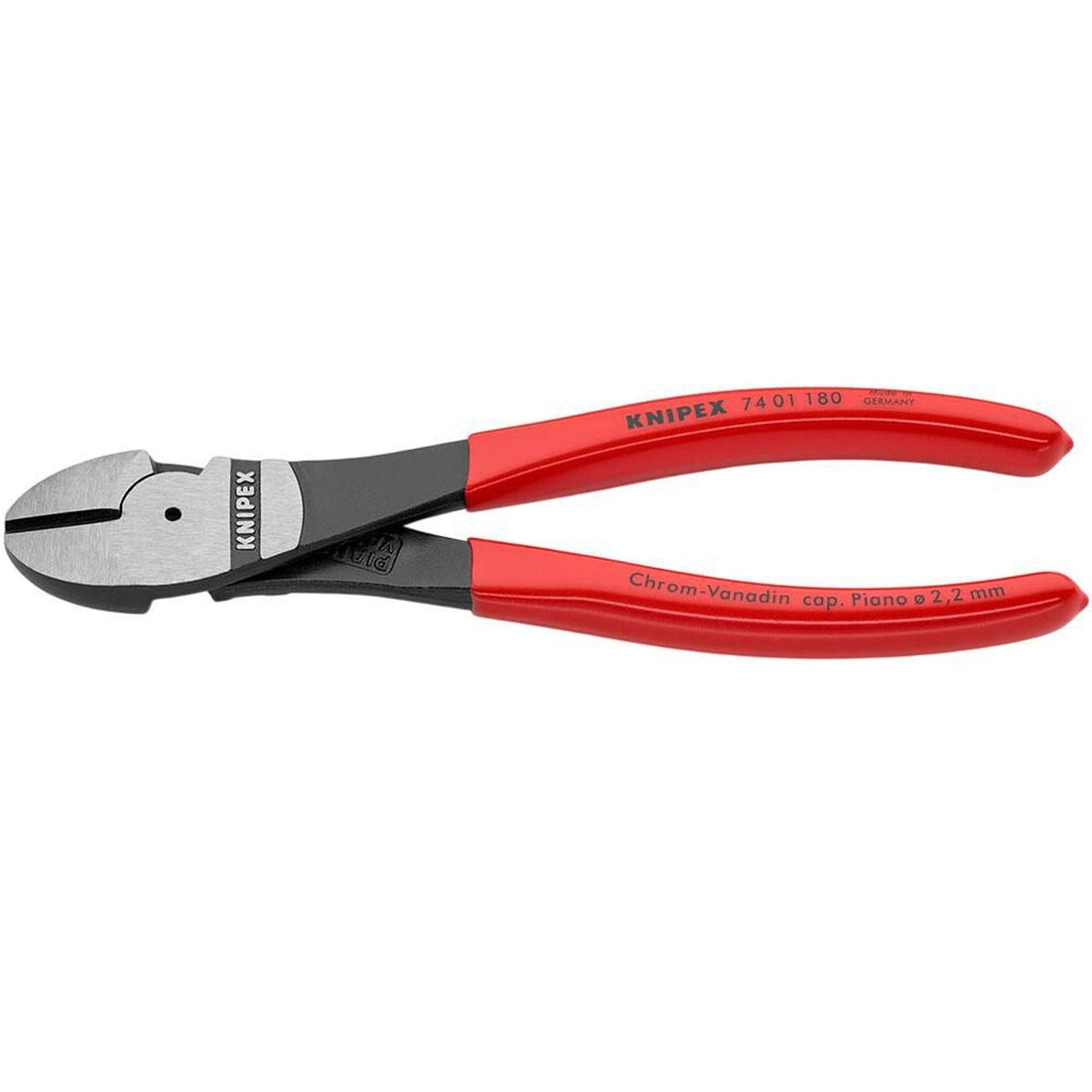
The best diagonal cutters for most tradespeople are the Knipex 74 01 180 (7 in.) if you cut wire daily, or the Klein D2000-9NE (9 in.) for general electrical and construction work at a lower price. Channellock's 337 works when budget is the constraint and cuts are light-duty. Diagonal cutters — also called diagonal pliers, dikes, or dykes — cut wire at an angle to the pivot joint, giving better reach and cleaner results than straight-jaw nippers. Two specs decide which pair to buy: jaw hardness (HRC) and blade geometry. Get those right and the pick is obvious.
The Two Specs That Actually Matter
Most buying guides list features. These two specs determine whether a cutter still works clean after a year of daily use.
Induction-Hardened Edge vs. Through-Hardened Jaw
Through-hardening treats the entire jaw to a uniform hardness. That works fine for a budget tool, but you can't push the surface HRC very high without making the whole jaw brittle and prone to cracking.
Induction hardening heats only the cutting edge, which lets manufacturers get that edge significantly harder — up to ~62–64 HRC — while leaving the jaw body tough underneath. The result: the edge holds longer on harder wire, and the tool doesn't fracture under load.
That's the real reason Knipex cutters outlast cheaper alternatives. It's metallurgy, not marketing.
Standard 15° Offset Cut vs. Flush Cut
Standard diagonal cutters leave a small angled nub on the cut end. For 99% of electrical and general trade work, that's fine — nobody is measuring the end of a branch circuit conductor.
Flush cutters (also called semi-flush or micro cutters) cut nearly flat to the surface. They matter for:
- Trimming component leads on a PCB
- Cutting zip ties completely flush inside a panel or enclosure
- Electronics work where that small nub creates a problem
Flush cutters have thinner jaws and lower wire gauge ratings. They're a specialized tool, not an upgrade to a standard diagonal cutter.
Top Picks by Use Case
| Tool | Length | Jaw hardness | Soft wire | Med-hard wire | Hard wire | Approx. price | Best for |
|---|---|---|---|---|---|---|---|
| Knipex 74 01 180 | 7.09 in (180 mm) | 60–64 HRC | broad range | moderate range | limited range | Check retailer | Daily trade use, electricians |
| Klein D2000-9NE | 9 in | Rockwell 62C | 14 AWG (1.628 mm dia.) | — | — | Check retailer | General electrical/construction |
| Channellock 337 | 7 in | laser-hardened | light-gauge wire | — | — | Check retailer | Budget, light-duty cuts |
| Hakko CHP-170 | ~6 in | 58 HRC | light-gauge wire | — | — | Check retailer | Electronics, PCB, flush work |
| Milwaukee 48-22-6107 | 7 in | hardened edge | — | — | — | Check retailer | Brand-consistency buyers |
Best Overall for Daily Trade Use — Knipex 74 01 180 (7 in.)
This is the cutter most electricians end up with after wearing out a couple of cheaper pairs. The 74 01 180 sits in the 180 mm (7.09 in.) length — the sweet spot for panel work and conduit runs.
The induction-hardened cutting edge is rated at 60–64 HRC, with high-leverage tools in the line reaching 64 HRC. Cutting capacity runs up to 18 AWG (≈1.02 mm) for soft wire, with progressively lower limits for medium-hard and hard wire — check the Knipex spec sheet for the exact gauges in your application. It's one of the few diagonal cutters rated for piano wire at 0.775–1.6 mm.
The joint is tight with no play, and the handles are comfortable for extended use. The price is real — these aren't cheap. But if wire cutting is a daily part of your work, the edge retention math is straightforward: you're not replacing these every year.
Best Value for General Electrical/Construction — Klein D2000-9NE (9 in.)
The D2000-9NE is Klein's New England pattern diagonal cutter. "NE" stands for New England — a heavier-duty jaw profile with a more aggressive cutting angle built for high-demand electrical work. It's been a standard in North American electrical work for decades.
At 9 inches, it gives more leverage on larger-gauge wire than a 7-inch tool. Klein rates the jaw to a documented hardness specification suited for sustained trade use, with cutting capacity across the standard electrical wire gauges a residential electrician works with regularly. Weight is in the expected range for a 9-inch diagonal cutter — substantial enough for leverage without being fatiguing over a full day.
The honest comparison to Knipex: Klein's NE-series cutters are induction hardened but don't reach the same edge HRC as Knipex's premium line. For residential rough-in where you're cutting 12 AWG and 14 AWG THHN most of the day, the Klein performs well and costs noticeably less. The Knipex edge advantage shows up most under sustained heavy use on harder wire.
For most electricians and general contractors, the Klein is the right call.
Best Budget Pick — Channellock 337 (7 in.)

Channellock makes legitimate American-made hand tools. The 337 is their 7-inch diagonal cutter — not junk, but not a premium cutter either.
The jaw is laser-hardened rather than induction-hardened, and cutting capacity is specified in AWG on the Channellock product page. It handles soft copper wire, zip ties, and light-duty cuts without complaint. Where it falls short is sustained use on medium-hard or harder wire — the edge dulls faster than the Knipex or Klein NE-series.
Buy the 337 if you're a homeowner cutting wire a few times a year, budget is tight, or you need a pair to leave in a shared toolbox. Pass on it if wire cutting is part of your daily work.
Best for Electronics / Flush Work — Hakko CHP-170
The Hakko CHP-170 is a micro cutter built for PCB work and component lead trimming — anywhere you need a clean, flat cut in a tight space. It's not a replacement for a standard diagonal cutter. It's a different tool for a different job.
It cuts up to 16 AWG at maximum capacity, with a 21-degree jaw offset angle for clean access in tight spaces. At roughly 6 inches, it's undersized for trade work. For electronics hobbyists and techs, it's the right tool alongside a standard cutter.
If the Knipex 78 03 125 better fits your application — especially for professional electronics work — note that it measures 125 mm overall, weighs 56 g, cuts 0.2–1.6 mm soft wire, and is certified to DIN ISO 9654.
Milwaukee 48-22-6107 — Who It's Actually For
The 48-22-6107 is Milwaukee's 7-inch diagonal cutter. Milwaukee doesn't publish a consolidated jaw hardness figure in widely available spec sheets, but the tool handles standard electrical wire gauges without issue. It's a solid, competent tool — not an embarrassing buy.
But Milwaukee's strength is power tools and their battery ecosystem. Their hand tools are capable without being class leaders on jaw hardness. The 48-22-6107 makes sense if you're standardizing on Milwaukee hand tools for brand consistency. If edge retention is the priority, the Knipex or Klein NE-series is the better choice.
Is Knipex Worth the Price?
Knipex 7-inch diagonal cutters typically retail at roughly 3–4× what a comparable Klein or Channellock costs. That gap holds consistently across major retailers and hasn't narrowed appreciably in recent years.
Here's the direct call:
Yes — if you're an electrician, low-voltage tech, or anyone cutting wire hundreds of times a week. The induction-hardened edge holds significantly longer. Over two to three years of daily use, a Knipex outlasts budget cutters multiple times over. The math works in your favor.
No — if you're a general contractor or DIYer where wire cutting is occasional. Klein or Channellock delivers 90% of the performance for a fraction of the price. Buy the Klein, take care of it, and spend the difference on something else.
The Knipex premium is earned — but only if you're doing the volume that lets you realize it.
Diagonal Cutter Length Guide: 6 in. vs. 7 in. vs. 8 in. vs. 9 in.
6 in. — Electronics, jewelry, PCB component trimming. Too short and light-duty for most trade work.
7 in. — The electrician's standard. Best reach-to-leverage balance for panel wiring, conduit work, and everyday electrical tasks. If you're buying one pair, this is the size.
8 in. — Utility and service work. More leverage for larger-gauge wire without going heavy-duty.
9 in. — Heavy-gauge wire, HVAC, automotive. Overkill for panel wiring; right when you're regularly dealing with 6 AWG or larger.
Most electricians land on 7 inches. Most DIYers who want one pair to handle everything also end up here.
What Diagonal Cutters Can and Can't Cut
They handle:
- Soft copper and aluminum wire within the tool's rated capacity
- Zip ties
- Cotter pins
- Component leads on PCBs (with the right flush cutter)
- Light steel wire within the rated spec
Proceed with caution:
- Hardened steel wire — only premium induction-hardened cutters rated for it (check the spec sheet); forcing a budget cutter on hard wire chips the edge permanently
- Coat hangers — mild steel, possible with a quality cutter but not what the tool is designed for
Never:
- Rebar — bolt cutters or a grinder
- Wire rope and aircraft cable — requires tools specifically rated for those materials
- Hardened bolts, nails, or fasteners — that's what bolt cutters are for
Forcing a diagonal cutter past its rated capacity doesn't just make a bad cut. It ruins the edge, sometimes permanently.
Frequently Asked Questions
What is the difference between diagonal cutters and wire cutters?
The terms get used interchangeably, but "wire cutters" is broader — it can mean side cutters, end nippers, and linesman pliers. Diagonal cutters (also called diagonal pliers or dikes) cut at an angle to the pivot joint, giving better reach and a cleaner cut than straight-jaw nippers. If you're shopping for electrical or trade wire-cutting work, diagonal cutters is the specific search you want.
What are diagonal cutters used for?
Cutting copper and aluminum wire within the tool's rated capacity, cutting zip ties, removing cotter pins, trimming component leads on circuit boards, and light cable work. Not for hardened steel, nails, or anything requiring bolt cutters.
Are Knipex diagonal cutters worth the price?
For electricians and low-voltage techs cutting wire daily, yes — the induction-hardened edge holds longer, and the tool outlasts budget options many times over. For occasional DIY or general construction, Klein or Channellock delivers 90% of the performance at a fraction of the cost. It comes down to cut volume.
What size diagonal cutters should I buy?
7-inch is the standard for electricians — best balance of reach and leverage for most panel and conduit work. Go 9-inch if you regularly cut heavier-gauge wire. Use 6-inch only for electronics and PCB work.
Can diagonal cutters cut hardened wire?
Premium induction-hardened cutters like the Knipex 74 01 180 and Klein D2000-9NE are rated for medium-hard and some hard wire up to their stated capacities — check the spec sheet. Budget cutters are not; forcing them on hardened wire chips the edge. Piano wire and aircraft cable require tools specifically rated for those materials.
What does "NE" mean on Klein diagonal cutters?
NE stands for New England pattern — a heavier-duty jaw profile with a more aggressive cutting angle, originally built for the high-volume electrical work of the Northeast U.S. market. It's heavier construction than Klein's standard diagonal cutters and better suited for sustained trade use.
What's the difference between diagonal cutters and flush cutters?
Standard diagonal cutters leave a small angled nub on the cut end, which is fine for most trade work. Flush cutters (also called semi-flush or micro cutters) cut nearly flat to the surface — important for PCB component trimming or cutting zip ties completely flush in tight spaces. Flush cutters have thinner jaws and lower wire gauge ratings. They're a different tool for a different application, not a better version of the same thing.
The Bottom Line
Pick by jaw hardness for your cut volume, by length for your typical wire gauge, and by price for how often you're actually cutting wire.
Knipex 74 01 180 for daily trade use — the edge retention is real and the price justifies itself over time. Klein D2000-9NE for most electricians and contractors who want a serious tool without the Knipex premium. Channellock 337 when budget is the constraint and cuts are light. Hakko CHP-170 for electronics and flush work alongside a standard cutter, not instead of one.
If you're sorting out the rest of your hand-tool lineup, these cover the adjacent decisions:
- Knipex vs. Klein pliers — how Knipex and Klein stack up across the full pliers lineup
- Best wire strippers for electricians — pairing your diagonal cutters with the right strippers
- Adjustable pliers: Channellock vs. Knipex — Channellock vs. Knipex on adjustable pliers
- Klein vs. Knipex linesman pliers — linesman pliers comparison for the same trade audience