
Best Wire Strippers for Electricians: Klein, Knipex, Ideal, and Irwin Compared
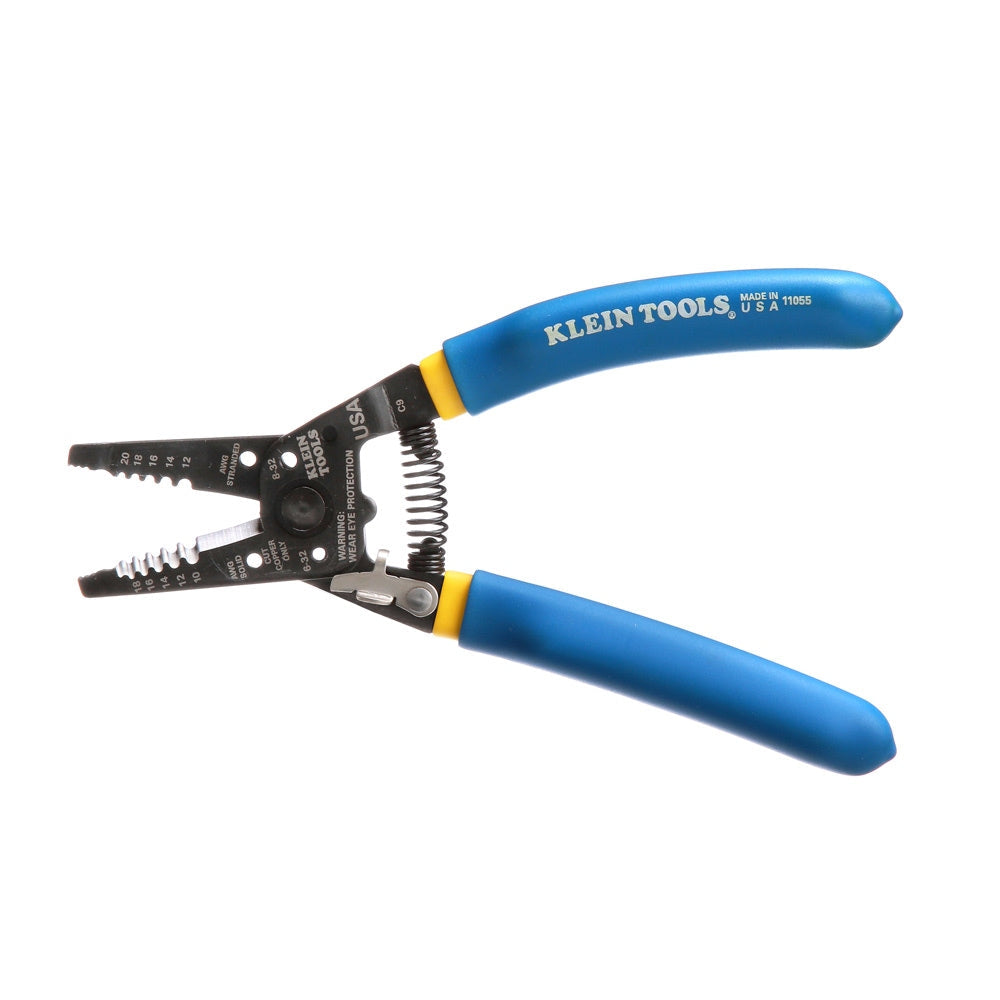
Klein 11055 is the wire stripper most residential electricians keep on their belt. It covers 10–18 AWG stranded and 12–20 AWG solid — which handles virtually every wire you'll pull in a house. If you're stripping hundreds of conductors a day or doing panel-heavy work, the Knipex 12 22 190 self-adjusting stripper earns its premium. And if you spend most of your day making terminations inside panel boxes, the Ideal T-Stripper is the one mainstream roundups always miss. Here's how to choose the best wire strippers for your work — not a list built for homeowners.
What Makes a Wire Stripper Right for Electrical Work
Not all wire strippers are built for the same job. A stripper that works fine for a homeowner fishing one circuit gets tiresome fast on a rough-in crew. Three things actually matter: AWG range, self-adjusting vs manual, and the type of conductor you're stripping.
AWG Range — What Residential Rough-In Actually Demands
In residential work, two conductor sizes dominate: 14 AWG (15-amp circuits, per NEC 310.15) and 12 AWG (20-amp circuits, same table). A stripper covering 10–20 AWG solid is enough for most of what you'll pull in a house — NM-B 14-2, 12-2, 10-2, and their THHN equivalents all fall in that window.
Service work changes the math. Subpanel feeders, service entrance conductors, and HVAC equipment wire often run 8 AWG and below. The Klein 11055 tops out at 10 AWG stranded — if service work shows up regularly on your schedule, you need the Klein 11057 or a separate plier-style stripper for the heavy stuff.
On the lighter end: 22–24 AWG thermostat wire, alarm wire, and low-voltage runs are outside what most electrician strippers handle cleanly. Most journeymen keep a separate lightweight pair for that. It's a different tool for a different task, and it's outside the scope of this post.
Self-Adjusting vs Manual — A Production-Volume Decision
Self-adjusting strippers set their own cutting depth automatically. You don't dial in the gauge. That matters when you're moving between different wire sizes in a panel or when nick risk is high on a job where nicked conductors mean callbacks.
But the choice isn't "self-adjusting is better." It's about volume and workflow. An experienced hand with a manual stripper is often faster per strip than a self-adjusting tool — there's no jaw-reset cycle between strips. The Knipex 12 22 190 specifically has a jaw-reset lag that some electricians find annoying during fast-paced rough-in work.
At 200+ strips per day, fatigue tips the math toward self-adjusting. At 20 strips per day, manual wins on speed and simplicity.
Conductor Type — Romex vs THHN
NM cable (Romex) has an outer plastic jacket that needs scoring and peeling before you strip the individual conductors inside. Most electrician strippers have a scoring notch or slot for this — the Klein 11055 does. The insulated conductors inside (typically 14 AWG or 12 AWG) then strip normally.
THHN and THWN individual conductors are bare wire inside a single insulation layer — clean circular strip is all you need. Self-adjusting tools shine here because they grip the conductor consistently without hand-setting depth on each gauge.
Both NM and THHN work fine with the Klein 11055 or the Knipex self-adjusting. The technique differs slightly, but neither conductor type requires a specialized tool for standard residential and light commercial work.
The Picks — Best Wire Strippers for Electricians
Best Overall — Klein 11055
The Klein 11055 has been the default electrician's wire stripper for over 40 years. Apprentices get handed these on day one; journeymen at year 20 often still reach for the same model.
Specs:
- Stranded AWG range: 10–18 AWG
- Solid AWG range: 12–20 AWG
- Country of origin: Made in USA
- Overall length: 7.4 in
- Approximate retail: budget-friendly; widely available at home improvement and electrical supply retailers
The AWG range is exactly right for residential work. Comfortable dual-material grips, wire-looping holes, a scoring notch for NM outer jackets. Inexpensive enough that keeping a backup in your bag doesn't sting.
Right for: Residential electricians, apprentices, anyone doing standard NM and THHN work day-to-day.
Skip it if: You're regularly stripping 8 AWG and heavier — move to the Klein 11057 for that range.
Best Self-Adjusting — Knipex 12 22 190
The Knipex 12 22 190 is the self-adjusting stripper worth the money. German-made, handles a wide AWG range without manual adjustment, and the jaw mechanism holds up to daily use in a way cheaper self-adjusting tools don't.
Specs:
- AWG range: covers a broad range of wire gauges suited to residential and light-commercial panel work — confirm exact figures at knipex.com
- Overall length: standard full-size length for comfortable one-handed use — see knipex.com for the exact measurement
- Country of origin: Made in Germany
- Approximate retail: premium-priced relative to manual strippers; sold through authorized Knipex distributors and major online retailers
The self-adjusting mechanism grips the wire and finds its own cutting depth. In a panel where you're working through a mix of 12, 14, and 10 AWG conductors without stopping to reset a dial, that saves real time and cuts nick risk.
Build quality is a clear step above the Irwin self-adjusting strippers at a lower price point. Electricians who strip wire all day consistently report the Knipex holding up where Irwin jaws wear out.
Right for: Production environments, panel-heavy work, high-volume mixed-gauge stripping, trim electricians making lots of terminations.
Skip it if: You want the cheapest functional tool. The Klein 11055 at roughly a quarter of the price handles 95% of jobs fine.
Best for Panel Work — Ideal T-Stripper
The Ideal T-Stripper almost never shows up in mainstream roundups. That's partly because mainstream roundups aren't written by people who spend their days inside panel boxes.
Specs:
- AWG range: covers gauges common to residential panel termination and finish electrical work — confirm exact range at idealind.com
- Overall length: 6 inches
The T-Stripper is compact and short-handled by design. It's built to work inside tight panel enclosures and junction boxes where a standard 7–8 inch stripper is constantly fighting for clearance. The name comes from the T-shaped profile: stripping slots across a short crossbar, which lets you maneuver inside a dead front without banging knuckles on the enclosure.
Finish electricians and panel trim-out crews love it. It's the kind of pick you find out about from someone who's actually done panel work — not from a generalist roundup built around Amazon bestsellers.
Right for: Finish electricians, panel trimmers, anyone spending most of their day making terminations in confined spaces.
Skip it if: Rough-in is your primary work — you'll want the speed and handle length of a standard stripper.
Best Value Self-Adjusting — Irwin 2078300
The Irwin 2078300 is roughly half the price of the Knipex and handles occasional self-adjusting use without complaint.
Specs:
- AWG range: 10–24 AWG
- Jaw mechanism: self-adjusting; automatically sizes to the wire gauge being stripped without requiring manual adjustment
- Approximate retail: budget-friendly self-adjusting option; widely available at major home improvement and hardware retailers
The honest trade-off is jaw durability. Electricians who use self-adjusting strippers daily consistently report the Irwin jaw wearing out faster than the Knipex. For occasional use — an apprentice who wants self-adjusting without spending Knipex money, or a DIYer doing one or two electrical projects a year — the Irwin is adequate. For daily production use, the Knipex holds up better and costs less per year of actual service life.
Right for: Apprentices who want self-adjusting capability without the Knipex price; DIYers doing occasional electrical work.
Trade-off: Plan to replace it sooner. If you're stripping wire daily, just buy the Knipex once.
Best for Large-Gauge and Service Work — Klein 11057
When service entrance conductors, subpanel feeders, or commercial wiring run regularly on your schedule, the Klein 11055's range tops out too soon. The Klein 11057 covers the heavier gauge territory the 11055 can't reach.
Specs:
- Stranded AWG range: 22–32 AWG stranded
- Solid AWG range: 20–30 AWG
- Overall length: 7.5 in (19.1 cm)
- Country of origin: Made in USA
Same basic design as the 11055 — comfortable grip, wire-looping holes, USA-made — but built for heavier wire. Most residential electricians don't need it as a daily carry; it's worth having in the bag when the job calls for it.
Right for: Service work, subpanel feeders, commercial wiring, anyone regularly working with 8 AWG and heavier conductors.
Comparison Table
| Model | Type | AWG Range (stranded / solid) | Made In | Best For |
|---|---|---|---|---|
| Klein 11055 | Manual | 10–18 AWG / 12–20 AWG | USA | Residential rough-in; daily carry |
| Knipex 12 22 190 | Self-adjusting | broad range — see manufacturer specs | Germany | Panel work; mixed gauges; production |
| Ideal T-Stripper | Manual | see manufacturer specs | — | Panel boxes; tight spaces; finish work |
| Irwin 2078300 | Self-adjusting | 10–24 AWG | — | Budget self-adjusting; occasional use |
| Klein 11057 | Manual | 22–32 AWG / 20–30 AWG | USA | Service entrance; feeders; 8 AWG and heavier |
*AWG ranges for Knipex, Ideal, and Irwin are pending Stage 5 verification. Klein 11055 ranges are confirmed at manufacturer spec page.*
Klein vs Knipex Wire Strippers: Which Should You Buy?
This is the argument that happens in the truck on the way to the job site.
Klein 11055 runs around $19.60, is manual, made in the USA, covers 90% of residential work, and is cheap enough to keep a spare. It's the industry default for a reason — correct range, comfortable grip, no learning curve, no downtime waiting on jaw resets.
Knipex 12 22 190 runs about 3–4× the Klein price, is self-adjusting, made in Germany, and is built for high-volume or mixed-gauge work. The jaw mechanism is what justifies the premium — reduced nick risk, less fatigue over a full day of stripping, better performance in panels where gauge variety is constant.
When Klein wins: Single-trade residential rough-in work. Budget matters. You prefer manual speed and don't want to think about jaw-reset cycles between strips. You might lose it on a job site. All of these are legitimate reasons — the Klein 11055 is not a compromise.
When Knipex wins: You strip wire all day, every day. You work through mixed gauges in panels. You've tried cheaper self-adjusting strippers and been frustrated by jaw wear or nick risk. You'd rather buy one good tool than replace two cheaper ones.
The verdict: if you're doing residential rough-in, the Klein 11055 is the right daily carry — and if it's already on your belt, keep it there. If you've shifted to panel-heavy or production work and haven't tried the Knipex, try it. Most electricians who make the switch for that application don't go back.
For more on the Klein vs Knipex brand argument across other hand tools, see our pliers comparison and linesman pliers guide — same trade-off logic, different category.
What Gauge Range Do You Actually Need?
| Work type | Dominant conductor size | Recommended tool |
|---|---|---|
| Residential lighting and receptacle circuits | 14 AWG copper (15A, NEC 310.15) | Klein 11055 |
| Residential kitchen, bath, and appliance circuits | 12 AWG copper (20A, NEC 310.15) | Klein 11055 |
| Range, dryer, EV charger feeders | 10 AWG | Klein 11055 (upper end of its range) |
| Service entrance, subpanel feeders | 8 AWG and below | Klein 11057 or plier-style stripper |
| Panel terminations with mixed gauges | 10–14 AWG variety in close succession | Knipex 12 22 190 or Ideal T-Stripper |
| Low-voltage: thermostat, alarm, data cable | 22–24 AWG | Separate lightweight pair — outside this post |
The 12 AWG and 14 AWG rows cover the bulk of what most residential electricians do. Any stripper covering 10–20 AWG solid handles that work. Above 10 AWG, you're into service territory and need a second tool. Below 20 AWG, you're into low-voltage territory that a standard electrician stripper often handles awkwardly — most journeymen keep a dedicated pair for thermostat and alarm wire.
Frequently Asked Questions
What wire strippers do most electricians use? Klein 11055 is the most common on residential job sites. Covers the right AWG range, made in the USA, inexpensive enough that losing one doesn't ruin your day. Knipex 12 22 190 is the second pick among electricians who strip wire all day or spend significant time in panels.
Klein or Knipex wire strippers — which is better? Klein for the price and manual speed on standard residential work. Knipex for self-adjusting reliability and mixed-gauge stripping in panel-heavy or production environments. Most residential electricians are well-served by Klein. Panel and production electricians who've tried Knipex tend to keep it for that application.
What is a self-adjusting wire stripper and is it worth it? A self-adjusting stripper grips the wire and sets its own cutting depth automatically — no gauge dial to set. Worth it if you strip many different gauges per day or want to reduce nick risk on unfamiliar wire. The Knipex 12 22 190 is the self-adjusting version worth buying; the Irwin 2078300 is adequate for occasional use at a lower price point.
What gauge wire strippers do I need for house wiring? A stripper covering 10–20 AWG solid and 10–18 AWG stranded handles virtually all residential NM and THHN work. The Klein 11055 hits this range. That covers NM-B 14-2 and 12-2 (the two most common residential cables) plus THHN in the same gauges.
What is the Ideal T-Stripper used for? The Ideal T-Stripper is compact and short-handled — built specifically for tight spaces like panel boxes and junction boxes where a standard-length stripper won't maneuver. It's the standard pick for finish electricians and panel trim-out crews spending most of their time making terminations in confined enclosures.
Do electricians need separate wire strippers for different gauges? Most residential electricians carry one pair covering 10–20 AWG for daily work. Service work above 10 AWG calls for a separate tool (Klein 11057 or a plier-style stripper for really heavy gauge). Low-voltage work in the 22–24 AWG range usually gets its own lightweight pair. Three tools covers the full spread.
Are expensive wire strippers worth it for electricians? The Klein 11055 handles the job for most electricians at a price that makes sense to replace when needed. The Knipex — at roughly 3–4× the Klein price — earns that premium for daily high-volume or mixed-gauge stripping. Beyond the Knipex price point, you're into diminishing returns for hand-held strippers.
What's the difference between Klein 11055 and 11057? The 11057 handles a heavier gauge range — it goes lower (larger wire) than the 11055. For standard residential rough-in (mostly 12 AWG and 14 AWG), the 11055 is enough. For service work, subpanel feeders, or commercial wiring that regularly runs 8 AWG and heavier conductors, the 11057's extended range matters.
Wire strippers are one piece of an electrician's hand-tool kit. For pliers — where the Klein vs Knipex debate comes up again with the same trade-off logic — see Knipex vs Klein pliers for the direct brand comparison and the linesman pliers showdown for linesman pliers specifically. Insulated screwdrivers are covered at Klein vs Wera insulated screwdrivers. And if you're stocking out a panel bag, this nut driver guide is the next stop.
*Editorial note — catalog gap: No hand-tools pillar post currently exists in the link map (e.g., "Best hand tools for electricians: the complete kit"). When that pillar is published, add a reciprocal upward link from this post. Reciprocal updates also needed in `knipex-vs-klein-pliers-electrician`, `klein-vs-knipex-linesman-pliers`, and `best-nut-driver-set` to link back to this wire-stripper post. Editorial, no money page.*