
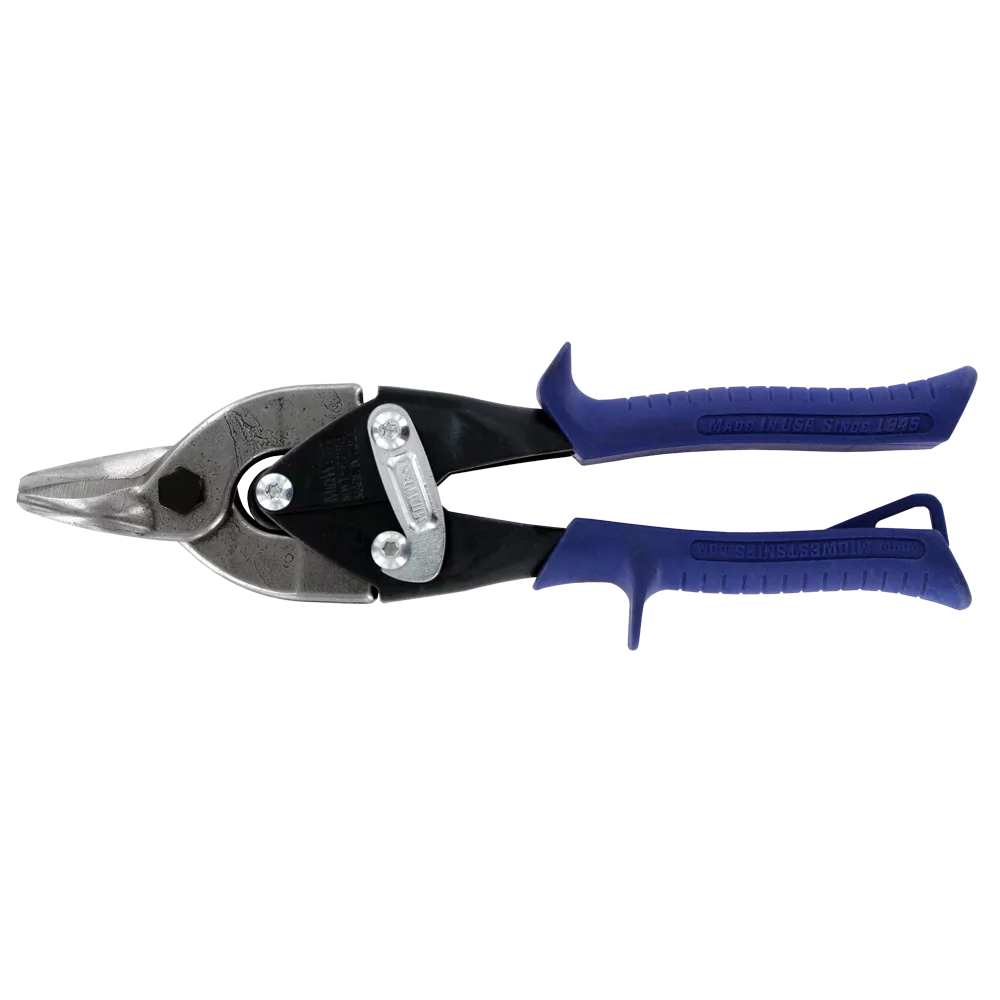
Best Aviation Snips: Which Cut Direction Do You Actually Need?
The best aviation snips for most buyers: Midwest Snips MWT-6716B is the best overall for compound-action cutting force and blade tolerance that holds up through a full sheet-metal season. Malco Max2000® is the best for HVAC ductwork. For stainless, Klein Tools' 1200 and 2400 series, each rated for 22-gauge stainless steel, are the only picks with blades actually rated for it.
Before you buy any of them, pick the right cut direction. That's the mistake most people make at the hardware store — and every other roundup buries it or skips it entirely.
Red, Green, or Yellow? The Cut-Direction Code Every Sheet-Metal Worker Should Know
The three handle colors on aviation snips aren't brand differentiation. They're an industry-wide convention that tells you which way the blade curves the scrap — and which way your cut wants to travel.
What Each Color Actually Means
Red = left-cut. The blade angles so the scrap curls counter-clockwise. You're cutting a curve that bends to the right — inside curves on duct collars, or working from the right side of a panel toward you.
Green = right-cut. The scrap curls clockwise. Use it for left-curving cuts, outside-curve duct transitions, or working from the left side of a panel.
Yellow = straight-cut. Runs in a straight line with some ability to ease either direction. This is the general-purpose pair that covers most DIY sheet-metal work.
This color code — red for left cut, green for right cut, yellow for straight/combo cuts — is a de facto industry-wide convention confirmed by all major manufacturers, so it holds across every pair on the shelf.
Which Cut Direction Do You Need? Quick Reference by Task
| Job | Cut needed | Handle color |
|---|---|---|
| Inside curve on duct collar | Left-cut | Red |
| Outside curve on duct collar | Right-cut | Green |
| Straight duct run | Straight | Yellow |
| Cutting from the right side of a panel | Left-cut | Red |
| Cutting from the left side of a panel | Right-cut | Green |
| Vinyl siding, roofing straight cuts | Straight | Yellow |
One way to remember it: the cut curves away from the scrap in the direction matching the color. Making a clockwise circle? That's a right-curving line — grab green (right-cut) so the waste peels away instead of jamming back into your blade.
Do You Need All Three?
For HVAC ductwork or auto body work in tight spaces — yes. You'll switch directions constantly as you work around a fitting or panel, and fighting the wrong snip is slower and harder on your hand than just grabbing the right one.
For straight cuts on siding, roofing flashing, or occasional sheet metal? A yellow pair handles it. That's where most DIYers can stop.
The 5 Best Aviation Snips Ranked
Best Overall — Midwest Snips MWT-6716B
Midwest Snips consistently earns the top mention on HVAC contractor forums for one reason: blade tolerance. When blades are ground tight, the cut is clean and the snips don't bind or skip on thin sheet metal the way cheaper pairs do at the pivot.
Their compound-action mechanism is smooth from day one and stays that way longer than budget alternatives. That's partly blade steel quality and partly the consistency of the pivot machining.
- Blade steel: Molybdenum alloy steel (Austemper® heat-treated)
- Gauge rating: Rated for the mild steel and aluminum gauges used in professional sheet-metal work — check the current manufacturer spec sheet for exact capacity on this model
- Overall / blade length: A compact, well-balanced profile suited for open-bench cuts and confined ductwork alike — see the manufacturer's current spec page for exact measurements
- Stainless rated? Not listed as stainless-rated; keep these on mild steel and aluminum
Buy the cut direction you use most. If you primarily do ductwork in one orientation, a single pair here beats a budget three-pack.
Best for HVAC Ductwork — Malco Max2000®

Malco designs for sheet-metal and HVAC trades specifically, and it shows in the handle geometry. The grip is shaped for repeated cuts across a full workday — which matters more than most reviewers acknowledge. Fatigued hands on snips mean ragged cuts and slower work.
Spring return quality is above average: consistent tension, not too stiff, durable over a season of regular use. Malco cites up to 30% reduction in cutting effort compared to single-pivot snips in their product copy — and pro consensus supports the claim.
- Blade steel: Hardened blade steel suited for trade-level sheet-metal work — check the current Malco spec sheet for the exact alloy and heat treatment
- Gauge rating: Rated for 20-gauge galvanized steel (0.040"); heavy-duty models handle 18 gauge
- Stainless rated? Not confirmed as stainless-rated on the manufacturer's spec page; not recommended for stainless steel use
If you're outfitting a trade toolkit, wire strippers belong in the same conversation as snips — see the best wire strippers for electricians for what HVAC and electrical techs actually carry.
Best Budget Pick — DeWalt DWHT14676 or Stanley FatMax Aviation Snips
Budget aviation snips follow a consistent pattern: the compound-action mechanism is present, the color coding is correct, but blade steel is a lower grade. A DIYer doing occasional duct work or vinyl siding gets solid service. A pro running them daily will feel the difference after a few months.
DeWalt's DWHT14676 and Stanley FatMax aviation snips both fall in this category — competent, widely stocked, and available at most big-box stores. At this price point, blade steel runs a lower grade than professional alternatives; check each model's spec sheet if long-term durability under regular use is a concern.
Who they're for: someone who needs a pair for a weekend job and doesn't want to spend $35–45 on professional-grade snips. For anything approaching regular use, spend the extra money on Midwest Snips or Malco. The blade steel difference becomes obvious around the six-month mark.
Left-hand use: Most aviation snips are ambidextrous by design — cut direction is built into the blade angle, not the handle shape. None of the five picks in this guide offer ergonomic left-hand handle variants; blade-left designs in the aviation snip category are built for right-handed users.
Best for Stainless Steel — Klein Tools 1200 and 2400 Series
This is the pick where blade steel grade stops being background detail and becomes the whole decision. Most aviation snips are rated for mild steel and aluminum. Use them on stainless and the blade edges will notch — sometimes on the second cut, sometimes the fifth, but not many more than that.
Stainless-rated snips need blades ground harder — typically induction-hardened or heat-treated to a higher Rockwell value — with an explicit stainless steel rating on the spec sheet. Klein Tools and Wiss both have models that qualify. Klein's 1200 and 2400 series use hardened blades with an explicit stainless steel rating; check the current spec page for detailed hardness data. Wiss also produces stainless-capable models in their professional line — verify current availability on the manufacturer's site before purchasing, as lineups do change.
Klein makes sense here because their brand standard in the electrical and trades market — see Klein vs. Knipex hand tools for how Klein competes at the professional hand-tool tier — is built on longevity under daily professional use. Stainless cutting demands that same standard.
- Stainless gauge rating: Rated for 22-gauge stainless steel across the 1200 and 2400 series — confirm the current spec sheet for any model-level variations before purchasing
If a snip's spec sheet doesn't list stainless compatibility, assume it isn't rated for it.
Best 3-Piece Set — Midwest Snips MWT-6716RLS or Malco's Three-Pack
Buying all three cut directions as a matched set has one real advantage: the blades are ground to the same tolerance and the handles are sized identically, so switching mid-job doesn't feel like picking up a different tool. Matched spring tension between pairs is also noticeably better than mixing brands.
Midwest Snips (MWT-6716RLS), Malco, and Milwaukee (Model 48-22-4533) all sell left/right/straight combo packs. For current SKUs and pricing, check each manufacturer's website or major retailers such as Home Depot.
When it makes sense: HVAC ductwork, auto body sheet metal, roofing in confined spaces. You'll switch directions enough that the set pays for itself in time saved over hunting through a mixed-brand drawer.
When it doesn't: Straight cuts on siding or flashing, or occasional DIY sheet metal. Buy a yellow pair.
What to Look for in Aviation Snips Before You Buy
Compound Action vs Single-Pivot
Standard tin snips work like heavy scissors — one pivot, your grip strength is the whole show. Aviation snips add compound action: a linked series of pivots that multiplies the force your squeeze generates at the blade. You get more cutting pressure per grip than your hand alone could produce.
In practice, this means you cut 18-gauge mild steel without fighting it, and your hands aren't exhausted after an hour of ductwork. The compound action also curls the scrap tightly as it cuts — the cutaway waste springs back less and is less likely to catch your forearm.
That compound-action pivot is what makes aviation snips aviation snips. The cut direction is secondary to this.
Blade Steel: High-Carbon vs Induction-Hardened
At the budget end: high-carbon steel. Holds an edge adequately for mild steel and aluminum; wears faster on harder materials.
At the professional tier: induction-hardened or heat-treated blades. These hold their edge significantly longer under daily use and are the minimum for stainless steel work.
The capacity rating on a snip ("18-gauge mild steel") tells you what the blade can cut — it doesn't tell you how long the blade stays sharp doing it. Two pairs both rated for 18-gauge mild steel can feel completely different after six months of regular work if their blade steel grades differ. Check the manufacturer's spec sheet or materials callout, not just the gauge number.
If you're thinking about edge-steel considerations for sheet material work beyond metal, our drywall utility knife guide covers that ground for drywall and construction applications.
Spring Return and Handle Grip
The spring that opens the blades after each cut earns its keep on long jobs. A weak spring means manually reopening the snips every few cuts — inefficient and tiring. A spring that's too stiff fights your grip. Get it wrong and you know by lunchtime.
Premium snips tune spring tension for trade use. Budget pairs sometimes get this right, sometimes don't. If you're buying a budget pair you haven't held, look for user reviews that specifically call out the spring — that detail usually surfaces in pro feedback even when product descriptions skip it.
Handle material matters too. Soft-grip or rubber-over-shell gives you control and cushion on repetitive cuts. Bare plastic handles on snips are often a signal that cost was cut at the assembly stage, not just the blade.
Aviation Snips FAQ
What is the difference between aviation snips and tin snips?
Aviation snips use a compound-action pivot — multiple linked levers that multiply your grip force — so you can cut thicker sheet metal with less effort and less hand fatigue over a long job. Standard tin snips are single-pivot, like heavy scissors: one lever, your grip is the whole mechanism. Aviation snips also curl the scrap as they cut, keeping the cutaway piece from springing back toward your hand.
What do the colors on aviation snips mean?
Red = left-cut: blade curves scrap counter-clockwise; use for clockwise inside curves and right-side panel cuts. Green = right-cut: scrap curves clockwise; use for counter-clockwise cuts and left-side panel work. Yellow = straight-cut: runs in a straight line or gentle curve either direction. This color coding is a de facto industry-wide standard confirmed by all major manufacturers — it doesn't vary by brand.
Can aviation snips cut stainless steel?
Some can, most can't. The typical aviation snip is rated for mild steel and aluminum. Use it on stainless and the blade will dull or notch fast — sometimes after just a few cuts. For stainless work, you need snips with blades explicitly rated for it — typically induction-hardened, with the stainless rating called out on the spec sheet. Of the picks in this guide, the Klein Tools 1200 and 2400 series carry a confirmed stainless steel rating. For the others, assume mild steel and aluminum use unless the manufacturer's current spec page explicitly states otherwise.
What gauge metal can aviation snips cut?
Gauge capacity varies by model and brand — check the manufacturer's spec sheet for the exact rating on your specific snips rather than assuming a generic figure applies. Professional-grade aviation snips generally handle a broader range of gauges than budget alternatives, and stainless-rated models carry a separate, lower stainless gauge capacity. When in doubt, consult the spec sheet.
Do I need left-cut, right-cut, AND straight snips?
For HVAC ductwork, auto body panel work, or roofing in confined spaces — yes. You'll change directions constantly working around fittings and panels, and the wrong snip makes the cut harder and messier than it needs to be. For straight cuts on siding or occasional flat sheet metal, a yellow (straight) pair covers most of it. One pair handles most DIY needs; all three handle most trade needs.
Are Midwest Snips better than Wiss?
Both are professional-grade with strong followings among HVAC techs. Midwest Snips get consistent praise on contractor forums for tight blade tolerances and smooth compound action. Wiss has been the old-school pro standard for decades, though the brand drew mixed reviews after the Apex Tool Group acquisition. Current consensus on HVAC-Talk and Contractor Talk favors Midwest Snips. Both are worth choosing over a budget pair.
Keep the snips working: put a drop of machine oil on the pivot joint every few months, or whenever the action starts to feel stiff. After cutting galvanized steel, wipe the blades clean — the zinc residue accelerates corrosion on blade edges if you leave it. Two minutes of maintenance extends a quality pair significantly.
Adjustable wrenches round out the hand-tool kit for most trade work — our adjustable wrench comparison covers that decision if it's next on your list.