
Universal Power Tool Battery: What's Actually Possible (and What Isn't)
There's no universal power tool battery that fits Milwaukee, DeWalt, Makita, and other major brands interchangeably. The connectors are proprietary by design, and that's not going to change. But if your real question is "how do I get one battery to power everything I need on the job" — your existing M18 or 20V MAX battery already does that with a $30–$40 adapter. Here's the full picture: why cross-brand swapping doesn't work, what third-party options actually cost you, and the accessory that turns the battery already on your belt into a genuine universal power source.
Why There's No True Universal Power Tool Battery
The Voltage Is Almost Identical — the Connectors Are Not
All the major 18V-class platforms run at nearly the same nominal voltage. That's where the compatibility ends.
| Brand | Nominal Voltage | Peak Voltage (Unloaded) | Connector Style |
|---|---|---|---|
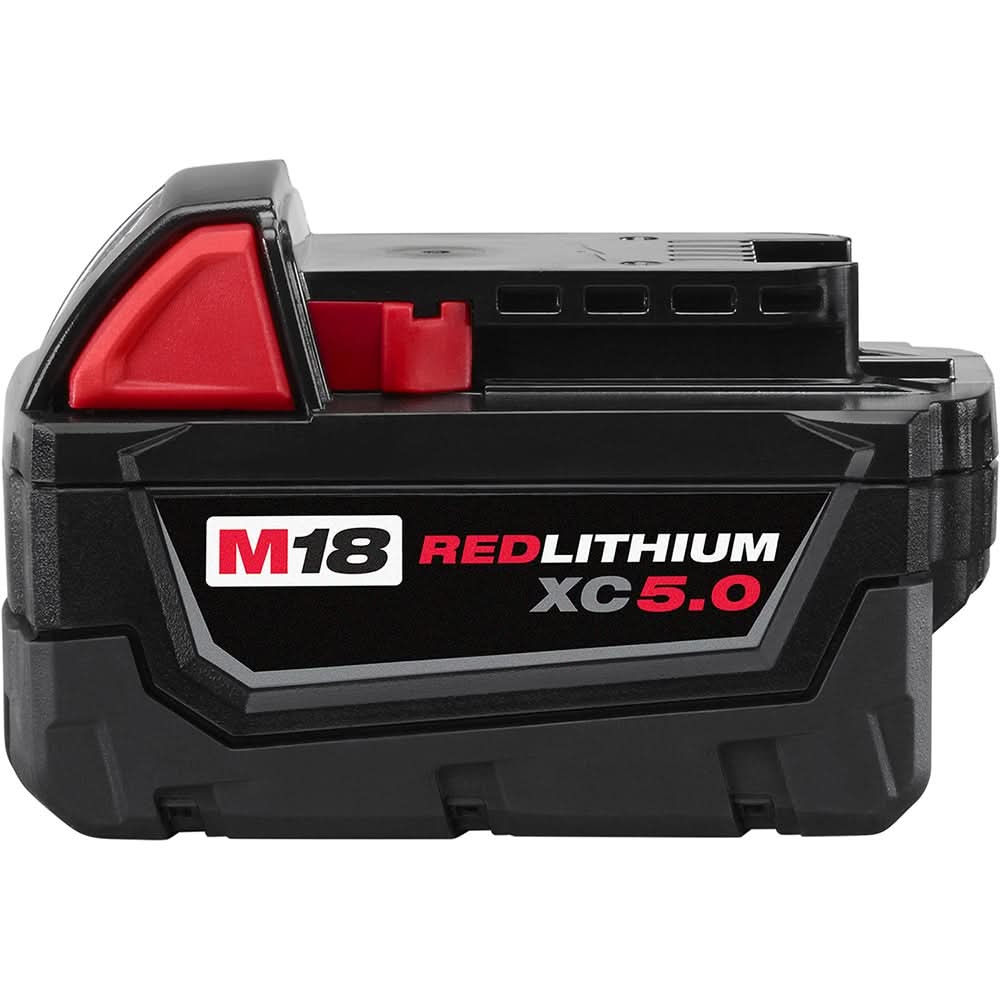
| Milwaukee M18 | 18V | ~20V | Proprietary slide-in (M18) |
| DeWalt 20V MAX | 18V nominal | 20V | Proprietary twist-lock |
| Makita LXT | 18V | ~20V | Proprietary slide-in (Makita) |
| Bosch 18V | 18V | ~20V | Proprietary slide-in (Bosch) |
Milwaukee rates their packs at 18V nominal. DeWalt calls theirs "20V MAX" — that's the unloaded peak, not the working voltage. Under load, both deliver approximately 18V. Neither has a real electrical advantage over the other.
None of those connectors are interchangeable. An M18 battery won't seat in a DeWalt tool. A Makita LXT pack won't fit a Bosch tool. The slot shapes, tab positions, and contact layouts are all different — by design.
Platform Lock-In Is Engineered, Not Accidental
It's not just the physical connector. Modern cordless tools communicate with the battery through data pins. The battery management system (BMS) reports state of charge, temperature, and cell health directly to the tool — that's how Milwaukee REDLITHIUM and DeWalt XR packs deliver accurate fuel gauges and cut off before over-discharge damages the cells.
Swap in a third-party battery that bypasses this communication layer and the tool loses that feedback. You're running blind on cell health. This dynamic plays out even within a single brand — whether M12 batteries fit M18 tools is a clean example of how even same-voltage, same-brand connectors don't cross.
Third-Party "Universal" Batteries — What They Actually Offer
What They Claim
Some aftermarket battery makers sell packs with interchangeable adapter tabs or a form factor designed to fit tools from multiple brands. The pitch is one battery for your Milwaukee drill and your DeWalt circular saw.
The Real Trade-Offs
The mechanical part often works. The trade-off is the BMS bypass.
When the tool can't read battery state of charge accurately, fuel gauge readings become unreliable — you won't know if you're at 80% or 20%. Worse, if the BMS can't enforce a safe discharge floor, you risk over-discharging the cells. Lithium-ion cells pushed below their floor don't just perform worse; degraded cells can become a safety hazard.
On warranty: Milwaukee's warranty language excludes damage resulting from "misuse" or "alterations" — it does not explicitly name non-Milwaukee batteries by category, but a non-OEM pack could fall under either term at Milwaukee's discretion. DeWalt's warranty similarly contains exclusions covering damage caused by use of non-approved accessories. Check your paperwork before you void coverage on an expensive tool.
When They Make Sense
A third-party universal battery as a backup pack for an occasional-use tool? The risk is low and manageable. Running one as your primary battery on a tool you depend on daily? Not worth it. Your runtime, your fuel gauge accuracy, and potentially your pack life will all take a hit.
The Safety Floor
If you go third-party, the non-negotiable: look for a visible UL or ETL certification mark on the battery itself — not the box, the battery. No certification mark means the overcurrent and thermal protection hasn't been independently tested against the discharge rates power tools actually demand. Unbranded, uncertified packs are a documented fire risk. This is the minimum bar, and it's non-negotiable.
The Actual Universal Solution — Turn Your Battery Into a Power Source
Your M18 or 20V MAX pack already delivers the voltage to power practically everything on a job site that isn't a high-draw power tool — phones, tablets, laptops, LED work lights, small appliances. With the right adapter, no BMS bypass required. Native connector, zero cross-brand hackery.
USB-C Charger Adapters for M18 and 20V MAX
The M18 USB-C charger and Dewalt 20V MAX USB-C charger plug directly into your platform's battery and deliver up to 65W USB-C output. That's fast-charge territory for most smartphones and tablets, and enough for many USB-C laptops to charge at a useful rate.
One of these in your work bag replaces the wall outlet for personal devices all day. For a broader look at what else you can pull directly off a tool battery, powering devices from a tool battery goes deeper.
150W Inverters — a 120V Outlet from the Battery on Your Belt

The Milwaukee M18 inverter and Dewalt 20V MAX inverter give you a full 120V AC outlet plus two USB ports from any compatible M18 or 20V MAX battery. At 150W, you can run LED work lights, charge a laptop, power a jobsite radio, or run a light-duty corded tool when you're two floors from the nearest outlet.
What 150W won't run: anything with a compressor, a full-size circular saw, a microwave. For the full breakdown of what's realistic at that wattage, see is 150W enough for a power tool inverter — no need to repeat it here. For runtime estimates by Ah rating, how long a tool battery will run an inverter has the numbers.
USB Adapter vs. Inverter — Which One Do You Need?
| USB-C Adapter | 150W Inverter | |
|---|---|---|
| Output | Up to 65W USB-C + USB-A | 120V AC + 2× USB |
| Best for | Phones, tablets, USB devices | Laptops, LED work lights, small corded tools |
| Milwaukee | M18 USB-C charger | M18 inverter |
| DeWalt | 20V MAX USB-C charger | 20V MAX inverter |
If all you need is device charging, the USB-C adapter is the right call — simpler, cheaper, pocketable. If you want a real 120V outlet, the inverter is worth the extra spend. Milwaukee users weighing these two specifically: how to choose between an M18 charger and inverter walks through the decision in detail.
Choosing a Platform — M18 or 20V MAX — If You're Not Locked In Yet
Both ecosystems are mature, widely supported, and work with every accessory listed above. The "universal power source" path is available on either platform — that's not a tiebreaker. The full comparison (tool selection, battery cost per Ah, ecosystem depth) lives in its own post; don't buy in without reading it. Short version:
| Milwaukee M18 | DeWalt 20V MAX | |
|---|---|---|
| Starting voltage | 18V nominal | 18V nominal (20V peak) |
| Platform range | Scales down to M12 (12V) | Scales up with FLEXVOLT |
| Tool Army accessories | Milwaukee tools | Dewalt tools |
Once you're committed, the adapters and inverters above work the same on either belt.
FAQ
Is there a battery that works with all power tools?
No. Every major brand — Milwaukee, DeWalt, Makita, Ryobi, Bosch — uses a proprietary connector and battery management system. A Milwaukee M18 battery won't physically seat in a DeWalt tool, and vice versa. Third-party adapter solutions exist but bypass the BMS, which costs you fuel-gauge accuracy and introduces over-discharge risk. If you're specifically on DeWalt and wondering about cross-brand options, DeWalt and Black+Decker battery compatibility covers a common misconception worth clearing up.
Are Milwaukee M18 and DeWalt 20V MAX batteries the same voltage?
In practice, yes. Milwaukee rates their packs at 18V nominal. DeWalt's "20V MAX" rating is the unloaded peak — not the working voltage. Under load, both platforms deliver approximately 18V. The voltage is nearly identical. The connectors are not, so swapping remains physically impossible.
Do battery adapters for power tools actually work?
Mechanically, most do. The real cost is the BMS bypass: you lose accurate fuel-gauge data, the tool can't read state of charge precisely, and you risk running cells below their safe discharge floor without automatic cutoff. For a backup battery on a tool you use occasionally, the risk is manageable. For daily professional use on your primary tool, it isn't worth the trade-off.
Can I charge my phone or laptop with a Milwaukee M18 or DeWalt 20V battery?
Yes — with a platform-specific USB-C adapter or inverter. The USB-C charger adapters Tool Army stocks for both M18 and 20V MAX deliver up to 65W, which fast-charges most phones and tablets and handles many USB-C laptops. The 150W inverter adds a full 120V AC outlet. Neither requires a cross-brand adapter or BMS bypass — they plug straight into your existing battery.
What is the difference between 18V and 20V MAX?
Marketing voltage vs. nominal voltage. DeWalt labels their batteries "20V MAX" at the unloaded peak. The industry-standard nominal rating for the same chemistry is 18V — which is how Milwaukee and most other brands label their equivalent packs. Under working load, both systems run at approximately 18V. It's not a compatibility bridge and neither platform has a real voltage advantage over the other.
Are third-party power tool batteries safe?
Reputable third-party packs with a visible UL or ETL certification mark directly on the battery are generally safe for their rated use. Unbranded units with no certification mark are a documented fire and tool-damage risk — the protection circuitry is routinely underspecified for the discharge rates power tools demand. The certification mark on the battery itself is the minimum bar. Non-negotiable.
Already on M18 or 20V MAX? The accessory that makes your battery genuinely universal is in stock now. Milwaukee users: M18 inverter for a full 120V outlet, or M18 USB-C charger if device charging is all you need. DeWalt users: 150W 20V MAX inverter and 20V MAX USB-C charger. Browse everything for your platform: Milwaukee tools | Dewalt tools.