
How Long Will a Power Tool Battery Run an Inverter? (The Real Math)
A power tool battery will run a 150W inverter for roughly 20 minutes to 3+ hours — depending on battery size and what you're plugging in. The formula: Runtime (hrs) = (Battery Wh × 0.85) ÷ Load Watts. Quick example: an M18 5.0Ah battery is 18V × 5.0Ah = 90Wh. Running a 60W laptop charger: (90 × 0.85) ÷ 60 = 1.28 hours. The hard ceiling on both our M18 and DeWalt 20V MAX inverters is 150W continuous — if your device pulls more than that, it won't run. Scroll down for the full table by battery size and load.
The Formula — How Runtime Is Calculated
Step 1 — Find Your Battery's Watt-Hours (Wh)
Wh = Voltage × Amp-hours (Ah). Some batteries print the Wh right on the label; if yours doesn't, just multiply.
- M18 platform runs at 18V DC nominal
- DeWalt 20V MAX runs at 18 volts nominal (rated voltage as labeled; actual under-load voltage is slightly lower, but use 20V for the Wh calculation)
So a Milwaukee M18 5.0Ah battery = 18 × 5.0 = 90Wh. A DeWalt 20V MAX 5.0Ah = 20 × 5.0 = 100Wh. Simple.
Step 2 — Know Your Load in Watts
Check the device label, the power brick, or the product spec page. The watt rating is usually printed directly on the AC adapter.
| Device | Typical Draw |
|---|---|
| Phone charger (USB-C fast charge) | 20–25W |
| Tablet charger | 18–30W |
| Laptop charger | 45–90W |
| LED work light (single) | 10–30W |
| Small fan | 15–50W |
| Mini fridge | 40–60W |
| Microwave | 600–1,200W |
| Circular saw | 900–1,500W |
Those last two aren't happening on a 150W inverter.
Step 3 — Account for Inverter Efficiency (~85%)
Converting DC battery power to 120V AC loses about 15% as heat. That's physics — every DC→AC inverter does it. The efficiency spec for our 150W inverters isn't published in the listing, so we're using the industry-standard figure of 85% for compact modified sine-wave inverters.
The Full Formula
``` Runtime (hrs) = (Wh × 0.85) ÷ Watts ```
That's it. Punch it into your phone calculator on site.
Runtime by Battery Size — M18 and 20V MAX Tables
Here's the math already done for the most common battery tiers at three realistic loads.
Milwaukee M18 Battery Runtime Through a 150W Inverter
All Wh values calculated from 18V × rated Ah. Formula: (Wh × 0.85) ÷ Load Watts.
| Battery | Ah | Wh | 30W load | 60W load | 150W load (max) |
|---|---|---|---|---|---|
| M18 REDLITHIUM 2.0Ah (48-11-1820) | 2.0 | 36Wh | 1.0 hr | 30 min | 12 min |
| M18 REDLITHIUM 5.0Ah (48-11-1850) | 5.0 | 90Wh | 2.6 hrs | 1.3 hrs | 30 min |
| M18 HIGH OUTPUT 9.0Ah (48-11-1890) | 9.0 | 162Wh | 4.6 hrs | 2.3 hrs | 55 min |
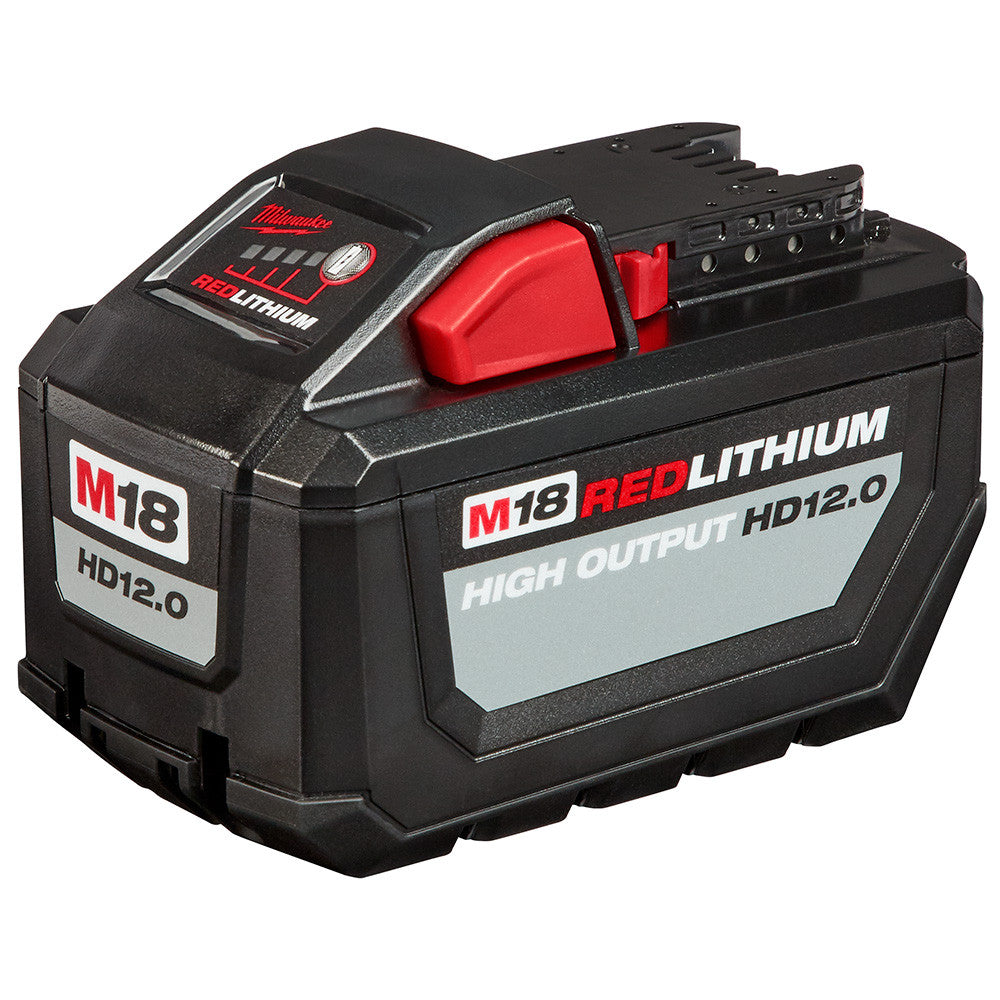
| M18 HIGH OUTPUT 12.0Ah (48-11-1812) | 12.0 | 216Wh | 6.1 hrs | 3.1 hrs | 1.2 hrs |
For more on M18 battery line differences (REDLITHIUM vs. HIGH OUTPUT vs. FORGE), see Milwaukee battery generations compared.
DeWalt 20V MAX Battery Runtime Through a 150W Inverter

All Wh values calculated from 20V × rated Ah. Formula: (Wh × 0.85) ÷ Load Watts.
| Battery | Ah | Wh | 30W load | 60W load | 150W load (max) |
|---|---|---|---|---|---|
| DeWalt 20V MAX 2.0Ah (DCB203) | 2.0 | 40Wh | 1.1 hrs | 34 min | 14 min |
| DeWalt 20V MAX 5.0Ah (DCB205) | 5.0 | 100Wh | 2.8 hrs | 1.4 hrs | 34 min |
| DeWalt 20V MAX 9.0Ah (DCB609) | 9.0 | 180Wh | 5.1 hrs | 2.6 hrs | 1.0 hr |
For a breakdown of DeWalt battery tiers, see DeWalt PowerStack vs. standard 20V MAX batteries.
> The 150W ceiling matters. If your device draws more than 150W, this inverter won't run it. Check your device's watt rating before you buy. A microwave, shop vac, or circular saw will not work here.
What Can You Actually Run?
Tool-battery inverters are a targeted power solution — not a generator replacement. Think: keep a laptop charged on a job site without a cord, charge your phone in a truck without an outlet, run an LED work light in a crawl space, power a small fan in a hot space.
| Device | Typical Watts | 150W inverter handles it? | Runtime on M18 5.0Ah (90Wh) |
|---|---|---|---|
| Smartphone (fast charge) | 20–25W | ✓ Yes | ~3 hrs |
| Tablet | 18–30W | ✓ Yes | ~2.6 hrs |
| Laptop charger (65W) | 60–65W | ✓ Yes | ~1.2 hrs |
| LED work light | 10–30W | ✓ Yes | 2.6–7.6 hrs |
| Small fan | 15–50W | ✓ Yes | 1.5–5 hrs |
| Mini fridge (compact) | 40–60W | ✓ Yes | 1.3–1.9 hrs |
| Full-size microwave | 800–1,200W | ✗ No | — |
| Circular saw | 900–1,500W | ✗ No | — |
| Shop vac | 600–1,200W | ✗ No | — |
A 5.0Ah M18 battery running a 60W laptop charger gives you about an hour of charge time. That's legitimately useful on a job where you don't have a cord. A 2.0Ah battery gives you maybe 20–25 minutes — fine for topping up a phone, not a work session. If you're relying on it all day, carry a 9.0Ah or 12.0Ah and a spare.
Laptop chargers vary. A Dell 65W adapter draws around 65W at full load; a MacBook charger typically pulls 30–67W depending on the model. Check your specific brick — there's a watt rating printed on it.
Which Inverter Fits Your Platform?
On Milwaukee M18: The M18 power inverter connects directly to any M18 battery and delivers a 120V AC outlet, USB ports, and an LED light for continuous power up to 150W.
On DeWalt 20V MAX: The 150W Power Inverter Compatible with Dewalt MAX XR Battery offers the same core capability — a 120V AC outlet, USB ports, and an LED light — sized specifically for 20V MAX batteries at 150W continuous.
These are not cross-compatible. The M18 inverter won't accept a DeWalt battery and vice versa — different connector, different voltage spec. M12 runs at a lower voltage with a different connector, and our inverters are not designed to support M12 batteries. If you're on M12 and wondering about the voltage difference, Milwaukee M12 vs. M18: key differences explained covers that fully.
USB-only path: If all you're charging is a phone or tablet, skip the inverter altogether. Routing DC battery power through AC and back to DC wastes that 15% efficiency for no reason. The Milwaukee M18 USB-C power supply charges USB devices directly from an M18 battery — no inverter, no conversion loss. DeWalt users have the same option with the USB-C Fast Charger with LED Screen Compatible with Dewalt Max XR Battery.
Tips to Get Maximum Runtime
- Don't run near the 150W limit continuously. Heat degrades both the battery and the inverter. If you're pushing 130W, you'll notice things warming up fast — that heat is lost energy.
- Start with a fully charged battery. A battery at 70% charge has 70% of its rated Wh available. The tables above assume 100%.
- Use a 5.0Ah or larger battery for anything over 30W. A 2.0Ah is fine for a quick phone top-up. For a laptop or sustained draw, 5.0Ah is the minimum worth using.
- Temperature matters. Cold batteries (below freezing) and hot batteries (stored in a hot truck) both deliver less usable capacity than their rated Wh. Don't expect full table numbers in extreme conditions.
- Power down devices not actively in use. A sleeping laptop still draws 10–20W through the charger. Disconnect it if you're not using it.
- Keep a charged spare on the charger. Swapping a fresh battery is faster than waiting for a recharge. For faster turnaround between jobs, see Milwaukee Super Charger vs. Rapid Charger: speed and features compared.
FAQ
Q: How do I calculate how long a battery will power an inverter?
Multiply battery voltage × Ah to get watt-hours (Wh). Then apply: (Wh × 0.85) ÷ device watts = hours. Example: 18V × 5.0Ah = 90Wh. (90 × 0.85) ÷ 60W = 1.28 hours on a 60W laptop charger.
Q: Can I run a 150W inverter on a Milwaukee M18 battery?
Yes — our 150W M18 inverter is designed specifically for M18 batteries. A 5.0Ah M18 battery (90Wh) runs a 60W load for about 1.3 hours, or a 30W load for about 2.6 hours. At full 150W draw, expect roughly 30 minutes.
Q: Can a power tool battery run a laptop through an inverter?
Yes, with the right battery. A laptop charger typically draws 45–90W. An M18 5.0Ah battery will power a 60W laptop charger for roughly 1.3 hours. A 2.0Ah battery gives you 20–25 minutes — useful for a quick top-up, not a work session.
Q: How many watts can a Milwaukee M18 battery produce?
The battery doesn't produce watts — the inverter sets the ceiling. Our M18 inverter is rated 150W continuous. The battery supplies that power; a larger Ah battery just runs longer at the same wattage.
Q: What size battery do I need to run a 150W inverter?
For sustained use near 150W, use a 5.0Ah or larger battery. At full 150W draw, a 5.0Ah M18 (90Wh) lasts about 30 minutes. A 9.0Ah (162Wh) extends that to roughly 55 minutes. For longer runtime, go 12.0Ah.
Q: Will a DeWalt 20V battery run an inverter?
Yes — our 150W DeWalt MAX XR inverter is designed for 20V MAX batteries. Same math applies: a DeWalt 5.0Ah 20V MAX battery = 100Wh; at 60W load, that's about 1.4 hours.
Q: Does an inverter drain a tool battery faster than a tool does?
It depends on the load. A 60W laptop charger draws far less than a circular saw at full speed. The inverter adds ~15% overhead for DC→AC conversion, but a light electrical load will drain a battery more slowly than hard tool use.
Q: Can I run an inverter on an M12 battery?
Our inverters are designed for M18 (18V) and DeWalt 20V MAX — not M12. M12 runs at a lower voltage and uses a different connector. Don't force the fit.
If you're on M18, the M18 power inverter paired with a 5.0Ah or larger battery handles real work — laptop charging, LED lights, small devices on a job site without an outlet. DeWalt 20V MAX users have the same capability with the 150W Power Inverter Compatible with Dewalt MAX XR Battery. Browse the full platform accessories at Milwaukee tools or DeWalt tools.