
DeWalt POWERSHIFT vs Gas Equipment: Is Cordless Concrete Power Finally Ready?
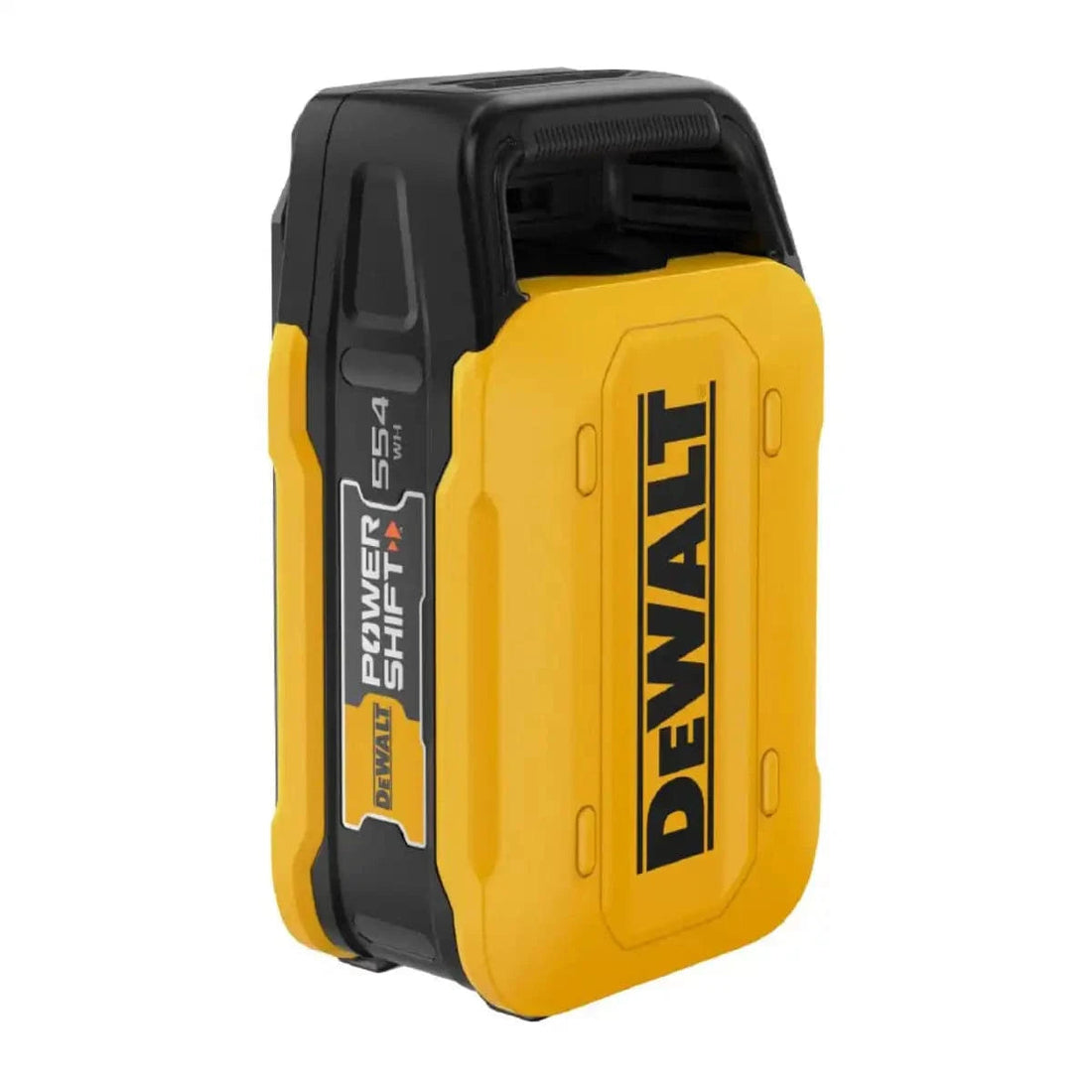
POWERSHIFT is DeWalt's dedicated cordless system for concrete and construction equipment — think rebar tiers, internal vibrators, cut-off saws, and plate compactors — built around a single high-capacity 554Wh battery and a matched fast charger. For indoor work, silica and emissions rules, noise, and maintenance, it already beats gas today. For all-day continuous pours and the lowest upfront cost, gas still wins. One thing to get straight first: POWERSHIFT runs its own battery. It is not 20V MAX, so the DeWalt packs in your drill and impact won't power it.
That last point trips up a lot of buyers, so we'll start there and then give you the honest, two-sided verdict against gas.
What is DeWalt POWERSHIFT (and what's in the system)?
POWERSHIFT isn't a new battery for your handheld tools. It's a separate equipment platform aimed squarely at concrete contractors and the trades that have been stuck running gas-powered gear.
The system is built around one large 554Wh battery and a dedicated fast charger that DeWalt says brings a pack to full in under 52 minutes. The same battery powers the whole equipment lineup, which covers categories like:
- Rebar tiers
- Internal concrete vibrators
- Cut-off saws
- Plate compactors
- A backpack-style portable power source
The pitch is simple: get the fumes, the noise, and the pull-cord maintenance off the jobsite without giving up the grunt that concrete work demands.
POWERSHIFT vs gas: where cordless already wins
For a lot of jobs, the cordless side of this isn't close anymore. Here's where POWERSHIFT genuinely beats gas:
- No exhaust. This is the big one. Running a gas saw or vibrator indoors or in a partly enclosed space means carbon monoxide and a hard stop from your safety officer. Battery gear runs clean, so it's legal and safe where gas simply isn't.
- Silica and emissions rules. Tighter OSHA silica enforcement and emissions limits make a zero-exhaust tool a real compliance win, not just a comfort one.
- Instant start. No choke, no flooding, no yanking a cord ten times on a cold morning. Pull the trigger and it runs.
- Far less maintenance. No fuel mixing, no oil changes, no spark plugs, no carburetors gumming up after it sits over a long weekend.
- Lower noise and vibration. Easier on the crew's ears and hands across a full shift, and friendlier on noise-restricted sites.
Where gas still beats POWERSHIFT (the honest part)
We're not going to pretend battery wins everywhere. It doesn't. Gas still has real advantages on the biggest jobs:
- All-day uninterrupted runtime. On a large continuous pour, gas keeps going as long as you keep fuel in it. Battery gear means planning swaps and keeping charged packs ready.
- Refuel in seconds. Topping off a gas tank is faster than swapping and recharging a depleted battery. On nonstop high-output work, that adds up.
- Lower upfront cost. A gas plate compactor or cut-off saw usually costs less to buy than a cordless system plus batteries and a charger. The cordless math works over time through fuel and maintenance savings, but the day-one price is higher.
- Established service network. Small-engine repair shops are everywhere. A newer cordless platform has a thinner service and parts footprint for now.
| Factor | POWERSHIFT (cordless) | Gas equipment |
|---|---|---|
| Indoor / enclosed use | Safe — no exhaust | Restricted or banned |
| Silica / emissions compliance | Strong advantage | A constant headache |
| Startup | Instant, every time | Pull-cord, can be finicky |
| Maintenance | Minimal | Fuel, oil, plugs, carbs |
| Continuous all-day runtime | Needs battery swaps | Keeps going on fuel |
| Refuel / reload speed | Swap + recharge | Seconds |
| Upfront cost | Higher | Lower |
The short version: the closer your work is to indoors, dust rules, and noise limits, the more POWERSHIFT makes sense. The bigger and more nonstop the open-air pour, the more gas still earns its keep.
POWERSHIFT vs Milwaukee MX FUEL: how do the two cordless systems compare?

DeWalt isn't alone here. Milwaukee's 72V MX FUEL line is the other serious "replace your gas equipment" cordless platform, and it's worth a cross-shop.
Both share the same core idea: a dedicated high-power battery system that is separate from the handheld lines. POWERSHIFT is not 20V MAX, and MX FUEL is not M18 — neither one shares packs with the drills and impacts most of us already own.
Where they differ is scope. POWERSHIFT is built tightly around concrete and construction equipment. MX FUEL spans cut-off saws, breakers, and even a CARRY-ON 3600W/1800W power supply that acts as a portable jobsite outlet. If you've already got Milwaukee batteries everywhere, MX FUEL keeps you in one ecosystem; if you're a DeWalt house focused on concrete gear, POWERSHIFT fits the existing kit and service relationships better.
We broke down the Milwaukee side in detail in our Milwaukee MX FUEL vs gas equipment guide. The honest answer to "which is better" is — pick the one whose equipment categories match the work you actually do.
Does POWERSHIFT use my DeWalt 20V MAX or FLEXVOLT batteries?
No. This is the single most important compatibility fact, so we'll be blunt about it.
POWERSHIFT is its own battery and charger ecosystem. Your 18V nominal (20V max) packs do not fit POWERSHIFT equipment, FLEXVOLT packs don't either, and your existing DeWalt charger won't charge a POWERSHIFT battery. It's a separate platform that happens to wear the same yellow.
What that means in practice: buying into POWERSHIFT is buying into a new battery line, not extending the one you already own. That's fine if you need the equipment — just budget for it like the standalone system it is.
What does still share your 20V MAX packs is everything on the handheld side: your drills, impacts, saws, and the accessories built for that platform. If your day-to-day is 20V MAX, that's where your battery investment keeps paying off.
What 20V MAX accessories actually fit (and convert)
Most people reading this own a couple of 20V MAX tools and aren't about to buy a concrete-equipment system. If that's you, the useful move is squeezing more out of the batteries you already have.
A couple of accessories do exactly that, and they run off your existing 20V MAX packs:
- A USB-C fast charger for your DeWalt 20V battery turns a battery into a USB-C/USB-A fast charger for phones and devices on the jobsite — charges USB devices up to 65W and works with all DeWalt 20V batteries.
- A 150W power inverter for the MAX XR pack gives you a 150W 120V outlet plus two USB ports straight off the pack — handy for small AC loads when there's no outlet nearby.
Neither one touches POWERSHIFT, but both are the right call for the platform most of us actually run. For the full DeWalt accessory lineup that fits your 20V MAX batteries, browse the DeWalt accessories collection.
For more on what your existing packs will and won't do, see our breakdown of 20V MAX vs FLEXVOLT and ATOMIC vs XR.
FAQ
Is DeWalt POWERSHIFT the same as 20V MAX? No. POWERSHIFT is a separate cordless *equipment* system built on its own battery and fast charger. It does not use your 20V MAX or FLEXVOLT packs.
Can DeWalt POWERSHIFT really replace gas equipment? For indoor work, silica- and emissions-restricted sites, noise-sensitive jobs, and lower maintenance — yes, today. For all-day continuous high-output pours and the lowest upfront cost, gas still has the edge.
What batteries does POWERSHIFT use? A dedicated 554Wh POWERSHIFT battery with a matched fast charger that DeWalt says reaches full in under 52 minutes — not 20V MAX packs.
POWERSHIFT vs Milwaukee MX FUEL — which is better? Both are dedicated high-power cordless equipment platforms separate from the handheld lines. POWERSHIFT targets concrete and construction equipment; MX FUEL spans cut-off saws, breakers, and a CARRY-ON power supply. Pick by which equipment categories you actually run.
Will my existing DeWalt charger work with POWERSHIFT? No. POWERSHIFT uses its own fast charger sized for its battery.