
Milwaukee vs Klein Tools: Which Hand Tools Actually Win?
Klein wins the electrical core — lineman's pliers, screwdrivers, and wire strippers. Milwaukee wins on utility knives, tape measures, and has cleaner warranty language. In the Milwaukee vs Klein tools debate, there's no single winner — it splits by category. The two companies are completely unrelated; neither owns the other. Most experienced electricians run both in the same bag. Here's the breakdown.
Quick-Verdict Table
| Category | Winner | Short reason |
|---|---|---|
| Lineman's pliers | Klein | USA-made, proven jaw geometry, trade standard |
| Side cutters | Klein | The electrician's default, earned over decades |
| Needle-nose | Tie | Both solid; personal preference decides it |
| Screwdrivers & multi-bit | Klein | Cushion-grip depth, wider insulated catalog |
| Nut drivers | Klein | More sizes, hollow-shaft options for panel work |
| Wire strippers | Klein | Katapult and specialty options in a different tier |
| Utility knives | Milwaukee | Fastback flip-open is faster and tougher |
| Tape measures | Milwaukee | Better blade reach and hook durability |
| Warranty | Milwaukee | Broader "limited lifetime" scope in practice |
| Made in USA | Klein | More domestic production, owns that identity |
The Short Answer — Who Should Buy Which
Buy Klein if…
You're an electrician building your first hand-tool kit, or you care about USA manufacturing. Klein has been making electrician's hand tools since 1857, and the lineman's pliers reflect 160-plus years of iteration. They're the default spec on apprentice tool lists across commercial electrical — the jaw geometry, induction-hardened cutting knives, and cushion-grip handles are exactly what the trade expects. Klein also makes sense if your shop or hall runs a "Klein-only" culture. That's real in commercial electrical, and it matters when tools get borrowed.
Buy Milwaukee if…
You're a multi-trade pro — carpenter, plumber, general contractor — who wants hand tools that match the Milwaukee ecosystem you already work in. Milwaukee's Fastback knives and tape measures have genuinely leapfrogged Klein in design. The warranty language is cleaner. And if you're adding hand tools to a Milwaukee-heavy kit, the ergonomics stay consistent across the lineup in a way that matters over a long day.
Are Milwaukee and Klein the Same Company?
This question comes up because both brands sit at the same counter, and Milwaukee's red handles land next to Klein's yellow-and-black ones. They are completely separate companies — no ownership link in either direction.
Milwaukee Tool is owned by Techtronic Industries (TTI), a Hong Kong-based conglomerate that also owns Ryobi and AEG.
Klein Tools is an independent, family-owned company founded in Chicago. It has never been part of TTI or any large conglomerate, and HQ plus some manufacturing remains in the Chicago area.
No cross-ownership, no licensing arrangement, no shared manufacturing. They compete.
Pliers & Cutters — Klein's Home Territory
This is the category Klein built its name on, and the verdict is still Klein.
Lineman's pliers. Klein's Journeyman side-cutting lineman's pliers — the D2000-9NE at 9.35 in. overall — are the benchmark. The jaw geometry is tuned for pulling wire; the cutting knives are made from induction-hardened 440A stainless steel. Milwaukee's 9" Comfort Grip High Leverage Lineman's Pliers with Crimper (48-22-6100) are a serious alternative with a softer cushion-grip handle. But Milwaukee is newer to the category, and on jobs where everyone reaches for Klein, the red handles draw questions.
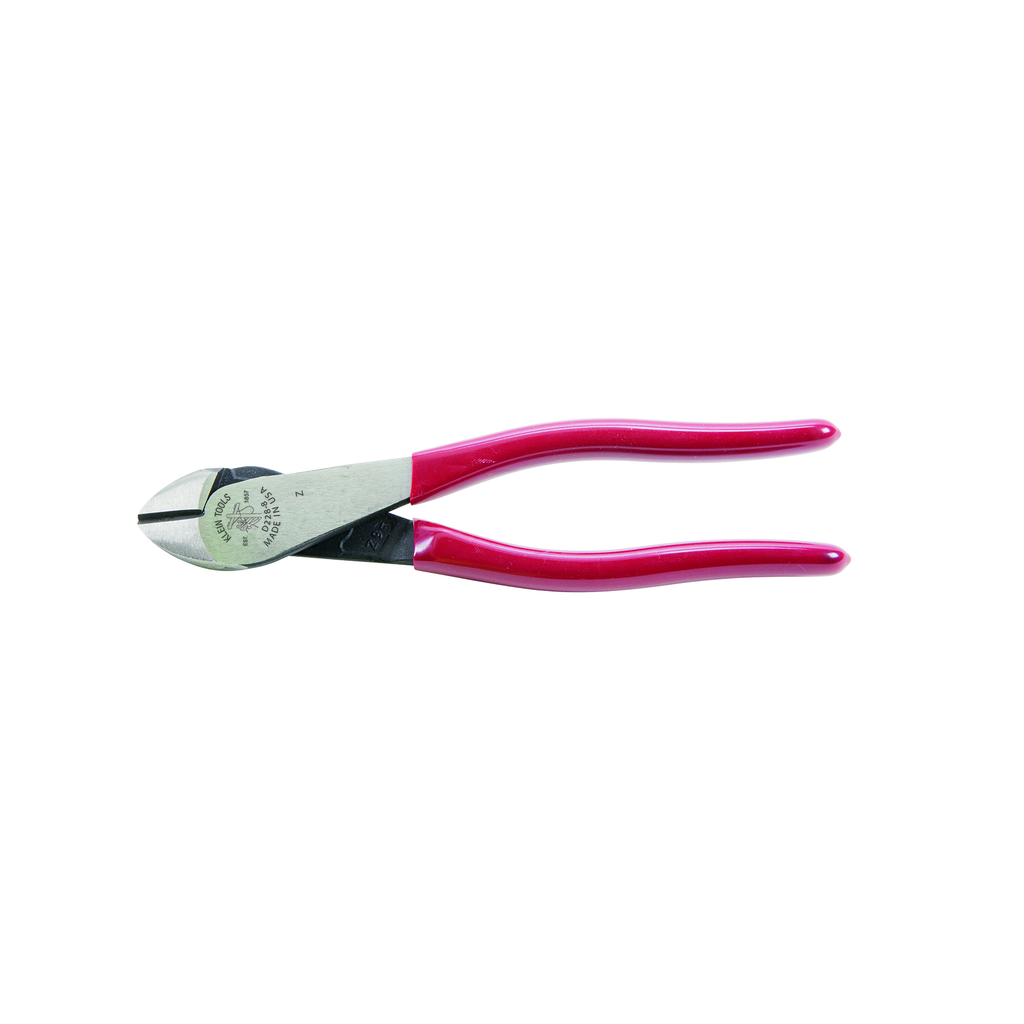
Side cutters and diagonal cutters. Klein again. The D228-8, D229-8, and the high-leverage line carry decades of field history. Milwaukee makes diagonal cutters, but it's not the brand trades look to first.
Needle-nose pliers. Genuine tie. Klein's long-nose pliers are well-built; Milwaukee's are too. Buy whichever matches the rest of your set. For a deep dive on the pliers landscape and where Knipex fits in, see Knipex vs Klein, electrician's perspective.
Grip trade-off. Klein's Journeyman cushion-grip is the established standard — textured, substantial, comfortable over a long pull. Milwaukee's handles use comparable material but different geometry, which some people prefer for smaller hands. Once you're past the pliers section, it comes down to feel.
Screwdrivers & Nut Drivers
Klein wins, but Milwaukee is closer here than it is on pliers.
Multi-bit / 11-in-1 screwdrivers. Both brands make an 11-in-1 that lives on the belt. Klein's 32500 — a 7.25", 8 oz driver spanning Phillips (#1, #2), Slotted (3/16" and 1/4"), Square Recess (#1, #2), TORX (T10, T15), and nut driver sizes from 1/4" to 3/8" — is the most-copied design in the industry. Milwaukee's 48-22-2760 adds a magnetic bit holder and an ECX™ bit — Milwaukee's patented bit geometry engineered to mate with both Phillips and slotted screw heads and resist cam-out on hardened screws — making it especially useful on jobsites running Milwaukee equipment. For general electrical work, the Klein 32500 is still what apprentices are told to buy first. On a Milwaukee-heavy commercial jobsite, the 48-22-2760 is a legitimate swap.
Insulated screwdrivers. Klein's catalog of 1,000V rated insulated drivers is deeper than Milwaukee's. If you work in panels or on energized equipment, Klein's insulated line is the safe default. Milwaukee has entered the category but with fewer SKUs. For how Klein compares against another serious insulated-driver contender, see Klein vs Wera on insulated drivers.
Nut drivers. Klein wins on catalog depth. The hollow-shaft nut driver — essential for long machine screws in panel work — is a Klein staple in sizes Milwaukee's lineup doesn't fully match yet.
Wire Strippers & Specialty Electrical Tools
Klein's home turf, and it's not close.
Klein's Katapult self-adjusting stripper has become the default recommendation in commercial electrical. Beyond that, Klein's specialty electrical catalog — cable cutters, fish tape, conduit benders, crimpers — represents a scope Milwaukee hasn't tried to match. Milwaukee makes a wire stripper; Klein makes a wire stripper *and* thirty other things an electrician reaches for.
For the full category breakdown, see Wire stripper buying guide. Short version: if you strip wire for a living, Klein owns this section of your toolbox.
Knives, Tape Measures & Where Milwaukee Has Caught Up

This is where Milwaukee has caught up — and in some cases pulled ahead.
Utility knives. Milwaukee's Fastback folding utility knife is genuinely different from anything Klein offers. The one-handed flip-open mechanism is faster than Klein's folder, and the blade-change system works with gloves on. Klein makes solid utility knives but hasn't matched the Fastback's ergonomics. See Milwaukee Fastback vs Stanley FatMax for more on how Milwaukee's design wins.
Fixed-blade knives. Milwaukee's HARDLINE line uses AUS-8 steel with a multi-position sheath that Klein doesn't match at the same price point. Slight Milwaukee edge.
Tape measures. Milwaukee wins. The Milwaukee Stud tape measures have blade reach and coating that outperform Klein's equivalents in most trade comparisons. The end hook takes repeated drops better. Klein makes tape measures, but they haven't invested the same engineering focus here. For the full landscape, see Milwaukee vs Stanley vs DeWalt tape measures.
Warranty, Country of Origin & Price
Country of Origin
Klein makes a real USA-manufacturing case. Many Klein hand tools — the Journeyman lineman's pliers and screwdrivers specifically — are made or assembled in the USA with US and global materials. As Klein itself puts it, "the vast majority of the products we sell are made in the USA." Klein is explicit about this because it's a real differentiator, not marketing noise.
Milwaukee does not make the same claim for its hand tools. Manufacturing is global.
If domestic production matters to your buying decision — for trade culture, union reasons, or principle — Klein has the stronger and more honestly-stated claim.
Warranty
Milwaukee offers a Limited Lifetime Warranty on many hand tools — covering repairs or replacements for defects in material or workmanship, with no registration required. Milwaukee has generally backed this up without excessive hassle.
Klein covers defects in materials and workmanship but does not offer a blanket lifetime replacement policy: hand tools are covered for the life of the product, electrical test and measurement tools for 2 years, and rechargeable products for 1 year. "Lifetime" isn't the framing Klein uses. Tradespeople sometimes assume Klein pliers come with a "break it, swap it" guarantee — they don't. Read the actual terms before relying on that assumption.
On warranty scope, Milwaukee is clearer and broader.
Price
Both are premium brands at premium prices. Klein lineman's pliers and Milwaukee's equivalent bracket the same general range at Home Depot or Acme Tools — neither is the budget option. Where pricing diverges is catalog depth: for the electrical core, Klein's deeper specialty lineup means staying in one ecosystem. For mixed-trade hand tools, Milwaukee competes on price and is often the better value per tool.
FAQ
Is Klein or Milwaukee better for electricians? Klein for the electrical core — lineman's pliers, side cutters, screwdrivers, wire strippers. Milwaukee for utility knives, tape measures, and warranty. Most experienced electricians run both. The "one brand only" argument is more loyalty than logic.
Does Milwaukee own Klein Tools (or vice versa)? No — completely separate, unrelated companies. Milwaukee Tool has been owned by Techtronic Industries (TTI) since 2005. Klein Tools is an independent, family-owned business. No ownership link in either direction.
Are Klein tools made in the USA? Many are — especially the Journeyman pliers and screwdrivers, made or assembled in the USA; Klein says the vast majority of its products are made domestically. Not every SKU in the catalog carries this designation. Check the individual product page if it's a deciding factor for you.
Are Milwaukee hand tools any good? Yes. Knives, tape measures, and ergonomics have all improved significantly in the last five years. The hand tools aren't the headline reason to buy Milwaukee — but they're not an afterthought either.
Do Klein and Milwaukee offer lifetime warranties? Milwaukee offers a Limited Lifetime Warranty on many hand tools, covering repairs or replacements for defects in materials and workmanship, with no registration required. Klein covers defects in materials and workmanship for the life of the product (with shorter terms for test equipment and rechargeable items) but does not frame it as a lifetime replacement policy — the blanket guarantee some tradespeople assume isn't there. Read both before deciding they're equivalent.
Which brand's pliers last longer? Close call. Klein's cutting knives are induction-hardened for long life, and Milwaukee's cutting edges are engineered for comparable durability. Both will outlast abuse on normal use for a career. The more practical difference is jaw geometry and grip — not raw longevity.
Build the Hybrid Kit — The Pro Move
Picking one brand across the board is brand tribalism, not smart buying. The honest recommendation:
Run Klein for: lineman's pliers, side cutters, insulated screwdrivers, nut drivers, wire strippers. That's the electrical-core kit Klein has spent 160-plus years refining.
Run Milwaukee for: utility knife (Fastback), tape measure, and general-trade hand tools where consistent ergonomics with your power tools matters.
A mixed bag isn't a compromise — it's how most working tradespeople actually buy once they've spent a few years in the field. Get the best tool for each job, not the one that matches the logo on everything else.
More brand-vs-brand comparisons:
- Knipex vs Klein, electrician's perspective
- Klein vs Wera on insulated drivers
- Milwaukee Fastback vs Stanley FatMax
- Wire stripper buying guide
- Milwaukee vs GearWrench ratchets
*Editorial, no money page.*