
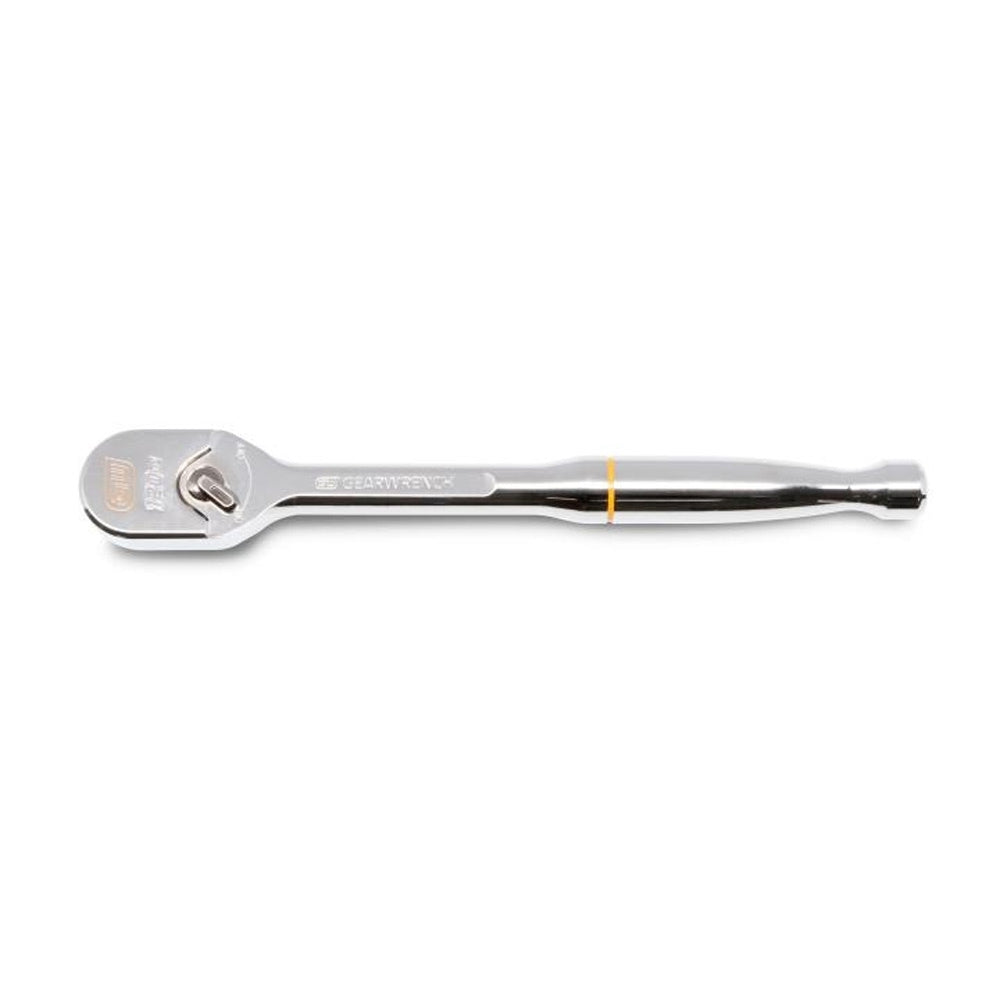
Milwaukee vs GearWrench Ratchet: Which Hand Ratchet Should You Buy?
The Milwaukee vs GearWrench ratchet comparison comes down to one number: tooth count. For most people, the GearWrench 120XP wins — 120 teeth, ~3° swing arc, earns its keep in tight engine bays and cramped spaces, and it typically costs less. Milwaukee is the right call if you're at the big-box counter, want one brand for your whole kit, and prefer one warranty desk for everything. Here's the full breakdown.
Milwaukee vs GearWrench Ratchet — At a Glance
| GearWrench 120XP | GearWrench Standard (90T) | Milwaukee | |
|---|---|---|---|
| Teeth | 120 | 90 | 90 |
| Swing arc | ~3° | ~4° | ~4° |
| Drive sizes | 1/4", 3/8", 1/2" | 1/4", 3/8", 1/2" | 1/4", 3/8", 1/2" |
| Flex-head option | Yes | Yes | Yes |
| Warranty | Limited lifetime | Limited lifetime | Limited lifetime |
| Made in | see product listing | see product listing | see product listing |
| Street price (3/8") | see current pricing | see current pricing | see current pricing |
| Best for | Tight-quarters, automotive | General work, budget | One-brand shop, big-box pickup |
Tooth Count and Swing Arc — The Number That Actually Matters
What Is Swing Arc?
Every time you reverse a ratchet, the mechanism catches the next tooth. The angle you have to move the handle before it catches is the swing arc. Smaller is better — you need less room to keep turning a fastener.
The math is simple: 360 ÷ tooth count = degrees per click.
- 120 teeth → 3° swing arc
- 90 teeth → 4° swing arc
That one-degree difference sounds trivial. In an open garage, it is. In a tight engine bay with a bolt half-buried behind a bracket, it's the difference between making progress and pulling your arm out to reset after every partial turn.
120-Tooth vs 90-Tooth in Tight Quarters
GearWrench built the 120XP line specifically to win this argument. At ~3°, you need about a 3-inch arc of handle travel to advance one full turn — useful when your elbow has nowhere to go.
Milwaukee's ratchet runs a 90-tooth mechanism, putting it in the same ~4° class as GearWrench's standard line. That's a capable ratchet for general shop work. It's not a step back from a standard ratchet — it's just not the 120XP.
If you mostly work on furniture, HVAC, or deck hardware, 4° is fine. If you turn bolts inside engine compartments on a regular basis, the 120XP's tighter arc is why people seek it out.
Feel, Build, and Head Design
Head Profile, Handle, and Weight
GearWrench ratchets are built around a low-profile teardrop head — thin at the top so it slides into tight spots without the body getting in the way. The 120XP uses a sealed design that keeps debris out of the mechanism, which matters in dirty shop environments.
Milwaukee's ratchet head uses a more conventional round profile — solid and grippy. Milwaukee's hand-tool handles trend toward a textured overmold that's comfortable for long sessions, consistent with their other hand tools.
Both target a professional feel. But GearWrench has decades specifically in the ratchet/wrench category; it's what the company is known for. Milwaukee entered the manual hand-tool space more recently, and the ratchet carries that history.
Flex-Head Options
Both brands offer flex-head versions of their ratchets, available in SAE and metric across their respective lineups — GearWrench across its 90-tooth and 72-tooth lines, and Milwaukee in 15-piece and 7-piece set configurations. A flex-head lets the drive pivot to reach fasteners at an angle — useful in the same tight-access situations where tooth count matters. Confirm the specific model exists at the drive size you want before buying; not every size ships in both head styles.
Drive Sizes & Socket Compatibility — Read This First
Both GearWrench and Milwaukee ratchets use standard SAE square drive (1/4", 3/8", 1/2"). That means any standard socket — regardless of brand — fits either ratchet. Craftsman sockets on a GearWrench ratchet? Fine. Milwaukee sockets on a GearWrench 120XP? Fine.
You are not locked into matching-brand sockets. This is the single most common misconception in this comparison. Matching brands is a marketing preference, not a mechanical requirement.
If you already own a good socket set, neither ratchet forces you to replace it.
GearWrench covers 1/4", 3/8", and 1/2" across both the 120XP and standard lines, with a catalog spanning 189 SKUs across ratchets, breaker bars, extensions, adapters, universal joints, and related drive tools. Milwaukee's hand ratchets and M12 FUEL cordless ratchets cover the same drive sizes — confirm the specific models before buying since Milwaukee updates product lines regularly.
Warranty and Where to Buy
Warranty Terms
Both brands advertise a limited lifetime warranty on their hand ratchets — check each brand's current warranty page for the full terms, exclusions, and claim process. The word "limited" matters — read the fine print. Typical exclusions are normal wear, abuse, and modifications.
In practice, the difference is often where you file the claim. GearWrench warranty work generally goes through the retailer or directly to the brand. Milwaukee warranty service routes through Milwaukee's dealer network and service centers — if you already have a Milwaukee dealer nearby for your power tools, that convenience is real. If you don't, it's a wash.
Where to Buy
GearWrench is widely available on Amazon, Advance Auto Parts, AutoZone, and specialty tool retailers. Easy to price-shop, usually ships in two days.
Milwaukee hand ratchets are stocked at Home Depot, Acme Tools, and Milwaukee's dealer network. If you're already picking up a battery or saw blade at the orange box, adding a Milwaukee ratchet to the cart is frictionless.
Price — What You Actually Pay
Street prices shift, so verify before acting:
- GearWrench 120XP (3/8"): check current pricing at Amazon or GearWrench.com
- GearWrench 120XP (1/2"): check current pricing at Amazon or GearWrench.com
- Milwaukee ratchet (3/8"): check current pricing at Home Depot or Acme Tools
- Milwaukee ratchet (1/2"): check current pricing at Home Depot or Acme Tools
The general pattern: GearWrench tends to price the 120XP competitively against Milwaukee's equivalent drive size — sometimes less, sometimes comparable. Neither is a budget brand. The value case for GearWrench is that you often get *more* tooth count (the spec that matters most for tight work) at the same or lower price.
Which Ratchet Should You Buy?
Buy the GearWrench 120XP if:
- You work in tight spaces regularly — automotive, HVAC, plumbing behind walls
- Swing arc matters and you want the finest arc in a standard ratchet
- You buy on Amazon or at an auto-parts store and want the specialist pick
Buy the Milwaukee ratchet if:
- You're already at Home Depot buying Milwaukee gear and want one warranty desk for everything
- Your work is general shop or construction — access isn't cramped and 4° is fine
- You value the Milwaukee brand ecosystem and prefer matched tooling
Don't overthink it if:
- You're doing light DIY — either ratchet handles furniture assembly, deck hardware, or appliance repairs without issue
- You already own a quality socket set — sockets transfer to either ratchet, so the choice is the ratchet alone
The honest summary: GearWrench is a ratchet company. Milwaukee makes a good ratchet. For the one task a ratchet lives for — turning bolts in confined spaces — the 120XP wins on the spec that matters most.
FAQ
Is GearWrench or Milwaukee the Better Ratchet?
For tight-quarters work and pure ratchet performance, GearWrench's 120XP wins — more teeth mean a finer swing arc, which you feel immediately in cramped access. Milwaukee wins on big-box convenience and unified warranty coverage if you're deep in the Milwaukee ecosystem.
How Many Teeth Does the GearWrench 120XP Have?
120 positions, which works out to approximately a 3° swing arc (360 ÷ 120 = 3°). That's among the finest arcs available in a standard ratchet.
How Many Teeth Does the Milwaukee Ratchet Have?

Milwaukee's ratchet uses a 90-tooth mechanism with a 4° arc swing. The exact count may vary by specific model; verify the model number before purchasing.
What Is Swing Arc and Why Does It Matter?
Swing arc is the smallest angle you have to move the ratchet handle before the mechanism catches the next tooth. 360 ÷ tooth count = degrees of swing arc. A 3° arc means you barely have to move the handle to advance — crucial in a tight spot. A 4° arc requires slightly more handle travel. In open spaces you won't notice. In a cramped engine bay you'll notice immediately.
Do GearWrench and Milwaukee Ratchets Have a Lifetime Warranty?
Both carry a limited lifetime warranty on hand tools. The claim process and terms differ — check each brand's warranty page for what's actually covered and excluded.
Can I Use Any Brand of Socket on Either Ratchet?
Yes. Both use standard SAE square drive (1/4", 3/8", 1/2"). Any standard socket from any brand fits either ratchet. You don't need to match brands.
Which Is Better for Automotive and Mechanic Work?
GearWrench's 120XP, primarily because of swing arc. Engine bays and underbody work often have less than 10° of handle travel available — the finer the arc, the more useful the ratchet. Both Milwaukee Tool and GearWrench offer 1/4-inch, 3/8-inch, and 1/2-inch drive ratchets, so socket sets work interchangeably with either brand.
Where Are GearWrench and Milwaukee Ratchets Made?
Manufacturing origin varies by product line and year for both brands — check the current product listing or packaging for the most accurate country-of-origin information.
If you're comparing GearWrench to other ratchet brands, our head-to-head with the Wera Zyklop gets into the fine-tooth vs. fine-engineering argument: Wera Zyklop vs. GearWrench 120XP.
For more on GearWrench hand tools: GearWrench vs. Tekton combination wrenches.
Building out a full mechanic's hand-tool kit: best torque wrenches for automotive and best nut driver sets.