
Best Hacksaw: The Right Frame and Blade for Every Cut
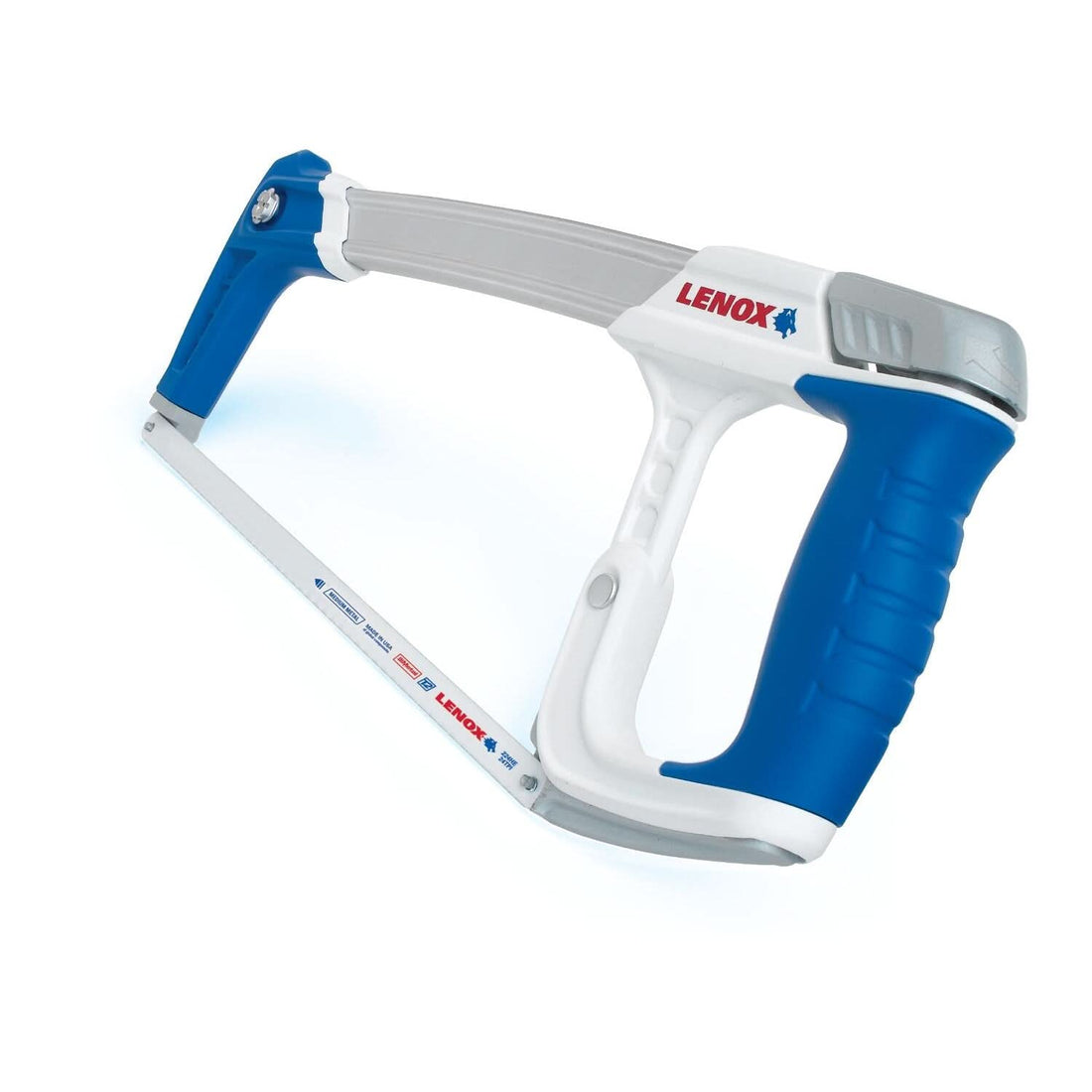
For most jobs — cutting pipe, conduit, bolts, and threaded rod — the Lenox 12132HT12 high-tension hacksaw loaded with an 18 TPI bi-metal blade is the pick. The high-tension frame keeps the blade straighter under load and cuts faster with less wandering. If you cut occasionally and budget matters, the Stanley FatMax 20-222 is the most versatile adjustable frame under $30. One rule before anything else: the blade TPI matters more than the frame brand. Here's how to get both decisions right.
If you're cutting sheet metal in long straight runs, aviation snips will outpace any hacksaw and leave a cleaner edge. For chain, padlocks, and thick rod where clean thread preservation doesn't matter, bolt cutters are faster. If you're here because you're cutting pipe or hardened steel — keep reading.
Why Blade TPI Matters More Than the Frame
The frame is a handle and a tension mechanism. The blade is doing the actual cutting. A $15 frame with the right bi-metal blade will outcut a $60 frame loaded with the wrong one.
Get the TPI wrong and you'll either strip the teeth on thin-wall tubing or bog down taking coarse ripping strokes through solid stock. Both are avoidable.
TPI by Material — Quick Reference
| TPI | Best for | Notes |
|---|---|---|
| 14 | Aluminum, thick plastic, soft metals | Coarser teeth clear chips fast; don't use on thin-wall material |
| 18 | Steel pipe, EMT conduit, copper tubing, hardware bolts | The all-around choice — right for most cuts |
| 24 | Thin-wall conduit, hard alloy pipe, drill rod | Finer cut, slower feed; right call on thin stock |
| 32 | Sheet metal, thin-wall tubing under ⅛ in | Full tooth engagement at all times; slow but clean |
The rule: you need at least three teeth in contact with the material at once. If you're cutting ⅛-in sheet metal with 14 TPI, one tooth is bridging the entire thickness — it'll strip and catch. When in doubt on thin stock, go finer.
Bi-Metal vs. Carbon-Steel Hacksaw Blades
Bi-metal blades have a high-speed steel tooth edge electron-beam welded to a flexible spring-steel back. Carbon-steel blades are one material throughout.
When you cut steel, friction generates heat at the tooth tips. Carbon-steel tips anneal (soften) under that heat — the teeth flatten, the blade stops cutting. Bi-metal teeth run hotter before they lose hardness. On any metal cut — steel pipe, copper tubing, even aluminum — bi-metal is the right blade. Carbon-steel is fine for plastic and wood, where heat isn't the issue.
Bi-metal blades typically run roughly 3–5× the cost of a comparable carbon-steel blade. On any trade job that's noise.
Which Direction Should Hacksaw Teeth Face?
Teeth point forward — cutting happens on the push stroke. Pull strokes don't cut on a standard hacksaw. Some techs reverse blades when cutting in a pull-stroke-only position or want a slightly smoother finish on soft metal. That works, but it's slower. Install teeth pointing forward unless access forces otherwise.
Best Overall — Lenox 12132HT12 High-Tension Hacksaw
The 12132HT12 is the pick for tradespeople doing sustained cutting. Lenox claims significantly higher blade tension compared to standard frames. More tension means less lateral blade flex under load. Cuts track straighter through steel without drifting.
The difference is most obvious cutting hardened bolts or solid steel rod. Standard frames let the blade walk the moment you apply sideways pressure. The high-tension frame resists that flex. Once you've used one on a sustained cut, going back feels sloppy.
Accepts: 12-in blades Pair with: Lenox T2 18 TPI bi-metal for most work; step to 24 TPI for hard alloy or thin-wall Best for: Mechanical, plumbing, and HVAC trades; anyone cutting steel or hard metals regularly Price: Available at major retailers; check current listings for pricing.
Best Adjustable Frame — Stanley FatMax 20-222
The FatMax 20-222 earns the DIY slot on blade orientation flexibility, not just price. The frame rotates through multiple blade positions, including a full 90° mode. The 90° mode is what sets it apart.
Why does 90° matter? Standard hacksaw frames have a fixed arch above the blade. When you're cutting long threaded rod that won't pass inside that arch, the frame stops the cut before the blade does. At 90°, the blade extends out laterally from the frame, so you can keep sawing regardless of stock length. Same trick handles flush cuts close to a wall or floor where the frame arch would hit the surface first.
Accepts: 10 in. or 12 in. blades Best for: DIYers, homeowners, occasional mixed-material use Price: Available at major home improvement retailers; check current listings.
Best for Electricians — Klein Tools 702-12
Electricians have needs a standard pistol-grip frame doesn't serve well: cutting EMT close to a panel box, making a 12-in cut in a conduit run with limited swing room, or reaching into a cabinet where grip angle matters.
The Klein 702-12 is built for that work. It offers three blade mounting positions — Standard (0°), 45° flush-cut, and front-mount — so the blade can be oriented for the cut, not just for what's most convenient to grip. The handle geometry gives electricians a grip that works in the positions they're actually in — reaching into panels, crouching in a chase, cutting conduit flat against a wall.
Accepts: 12-in blades Best for: Electricians, EMT and conduit cutting in confined or reach-in positions Price: Available at electrical supply houses and major retailers; check current listings.
Electricians reading this section are also likely the audience for our wire-stripping guide.
Best Budget — DeWalt DWHT20547L
The DWHT20547L is a standard-tension frame at an entry price of $37.99.
Standard tension means more blade wander on hard metals and longer cuts. That's acceptable if you're cutting PVC, soft aluminum, wood screws, or light conduit a few times a year. It's not the right call for solid steel rod or daily production work — that's where the Lenox high-tension frame pays for itself inside a single job.
Best for: Homeowners and occasional DIYers; plastic, soft metals, and light conduit Who should skip it: Anyone cutting hardened steel or using the saw regularly
Best for Tight Spaces — Junior Hacksaw (Bahco 319)

A junior hacksaw isn't a smaller version of the standard saw. It's a categorically different tool for one specific problem: the 12-in frame won't physically fit.
Junior frames take 6-in (150 mm) blades. That blade fits into spaces a standard frame can't reach — behind pipes, inside electrical boxes, deep in mechanical chases. That's the entire use case. Treat it as the rescue tool when the full saw is blocked, not a general-purpose saw.
The trade-off is blade tension. Shorter blades can't be tensioned as hard, so they flex more. Junior cuts wander more easily. Use slow, controlled strokes with light forward pressure. Expect the job to take longer.
The Bahco 319 is the standard pick in this class — well-made, takes standard junior blades, and stocked at most plumbing and electrical supply houses. At 556 g (19.6 oz), it's light enough to maneuver comfortably in the confined positions junior saws are typically used.
Accepts: 6-in (150 mm) junior blades Best for: Behind-wall plumbing, tight electrical access, anywhere the 12-in frame is physically blocked Not a substitute for: The full-size frame on any cut it can reach
What to Look for in a Hacksaw Frame
Blade tension mechanism. Wing-nut, thumb-knob, or lever-release. Lever-release wins for anyone swapping blades regularly — one motion, blade out. Wing-nuts require extra steps and sometimes a wrench. Thumb-knobs are fine for light occasional use.
Frame material. Aluminum alloy is lighter; steel is more rigid. For sustained cutting or heavy stock, steel or composite frames hold alignment better. Aluminum is fine for lighter work.
Handle style. Pistol grip is the standard and works for most people on most cuts. Straight or I-beam handles suit overhead work or reach-in positions. Don't overthink it, but if you're doing a lot of cutting in one position all day, the handle style matters to your wrist.
Blade length compatibility. Before buying a frame, verify it accepts the blade length available at your local supply source. 12-in blades are stocked everywhere. 10-in blades are common but not universal. Confirm before you commit.
Quick Comparison Table
| Model | Best for | Tension type | Blade length | Approx. price |
|---|---|---|---|---|
| Lenox 12132HT12 | Hard metals, frequent use | High-tension | 12 in | See retailer |
| Stanley FatMax 20-222 | DIY, adjustable blade angles | Standard | 10 or 12 in | See retailer |
| Klein Tools 702-12 | Electricians, EMT cutting | Standard | 12 in | See retailer |
| DeWalt DWHT20547L | Budget / light use | Standard | 12 in | $37.99 |
| Bahco 319 (junior) | Tight-access cuts | Standard (mini) | 6 in | See retailer |
Frequently Asked Questions
What is the best hacksaw for cutting metal? The Lenox 12132HT12 with an 18–24 TPI bi-metal blade. The high-tension frame keeps the blade from walking under load; bi-metal teeth handle steel, copper, and aluminum without dulling quickly. For sustained metal cutting, the gap over standard frames is real.
What TPI hacksaw blade do I need for cutting steel pipe? 18 TPI for standard-wall steel pipe. Use 24 TPI for thin-wall conduit or hard alloy. The baseline rule: at least three teeth must be in contact with the material at once. More teeth per inch means a slower but cleaner cut; 18 TPI is the practical all-around choice for most pipe work.
What is the difference between a hacksaw and a junior hacksaw? A standard hacksaw takes 12-in blades and has a full-size frame arch. A junior hacksaw takes 6-in blades and is built only for spaces where the full frame physically can't go. The junior runs lower blade tension and cuts slower — reach for it when access forces the choice, not as a substitute for the full-size saw on any cut the larger frame can reach.
Can you cut wood with a hacksaw? Technically yes, but it's the wrong tool. Hacksaw teeth are too fine and close-set for wood fiber — they clog in softwood and the cut is slow and rough. Use a cross-cut hand saw for wood. Save the hacksaw for metal and plastic.
How do you keep a hacksaw blade from bending or wandering? Use a high-tension frame, apply light forward pressure (let the blade work — don't force it), and match TPI to your material. Blade wander almost always comes from pushing too hard or using too few teeth per inch on thin-wall stock. Ease up, slow down, and the blade tracks.
What hacksaw do plumbers use? Most plumbers keep a high-tension 12-in frame — Lenox or Bahco — for copper and steel pipe, plus a junior hacksaw for cuts in tight chases or against walls. Bi-metal blades are standard. A fresh 18 TPI blade per job is cheaper than fighting a dull one through a full run of pipe.
How do I cut hardened steel with a hacksaw? Use a 24–32 TPI bi-metal blade in a high-tension frame. Light pressure, short controlled strokes, cutting oil if you have it. Carbon-steel blades dull almost immediately on hardened steel — bi-metal is non-negotiable. If the blade still skates across the surface, you may be hitting a case-hardened layer; use a grinder to break through the surface hardness first, then let the hacksaw tooth find purchase below it.
The Frame + Blade Framework
The frame determines how well the blade tracks. The blade determines whether the job gets done. A $25 frame with a fresh 18 TPI bi-metal blade will cut more steel, faster and cleaner, than a $60 frame loaded with a worn-out 14 TPI carbon-steel blade that shipped with a kit.
Match the blade to the job first. Pick the frame that fits your working conditions second. That's the whole decision.
*Funnels to: editorial, no money page*