
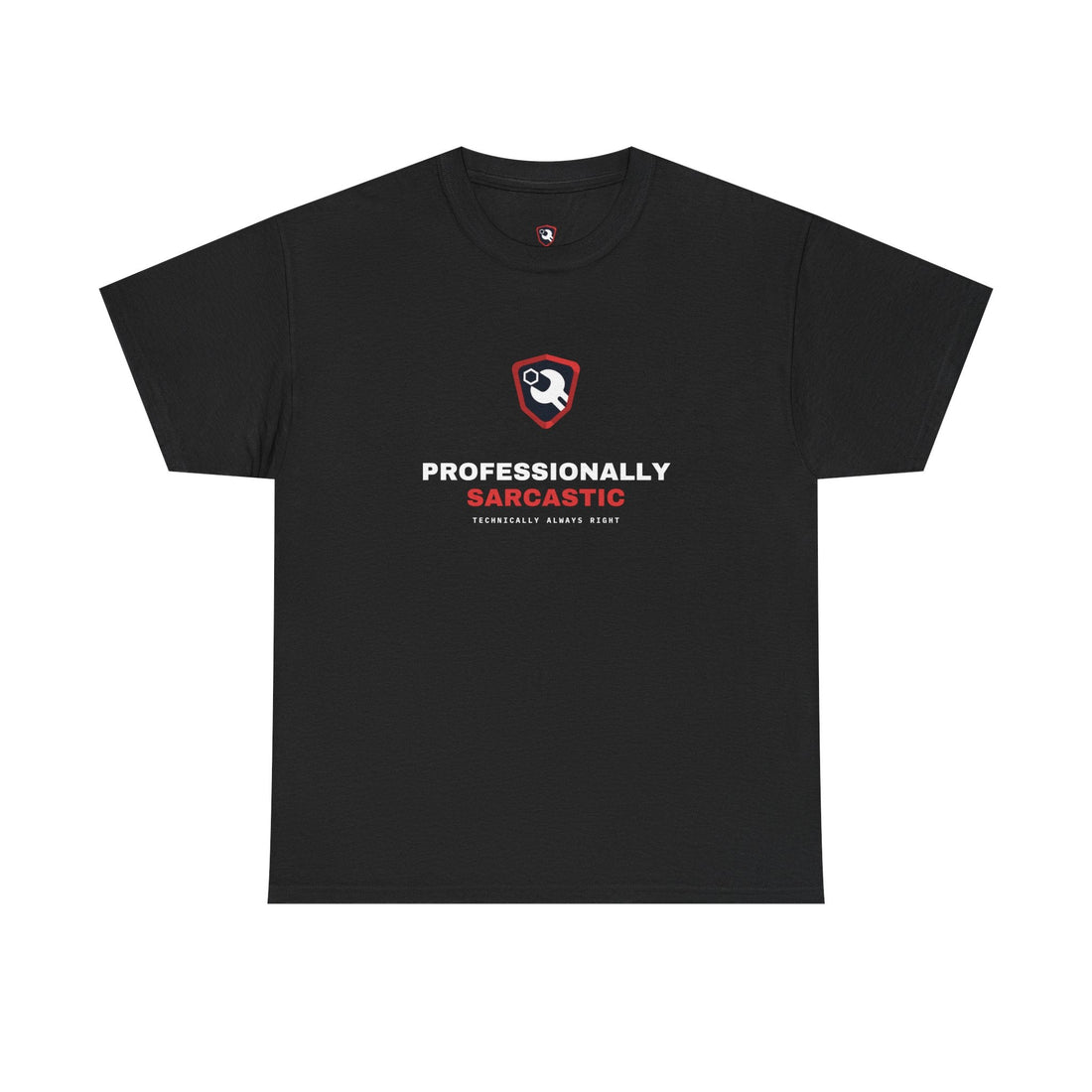
Why Mechanics Wear Black Shirts — And Why Cheap Black Ones Still Let You Down
The short answer to why mechanics wear black shirts: it's the most forgiving color in a dirty environment. Oil, grease, brake fluid, and coolant are all dark. Dark shirts absorb those stains into the background instead of broadcasting them. A white shirt is ruined after one oil change; a black shirt just looks like it's been used. That's the whole answer — but it's only half the story. The other half is why *not every* black shirt does the job, and why the mechanics who've worn black for twenty years know exactly which ones to buy.
Black Hides What Mechanics Deal With All Day
Oil and Grease Are Dark — So Is the Shirt
Color contrast is the enemy. Light surfaces read every stain; dark surfaces fold them into the background. When you're pulling a CV axle or doing a valve cover gasket, you're not controlling what lands where. Grease on a black shirt? You might not notice it from three feet away. The same grease on a gray or white shirt broadcasts itself immediately.
Black isn't vanity — it's error tolerance built into the fabric choice.
It's Not About Looking Clean — It's About Not Looking Filthy
There's a real professional dimension here. A grease-stained black shirt reads as "I worked hard today." A grease-stained white shirt reads as "I stopped caring."
Most shops don't mandate black — mechanics choose it independently because it solves a daily annoyance without requiring thought. It's a uniform they designed themselves, not one someone handed them. When mechanics across different shops, different trades, and different decades all land on the same color, that's not coincidence. It's a practical answer that passed the test of daily use.
The Part Nobody Talks About — Black Doesn't Stay Black on a Bad Shirt
Here's where the cheap stuff fails you: a thin, poorly dyed cotton tee starts fading after a handful of hot washes. By month three or four of weekly laundering, it's not black anymore — it's a washed-out gray. And gray is worse than white. At least white started that way.
At that point the shirt shows every new stain, because it's no longer dark enough to absorb them into the background. You bought a black shirt to solve a problem, and now you have a gray shirt that makes the problem worse.
The mechanics who've worn black for ten or fifteen years without thinking about it are almost always in heavier cotton. Not because they researched it — because those shirts kept their color and the cheap ones didn't.
Garment-Dyed vs. Surface-Dyed Black
This is the spec most people skip because most people buying a black tee don't know there's a difference.
| Dye method | What it means | How it wears |
|---|---|---|
| Garment-dyed (e.g., Comfort Colors 1717) | Entire finished garment goes into a dye bath after construction | Color penetrates deeper into the fiber; fades slowly and evenly |
| Surface-dyed (most mass-market tees) | Pigment applied to yarn or fabric pre-construction | Color sits on the outer fiber layer; washes off in stages, leaving a patchy look |
Because the finished garment — seams, hems, and all — goes into the dye bath after construction, the color works its way deeper into the fiber than pigment applied to raw yarn or pre-cut fabric. That depth is why garment-dyed blacks fade more slowly, and more evenly, than surface-dyed alternatives.
The garment-dyed approach is why a blank like the Comfort Colors 1717 holds its black the way it does. At 6.1 oz of ringspun garment-dyed cotton, pre-shrunk and soft-washed, there's significantly more dye depth to work through before it starts looking gray.
What Actually Makes a Black Shop Shirt Last
Three things, in order of importance:
Fabric weight. Anything under 5 oz is a grocery-run tee — it pills faster, snags easier, and loses color quicker. For shop use, 5–6 oz is the floor. The full breakdown of heavyweight vs. regular tees covers this in more depth.
Ringspun cotton. Ringspun and open-end spun cotton start from the same raw fiber but are processed differently, and that difference shows up in how the finished fabric performs. The short version: tighter fiber twist equals smoother fabric surface equals better dye retention through repeated washing. A Gildan 5000 — 5.3 oz heavy pre-shrunk cotton — holds up through the laundry cycle shop work demands.
Pre-shrunk construction. You're washing this thing weekly. A tee that shrinks three sizes is a tee you donate in three months. Both the Gildan 5000 and Comfort Colors 1717 are pre-shrunk — what you buy is what you keep.
FAQ: Mechanic Shirt Questions, Answered
Do mechanics have to wear black shirts? No rule requires it. Most shops don't mandate a specific color. Mechanics gravitate to black on their own because it's the most practical option for hiding oil and grease — and because it doesn't make daily wear look unprofessional.
Does black really hide grease? Better than lighter colors, yes. Grease and motor oil are dark; they blend into black fabric rather than contrasting against it. A thin black tee still shows grease up close, but a heavyweight one makes it nearly invisible at working distance.
Why do my black shirts turn gray so fast? Hot washes, harsh detergents, and low-quality surface dye. Wash inside out in cold water and skip the dryer when you can. But the bigger factor is starting with garment-dyed heavyweight cotton — wash technique alone can't save a cheaply dyed shirt. See also: how to wash graphic tees without damage.
What color shirt is best for a mechanic? Black or dark navy. Both hide the most common shop stains. Black is the clear favorite because it's forgiving across every stain color — oil, coolant, brake fluid, carbon, you name it.
Is polyester or cotton better for a mechanic shirt? Cotton, particularly in a hot shop. It breathes and it doesn't melt if it briefly contacts something warm. Full breakdown: cotton vs. polyester for garage work.
How do you get grease out of a black shirt? Pre-treat with dish soap or a dedicated degreaser before it goes in the wash — grease is oil-based and water alone won't lift it. Work it in, let it sit, then wash in cold. Same process whether the shirt is black or any other color.
If you're going to wear black in the shop — and you should — wear black that stays black. Garment-dyed, pre-shrunk, heavyweight cotton earns its gray slowly, over years of real use, rather than after six trips through the washer.
*Also worth reading: why work shirts develop stomach holes — if you're already thinking about what makes a shop shirt hold up, that one covers the other way they fail.*