
Carhartt vs Dickies Hoodie: Which One Actually Holds Up?
Quick answer: In the Carhartt vs Dickies hoodie matchup, Carhartt's is the heavier, weather-ready option — thicker cotton-poly, Rain Defender DWR finish, roomy fit built to layer — and it costs noticeably more. Dickies' Fleece Pullover Hoodie is lighter, softer, cheaper, and fine as an indoor shop layer, but it wears out sooner at the cuffs and pockets. Buy Carhartt if you're working outdoors and rough on gear. Buy Dickies if you want a knock-around indoor layer and want to spend less. And if you mostly want a heavyweight hoodie to live in around the garage, there's a third option that skips the brand premium entirely — covered below.
Carhartt vs Dickies Hoodie: The Quick Verdict
| Carhartt Loose Fit Midweight (Rain Defender) | Dickies Fleece Pullover Hoodie | |
|---|---|---|
| Fabric weight | Heavier midweight cotton-poly | Lighter cotton-poly fleece |
| Fit | Loose/roomy — runs big | Standard, close to true-to-size |
| Water resistance | Rain Defender DWR — sheds light rain | None (standard model) |
| Cuff durability | Heavy ribbing, holds its shape longer | Lighter ribbing — pilling is common |
| Full-zip option | Yes | Yes |
| Price | Higher end of the workwear hoodie range | Noticeably less |
| Best for | Outdoor jobsite, cold, rough use | Indoor shop, budget, knock-around |
Fabric Weight and Warmth: How Big Is the Gap?
This is where the difference is most obvious.
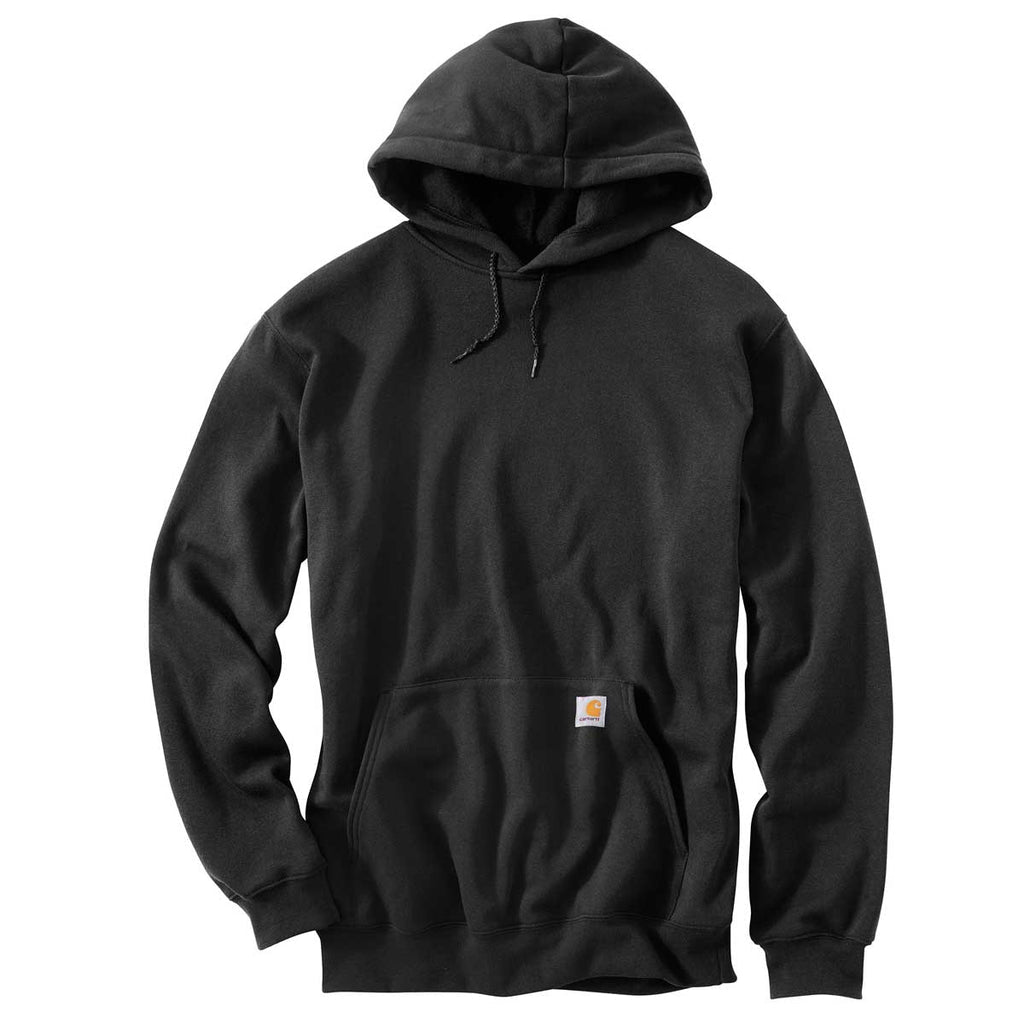
Carhartt's Loose Fit Midweight Sweatshirt with Rain Defender is the flagship hoodie most people are comparing — 10.5 oz, 50% cotton / 50% polyester. They also make a Loose Fit Heavyweight version that adds more thermal mass — 13 oz. On a cold January jobsite, you feel that difference immediately.
Dickies' Fleece Pullover Hoodie runs lighter — a softer, more casual-weight cotton-poly fleece blend. It's not a thin garment, but put both on back-to-back and the Carhartt feels like a different category of product.
For shop work where you control the temperature, the Dickies is plenty warm. For exterior work at 38°F before the sun's up, you'll want Carhartt's heavier fabric — or the Heavyweight version if you run cold. If you're weighing weight vs. blend trade-offs across shop apparel more broadly, weight comparison for shop apparel lays out the logic.
Fit and Sizing — Why Carhartt Runs Loose
Carhartt's "Loose Fit" label means what it says. The hoodie is cut roomy through the chest and shoulders specifically to wear over a shirt, a flannel, or a midlayer. That's the design intent. Buy your normal size if you want that layering room; size down if you're wearing it over a t-shirt and want it less boxy.
Carhartt also offers a Relaxed Fit hooded sweatshirt that's less dramatic than Loose — closer to a traditional hoodie silhouette if the Loose cut is too much room for your taste. The distinction is specific: Loose Fit is cut generously through the hip, seat, and thigh for maximum mobility, while Relaxed Fit provides comfort without being baggy.
Dickies runs closer to standard sizing. A large is a large. The silhouette is more traditional — not boxy. If you've been buying generic hoodies your whole life, the Dickies fit will feel familiar.
Water Resistance: What Does Rain Defender Actually Do?
Carhartt's Rain Defender is a durable water repellent (DWR) coating — it causes water to bead up and roll off the fabric rather than soaking in. That matters on a site where you're stepping in and out of a building all day, or walking a project in drizzle.
What Rain Defender is not: waterproof. In a sustained rain, a cotton-poly sweatshirt soaks through regardless of DWR treatment. DWR slows absorption; it doesn't stop it. You're not getting a rain shell out of either of these hoodies.
Dickies' standard Fleece Pullover Hoodie has no meaningful water repellency — soaks on contact. Dickies does make a Water Repellent Fleece Hoodie (separate SKU) that adds a DWR finish, so if water resistance matters and you want to stay in Dickies pricing, look for that version specifically.
For straight indoor shop use, none of this matters. You're not getting rained on in the garage.
Where Does Each Hoodie Wear Out First?
Both hoodies fail at the same spots. The difference is pace.
Cuffs. The ribbed cuffs stretch and pill before the rest of the garment shows much wear. Carhartt's heavier ribbing holds its shape noticeably longer. On the Dickies, you'll feel the cuffs go loose after a year of regular wear — faster if you pull the hoodie on by grabbing the cuff rather than the sleeve.
Hand pockets. Hands in pockets all day on a cold jobsite accelerates pocket wear fast — the pocket mouth stretches, the corners eventually blow. Carhartt reinforces here better than Dickies. If you're constantly fishing through the pocket for your phone or a fastener, this is a meaningful durability difference over time.
Hood and drawcord. The drawcord frays and eventually works through the hood tunnel on both. The cord tips are usually the first thing to go. Wash care extends the life of both — hot dryer cycles are hard on graphics and on cord hardware. See graphic care guide for care habits that keep either one looking right longer.
Full-zip versions. Both brands offer full-zip hoodies alongside the pullover. The zip adds convenience, but the zipper is now a failure point — the pull, the stops, and the tab all wear before the fabric does. If longevity is the top priority, pullover outlasts full-zip.
Price and Cost Per Wear: Is Carhartt Worth the Premium?
At $49.99–$59.99 for the Carhartt Loose Fit Midweight versus $29.99 for the Dickies Fleece Pullover Hoodie, the gap is real enough that it's a genuine decision factor, not a rounding error.
The cost-per-wear math depends on use.
Outdoors every day, layering, rough conditions, light rain? Carhartt's durability and Rain Defender earn their keep. The heavier fabric lasts longer at the wear points and the DWR buys you real comfort across months of outdoor use. That premium makes sense.
Indoor shop layer, garage, warehouse — mostly climate-controlled? The Carhartt features you're paying for go mostly unused. A Dickies gives you two to three years of regular shop wear before the cuffs give out, and when it's done, replacing it doesn't hurt. For a lot of people in a shop environment, Dickies is the smarter spend.
Which Should You Buy: Carhartt or Dickies?

Buy Carhartt if: You work outdoors regularly, you're hard on gear, you need something that layers properly over a flannel in real cold, and Rain Defender is actually useful to you. The Heavyweight version is worth the extra few dollars over the Midweight if you're running cold.
Buy Dickies if: You wear it mostly indoors — shop, garage, warehouse — budget matters, and you don't need DWR or heavy-duty layering room. It does the job, and when it wears out you replace it without pain.
Buy neither if: You're mostly in the shop and you'd rather have a plain heavyweight fleece with some personality on it than pay for weather features you'll never use. That's a different category — plenty of mid-priced 8 oz cotton-poly hoodies cover it without the workwear-brand premium.
If you're also comparing these brands on their pocket tees, Carhartt vs. Dickies pocket tee comparison runs the same side-by-side on fabric weight and durability for the tee.
Frequently Asked Questions
Is Carhartt or Dickies better quality? Carhartt's hoodie is heavier fabric with a water-repellent finish and generally outlasts Dickies in rough outdoor use. Dickies holds up fine for indoor shop wear. "Better" depends on the job — they're different tools for different conditions.
Are Carhartt hoodies worth the extra money? Worth it if you wear it outdoors regularly, layer it over a midlayer, and are hard on it in real weather. The weight and Rain Defender earn their keep in those conditions. If it's a knock-around indoor shop layer, you're paying for weather features you won't use.
Do Carhartt hoodies run big? The Loose Fit cut is intentionally roomy — designed to layer over a shirt or flannel. Size down one if you want it trimmer. The Relaxed Fit cut is less dramatic if Loose is too much room.
Is a Dickies hoodie warm enough for winter? As a standalone in real cold, it's a mid-layer at best — warmer under a jacket than on its own. Carhartt's heavier fabric handles cold better when you're actually outside in it.
Are Carhartt or Dickies hoodies waterproof? No. Carhartt's Rain Defender sheds light rain and snow (it's a DWR finish) but soaks through in a sustained downpour. Standard Dickies fleece has no meaningful water resistance. Neither is a rain shell.
Which lasts longer, Carhartt or Dickies? Carhartt, in most side-by-sides — the heavier fabric and better cuff/pocket reinforcement are real. Both fail first at the cuffs and hand pockets. How you wash it matters as much as the brand: see graphic care guide for care habits that extend either one.
Outdoor, rough conditions, real weather? Carhartt earns the premium. Mostly in the shop and want to spend less? Dickies does the job. If you're mostly indoors and won't ever use Rain Defender, you're paying for weather protection you don't need — buy on fabric weight and fit instead.