
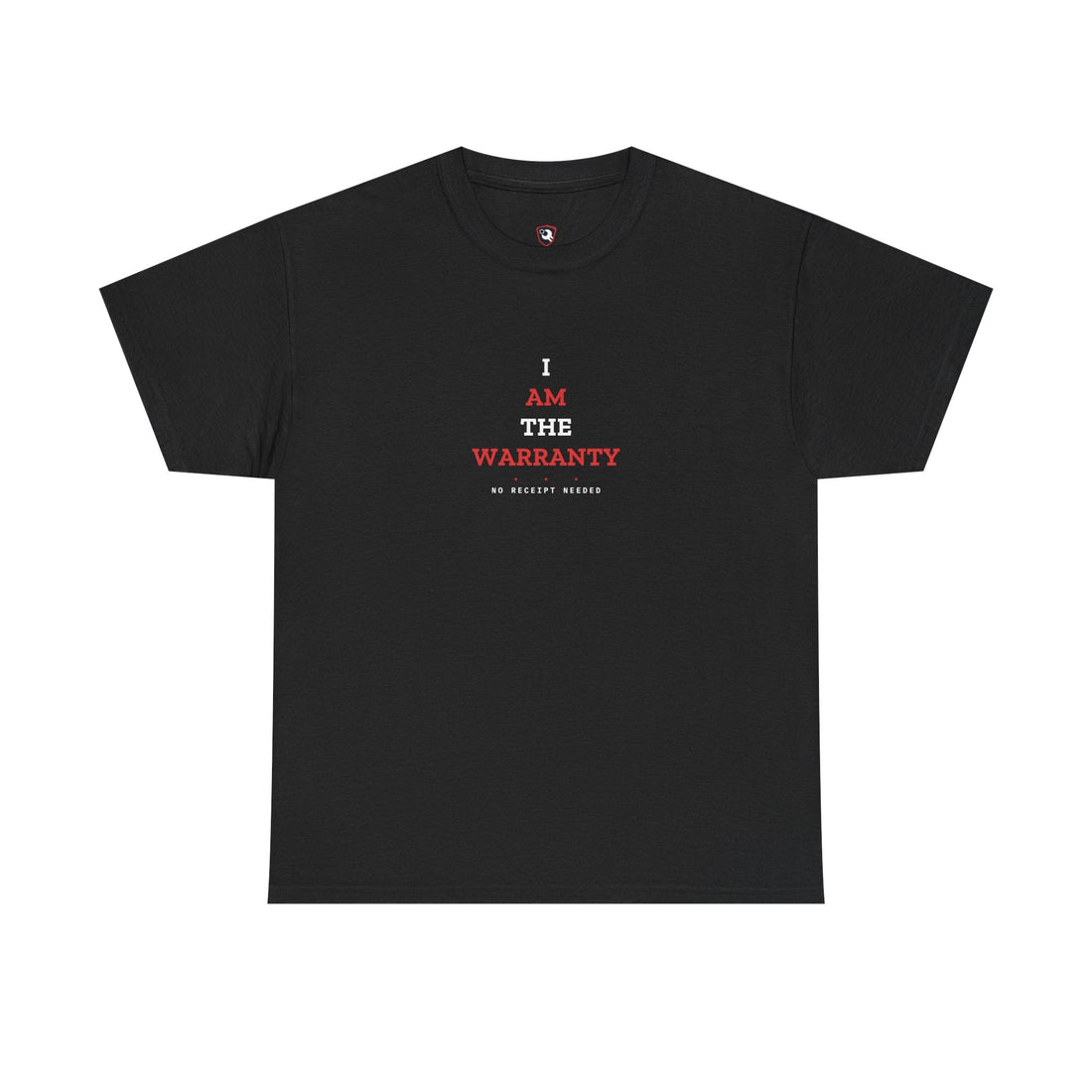
Why Work Shirts Keep Getting Holes in the Stomach (and What Actually Helps)
Those holes in your shirt — right at stomach height near the waistband — aren't a laundry mystery. They're friction damage: the metal hardware on your belt and jeans presses against your shirt; your shirt presses against the edge of a workbench or counter at exactly waist height; the back-and-forth grinds the fibers down. The washing machine doesn't start the hole — it finishes one that was already half-gone from abrasion on the job. Thin fashion tees, typically 4.2–4.3 oz, give out fast. Heavier ringspun cotton takes longer to fail. Here's the full breakdown.
What Causes Stomach Holes in Work Shirts?
Belt buckles and jeans rivets are the friction source
The tack button at the waistband of your jeans, the copper rivets at the waistband corners, and the back face of your belt buckle are all metal — hard, abrasive, and sitting at shirt height all day. The buckle face itself is rounded and relatively harmless. The back edge and the belt's metal keeper ring are what do the damage: sharp enough to catch fibers every time you flex or lean forward.
None of this matters much when you're standing still. It matters a lot when you're pressing against something.
The workbench is the anvil
When you lean into a metal workbench edge, your shirt gets sandwiched: hardware on one side, the bench on the other. Each lean-in works like a tiny abrasion cycle — just a few fibers compromised at a time. One lean does nothing. Two hundred lean-ins per shift across four weeks starts punching through.
This is why the holes show up at a very specific spot, not randomly across the shirt. It's wherever your hardware meets the surface you lean against most — always the same height, always the same patch of fabric.
Why the Washing Machine Gets the Blame (and What It Actually Does)
The washer agitates fibers that are already weakened from shop friction. At that point it doesn't take much: the agitation opens up what the bench started. So you pull the shirt out of the dryer and there's a small hole — and the obvious conclusion is that the machine did it.
It didn't. It finished it.
Mesh laundry bags slow down the drum agitation slightly. Washing inside-out reduces direct surface contact inside the drum and is worth doing — it's a real marginal benefit. But neither stops the primary damage from happening at the workbench. If you fix the abrasion source, the washing machine stops being a problem. Fix only the washing routine and you're treating the symptom. See how to extend a shirt's life in the wash if you want to stretch the life of a shirt you already own.
Three Factors That Control How Fast Holes Form
Fabric weight. This is the biggest lever. A thin blank — say, 4.2 oz — has fewer fibers between the hardware and the other side. A 6.1 oz ringspun tee has more material in that sandwich, and it takes longer to grind through. We go into the full weight comparison in what makes a heavyweight shirt worth it.
Yarn construction. Ringspun cotton twists the fibers tighter before weaving. Open-end spun yarn is fuzzier and loses fibers faster under friction. Garment-dyed fabric (like the Comfort Colors 1717) has been wet-processed, which slightly compresses the fiber structure — it tends to hold together under abrasion better than a standard dyed-and-finished blank.
Work habits. You can't change the hardware — your jeans have rivets, your belt has a buckle. What you can do: wear a shop apron over the shirt when you know you're leaning into benches for long stretches. Tuck the shirt so the hardware contacts denim instead of cotton. Or accept that shirts will eventually get holes and buy ones that survive longer before they do.
What Actually Slows It Down — and What Doesn't
Helps:
- Going heavier on fabric weight (5–6 oz cotton vs. fashion-weight blanks)
- Ringspun construction
- Breaking the sandwich — apron, tuck, or repositioning how you work against the bench
Doesn't help:
- Mesh laundry bags (marginal benefit, doesn't address the cause)
- "Gentle cycle" alone
- Fabric softener
- Spray-on fiber protectors
One more honest note: no cotton tee is immune if the friction is relentless enough. A 6 oz shirt will eventually develop holes too — it just takes longer. The realistic goal is "lasts a season of daily shop work," not "lasts forever." For more on realistic lifespan expectations, see how long you should expect a work shirt to last.
And if you're curious why cheap tees fail even faster across the board — not just at the stomach — that's a separate set of failure modes covered in why budget tees fall apart.
Frequently Asked Questions
Why do I keep getting holes in my shirts near the belly button? That's where your jeans' tack button or waistband rivets sit — right at navel height. It's the same abrasion point every time you lean against a counter or bench, so the damage concentrates in one spot.
Do jeans cause holes in shirts? Yes — specifically the metal hardware. The denim itself is rough but it's the tack button and waistband rivets that do the most damage when pressed between the shirt and a hard surface.
Does a belt buckle cause holes in shirts? The buckle face is usually rounded and not the main offender. The back edge of the buckle frame and the metal keeper ring are harder-edged — those are what grind through fabric when sandwiched against a bench.
How do I stop my shirts from getting holes in the stomach? You can't eliminate it if you do physical work, but you can slow it down: go heavier on fabric weight (5–6 oz vs. thin fashion blanks), wear a shop apron when leaning into benches, or tuck the shirt so the hardware contacts denim instead of cotton.
Does the washing machine cause holes in shirts? It contributes — agitation finishes off weakened fibers — but it's not the root cause. That's friction abrasion on the job. Fix that and the machine stops being a problem.
What t-shirt material is most resistant to stomach holes? Heavier ringspun cotton (6 oz+) takes longer to fail than thin open-end-spun fabric. Cotton/poly blends can be slightly more abrasion-resistant at the same weight but trap heat in a hot shop. There's a trade-off.
Why do expensive shirts get holes too? Price doesn't track fabric weight. Many premium fashion tees are kept thin on purpose — softer hand feel, better drape. Durability comes from weight and construction, not what you paid. A heavyweight blank can outlast a slim-fit fashion tee in a shop setting, regardless of the price tags.
If you're burning through shirts on a regular basis, the highest-leverage move is going heavier on the fabric. A 6.1 oz Comfort Colors 1717 ringspun or a 5.3 oz Gildan 5000 will outlast the tissue-thin blanks most online shirt shops use. They're not going to outlast a grinder wheel, but they'll outlast a workbench.