
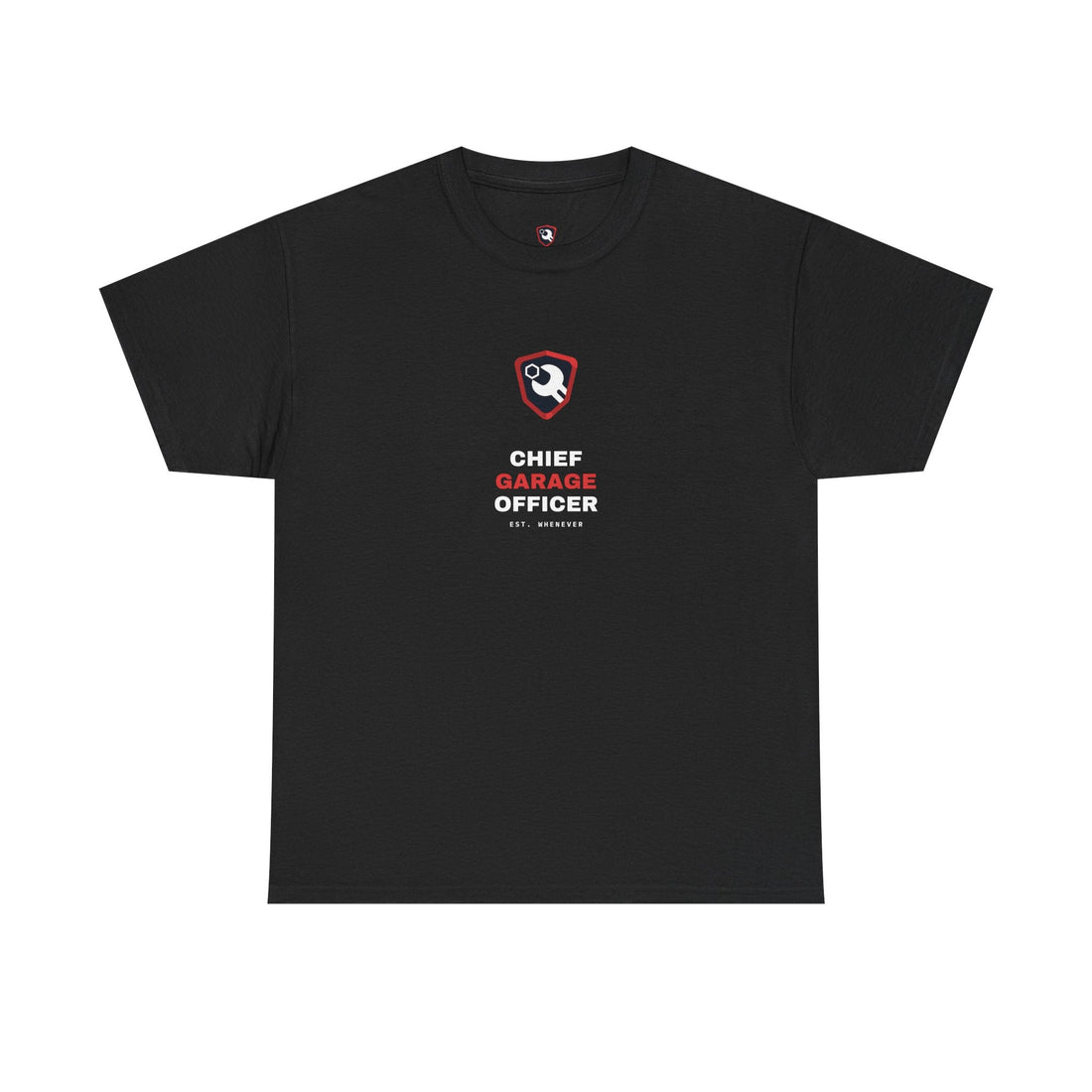
Cotton vs. Polyester T-Shirts for Working in a Garage: Which Actually Holds Up
For most garage work, heavyweight 100% cotton is the right call. It takes grease, handles sweat decently, and if a grinder spark or hot chip lands on it, cotton chars and falls away — it doesn't melt onto your skin. Polyester dries faster, but it softens and melts at around 250–260°C and holds body odor in a way cotton doesn't. A cotton/poly blend works for sweaty, non-spark jobs. One thing up front: no plain tee is flame-resistant PPE. That's a separate category that needs rated gear.
Cotton or Polyester: Which Should You Wear in a Garage?
Heavyweight 100% cotton. Not because it's the cheapest fabric, but because it handles the actual hazards in a shop: heat exposure, grease, abrasion, and repeated hard washing.
Polyester has its place. That place is not next to a grinder.
| Task | Best Fabric | Why |
|---|---|---|
| Daily wrenching / general shop work | Heavyweight 100% cotton | Comfortable, hides grime, won't melt near heat |
| Grinding / cutting metal | 100% cotton (heavier the better) | Cotton chars; poly melts and can fuse to skin |
| Welding or any serious hot work | FR-rated clothing — not a tee | No plain fabric is rated for welding |
| Sweaty summer work, no sparks | Cotton/poly blend or 50/50 | Faster drying, less odor than pure poly |
| Non-heat outdoor or endurance work | Polyester / performance blend | Moisture-wicking, lightweight |
What Each Fabric Actually Does (and Doesn't)
Cotton
Cotton is a natural fiber. It absorbs moisture rather than repelling it — moisture regain is 8.5% per ASTM D1909, so it soaks in sweat and you feel it. In a gym, that sounds like a problem. In a garage, it means you're not baking in a vapor barrier.
More importantly, cotton is cellulosic. Near flame or sparks, it ignites and chars rather than melts — though untreated cotton is not flame-resistant and cannot serve as arc-flash protection without chemical treatment. A stray grinder spark burns a hole in your shirt, not a patch of your arm. That distinction matters.
Heavier weights resist abrasion and snags far better than a standard fashion tee. A 6 oz ringspun cotton holds its shape through months of weekly washing. Downsides: it dries slowly, and untreated cotton shrinks on the first hot wash. Pre-shrunk and garment-dyed versions fix both — wash cold and you're set.
Polyester
Polyester is synthetic and hydrophobic. Moisture regain is just 0.4% by the ASTM D1909 standard — sweat hits the fabric and moves through fast. For a run or a day outdoors, that's genuinely useful.
In a shop, polyester creates two real problems.
Odor. Polyester is significantly more odor-retentive than cotton because bacteria bond to synthetic fibers. End of a long day under the hood, a poly shirt smells worse. That's not preference — it's chemistry.
Heat. Polyester softens and melts at around 250–260°C. A grinder throwing sparks, a hot metal chip, a bit of slag — any of that can cause polyester to melt and bond to skin. Cotton chars and falls away from heat. Polyester doesn't.
Cotton/Poly Blends
A 50/50 or 60/40 cotton-heavy blend dries faster than pure cotton, holds less odor than pure poly, and shrinks minimally if pre-shrunk. These are solid for sweaty, no-spark work — painting, exterior detailing, moving materials on a hot day. Not a substitute for cotton near heat.
The Garage-Specific Stuff Generic Guides Skip
Most cotton-vs-polyester comparisons are written for the gym or casual wear. They miss the parts that matter in a shop.
Sparks, Grinders, and Hot Work
Here's the one that matters most: polyester melts. Cotton doesn't.
When polyester contacts heat or flame, it softens, can drip, and can fuse to skin — turning a surface burn into something much worse. Cotton ignites and chars. It burns, but it falls away from you.
The honest follow-up: a cotton tee is not flame-resistant PPE. It is not FR-rated, arc-rated, or cut-resistant. If you weld regularly or do any serious hot work, you need actual rated flame-resistant clothing — NFPA 2112 compliant or equivalent. We don't sell that. Get the right gear from a proper safety supplier.
For occasional grinding, cutting, and the general sparky stuff that happens in a home shop — heavy cotton is the practical choice. Know its limits.
Sweat and Summer Heat in an Un-Air-Conditioned Garage
An unventilated garage in July is brutal. Cotton absorbs sweat and feels wet; polyester wicks and feels drier to the touch. Neither will cool you down without airflow.
The blend is a reasonable call if your work is purely sweat-and-no-sparks. But most garage sessions involve some ambient heat, occasional grinding, or cutting. Heavy cotton and a box fan beats poly and a false sense of protection.
Grease, Oil, and Stains
Grease shows on light colors regardless of fabric. Dark heavyweight cotton — especially garment-dyed — hides shop grime better than anything because it absorbs it into a base color that already looks like it's been through a shift.
A 6.1 oz garment-dyed tee also resists abrasion better than a thin fashion knit. You're leaning into engine bays, dragging across floor creepers, and catching zipper pulls on seams. It needs to survive that, plus 50+ washes.
Durability and Wash Life
Fabric weight is the most underrated spec when buying work shirts. A 4–4.5 oz fast-fashion tee pills, snags, and loses its shape inside a few months. A 5.3–6.1 oz ringspun cotton holds up through years of regular shop use if you wash it reasonably — cold water, low heat or hang dry.
Pre-shrunk matters. Garment-dyed matters more: the process pre-stresses the fabric, washes out excess dye, and leaves you with a softer hand, stable sizing, and a color that fades evenly rather than blotching.
For more on why oz-weight is the number to look at before price, see our fabric weight and durability guide.
Match the Fabric to Your Garage Task
- Daily wrenching, oil changes, general maintenance → heavyweight 100% cotton
- Grinding or cutting metal, any sparks → heavyweight 100% cotton (the heavier the better)
- Welding, plasma cutting, serious hot work → FR-rated garment; a tee is not the right tool here
- Sweaty summer garage work, no heat hazard → 50/50 blend or lightweight cotton
- Outdoors, non-shop work where you just need to stay dry → polyester or performance blend
- Shop day that bleeds into a parts run or lunch → heavyweight cotton; it holds up off the truck too
What We'd Actually Grab
For day-in, day-out garage wear, the answer is a heavyweight 100% cotton tee in a dark color. Specifically something in the 5.3–6.1 oz range — thick enough to resist snags, dark enough to hide the grime, pre-shrunk so it fits the same in October as it did in May.
Two blanks cover most shop graphic tees. The Gildan 5000 is 5.3 oz, 100% pre-shrunk cotton — solid everyday weight, durable, doesn't feel stiff after washing. The Comfort Colors 1717 is 6.1 oz ringspun, garment-dyed, soft-washed 100% cotton — heavier, softer out of the bag, and it just looks broken-in from day one.
Plain disclaimer: we sell graphic cotton shop tees. We don't sell FR clothing, work pants, gloves, boots, or PPE. If your work involves regular welding or arc exposure, get properly rated FR garments from a safety supplier — the right gear for the job.
If you're also sorting out headwear for the shop, we covered the trucker cap vs. baseball cap tradeoffs here.
Frequently Asked Questions
Is cotton or polyester better for working in a garage?
Cotton, for most garage tasks. Heavyweight 100% cotton handles heat exposure, grease, abrasion, and repeated washing better than polyester. Choose a blend only for purely sweaty work with zero spark or heat risk.
Does polyester melt when you weld or grind?
Yes. Polyester softens and melts at around 250–260°C, and molten synthetic fabric can fuse to skin and worsen a burn. Cotton ignites and chars rather than melting — better behavior near sparks. That said, neither is flame-resistant PPE. For actual welding, you need FR-rated clothing.
Is a cotton shirt flame-resistant?
No. Untreated cotton is not flame-resistant. It burns and chars instead of melting, which is meaningfully safer near sparks than polyester — but that's not the same as being rated for hot work. For welding or plasma cutting, use FR-rated apparel that meets NFPA 2112 or equivalent.
Which is better for sweat — cotton or polyester?
Polyester wicks and dries faster; cotton absorbs and stays wetter longer. If your job is purely sweaty with no heat hazard, a 50/50 blend gets you faster drying without poly's odor problem. Anywhere near sparks, cotton wins regardless.
Is a cotton/poly blend good for work?
For non-spark shop work, yes. A 50/50 blend dries faster than pure cotton, holds less odor than pure poly, and shrinks less than untreated cotton. It's still not FR gear — don't wear any plain blend near a welder.
What's the best t-shirt weight for shop work?
Somewhere in the 5.3–6.1 oz range of 100% cotton. Below that, fabric pills and snags too quickly. At 5.3 oz you get solid durability; at 6.1 oz you get more abrasion resistance and a noticeably softer hand. For more on why weight matters more than price tag, see how heavyweight cotton stacks up.
Do cotton shirts shrink?
Untreated cotton shrinks, especially on the first hot wash. Pre-shrunk is more stable; garment-dyed cotton (like Comfort Colors) goes through a process that pre-stresses the fabric and gives you the most size-consistent result. Wash cold, tumble low or hang dry, and it'll hold. For why fabric quality matters more than the care label, see why cheap shirts wear out faster.
The right shop shirt isn't complicated: heavyweight cotton, dark color, pre-shrunk, built to outlast whatever job you were doing when you bought it. That's the whole brief.