
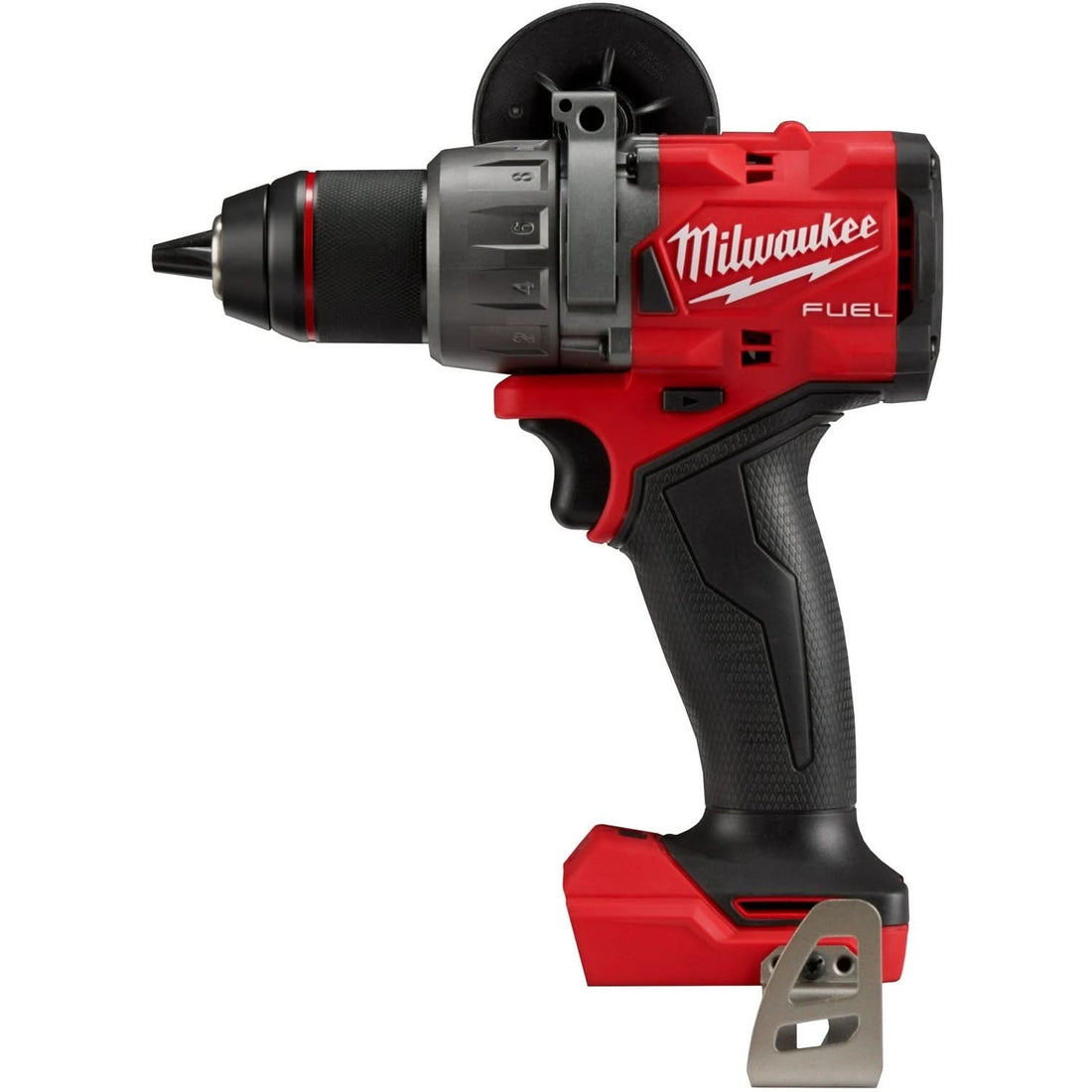
Milwaukee M18 vs DeWalt 20V MAX: Which Platform Should You Commit To?
Both run the same 18V nominal chemistry — DeWalt's "20V MAX" is a marketing name for the peak no-load voltage, not a different spec. Their batteries don't interchange. And for most people already holding a tool or two, the smartest move isn't picking a winner — it's committing hard to whatever color you already own and getting more out of those packs. Milwaukee M18 edges tool breadth and heavy-duty range at the top end; DeWalt 20V MAX edges FLEXVOLT crossover flexibility and often entry price. New buyer with nothing? The breakdown below will land you.
Milwaukee M18 vs DeWalt 20V MAX — The Short Answer
| Category | Milwaukee M18 | DeWalt 20V MAX |
|---|---|---|
| Nominal voltage | 18V | 18V |
| Marketing label | "M18" | "20V MAX" |
| Batteries interchange? | No | No |
| Platform size | 250+ tools | 300+ tools |
| Top-end battery | FORGE HD12.0 (12.0Ah) | FLEXVOLT 12.0Ah (20V/60V dual) |
| Battery Ah range | CP2.0 → FORGE HD12.0 | 1.5Ah → 12.0Ah FLEXVOLT |
| 60V-class cordless tools | No | Yes (FLEXVOLT ecosystem) |
| Best for | Heavy trades, widest specialty lineup | FLEXVOLT crossover power, lower entry cost |
Neither is a bad bet. Both are massive, mature ecosystems. The choice comes down to what you already own and where you want to go.
Are They the Same Voltage? The 18V vs "20V MAX" Thing, Explained
Yes — functionally identical.
Both the M18 and 20V MAX packs run five lithium-ion cells in series. Five cells at 3.6V nominal each equals 18V — the voltage the battery actually delivers under load. The "20V" on DeWalt's label is the peak no-load voltage, measured when nothing is drawing current. DeWalt markets the max. Milwaukee markets the nominal. The chemistry is the same.
This matters because a lot of people come into this comparison thinking one platform is more powerful based on the label. It's not. Under a real load, both run at 18V.
Can You Mix Batteries Between Milwaukee M18 and DeWalt 20V MAX?
No — not without a third-party adapter.
M18 and 20V MAX packs have different terminal geometry, different contact arrangements, and different battery management electronics. An M18 pack won't physically slide into a DeWalt tool, and vice versa.
Third-party adapters exist. They work for light-to-moderate loads, but they void most tool warranties and don't fully pass the battery communication protocol — the electronics handshake that governs thermal management and discharge protection. On high-draw tools like grinders, circular saws, or recip saws, that's a real risk.
If you're running mixed colors and considering an adapter, see the full breakdown: battery adapter guide.
Bottom line: plan around one platform and stay there.
Tool Lineup — Where Each Platform Leads
Both are enormous. Milwaukee M18 and DeWalt 20V MAX are the two largest 18V cordless ecosystems on the market — neither will leave you short. The full DeWalt 20V MAX platform is covered in depth at DeWalt 20V platform breakdown if you're evaluating from the DeWalt side.
Where they differ:
Milwaukee M18 leans deeper into the trades — HVAC, plumbing, electrical, mechanical. The lineup includes specialty tools like pipe threaders, cable cutters, drain cleaners, and dedicated automotive equipment. If you're a tradesperson whose kit goes heavy all day, M18 has more coverage in the specialty corners.
DeWalt 20V MAX is strong across general construction and benefits from FLEXVOLT crossover — covered below. It also shows up in more big-box contractor kits, which shapes the new-buyer entry price.
For general construction or DIY, both cover you completely. The specialty difference only matters if your trade needs something specific.
Batteries — How High Each Platform Goes
Milwaukee M18:
The range runs from the compact CP2.0 (2.0Ah, light and short) up to the FORGE HD12.0 at 12.0Ah. The FORGE packs — HD12.0 and XC8.0 — use lithium-iron-phosphate (LFP) cells for better thermal performance under sustained high-draw use. They're bulkier and heavier than standard XC packs; that's the trade-off for extra capacity and heat stability.
The full M18 FORGE vs DeWalt battery comparison lives at FORGE vs POWERSTACK comparison if you want a pack-level breakdown.
DeWalt 20V MAX:
The range goes from 1.5Ah compacts up to the FLEXVOLT DCB612 at 12.0Ah — but that top-end pack does something the Milwaukee lineup can't match. The DCB612 is dual-voltage: 20V MAX in a 20V tool, 60V MAX in a 60V FLEXVOLT tool (large circular saws, miter saws, table saws). One battery. Two voltage tiers. That's real money saved if you eventually want cordless replacements for corded saws.
If you ever plan to run 60V-class power off a cordless platform, DeWalt's FLEXVOLT ecosystem is the only path. Milwaukee's heavy hitters top out at 18V.
Price — Where Each Actually Wins
Neither platform is cheap. Both charge a premium for flagship tool+battery combos, and buying in is a multi-year investment.
DeWalt entry kits — drill/impact combos with a pair of 2.0Ah packs — tend to run a bit lighter on price at the big-box level than Milwaukee's equivalent. The gap isn't huge, but it's consistent enough to matter for a new buyer on a budget.
Once you're in and shopping bare tools, pricing evens out considerably across the platforms.
The real FLEXVOLT value play: if you need heavy saw work (miter saw, track saw, table saw), DeWalt's dual-voltage ecosystem means your 20V batteries cross over to 60V tools. That eliminates a separate battery investment. Milwaukee's M18 packs max at 18V regardless of pack size.
Don't buy extra batteries on whichever platform is cheaper right now. Buy extra batteries on the platform you already work on the most.
Which Should You Pick?
By user type — not by spec winners:
You already own 1–3 tools on one platform. Stop here. Stay on it. The cost of switching — new batteries, new chargers — eats any performance edge you might gain. Get more packs and more accessories for what you have.
New buyer, general DIY/homeowner. Match what a family member or friend already has so you can share batteries. No existing platform nearby? DeWalt entry kits tend to cost less to get started. Either platform handles everything a homeowner runs.
New buyer, heavy trades. Milwaukee M18. The specialty tool depth in HVAC, plumbing, electrical, and mechanical is broader. If you eventually want a 60V-class corded-replacement saw, revisit DeWalt — but most trade work runs off 18V all day.
Auto/mechanic work. Milwaukee M18. Strong automotive-specific lineup including underbody lights, ratchets, and compact tools. Milwaukee M12 is the dominant platform for tight-space ratchet and socket work. M12 and M18 compatibility covers the M12/M18 relationship if both sizes matter to your kit.
Want one platform for big cordless saws too. DeWalt + FLEXVOLT. One battery ecosystem from compact drill to 60V miter saw.
For accessories like tire inflators — which both platforms offer — see tire inflator comparison for a side-by-side on that specific tool.
Get More Out of the Batteries You Already Own
Whichever color you went with, those packs can do more than spin bits. A Milwaukee M18 or DeWalt 20V MAX battery can power your phone, your laptop, or a real 120V outlet on-site — no generator, no extension cord, just the pack already in your bag.
On Milwaukee M18:
- M18 USB-C fast charger — 65W USB-C fast charger that clips onto any M18 pack. Charges phones, tablets, and most USB-C laptops straight off the battery.
- M18 portable power inverter — 150W inverter that turns any M18 pack into a portable 120V outlet. Plug in a trouble light, a phone charger, a small radio — anything under 150W.
On DeWalt 20V MAX:
- DeWalt 20V MAX USB charger — Same 65W USB-C output, snaps onto any 20V MAX XR pack.
- DeWalt 150W power inverter — 150W AC inverter for the yellow side. Same wattage ceiling, same on-site flexibility.
The battery stems are platform-specific — M18 won't fit the DeWalt adapters and vice versa. But there's one accessory that works either way:
Cross-platform magnetic bit holder — Fits any drill or impact driver regardless of brand. M18, 20V MAX, M12 — doesn't matter. Keeps the bit you need stuck right where you can grab it.
Frequently Asked Questions
Is Milwaukee M18 better than DeWalt 20V MAX?
Neither wins outright. Both are 18V class platforms with massive tool lineups. Milwaukee edges tool breadth in heavy trades; DeWalt edges FLEXVOLT crossover and usually the entry price on combo kits. The best platform is the one you already own tools on.
Are Milwaukee and DeWalt batteries interchangeable?
No. The battery stems are physically different, and the electronics governing thermal management and discharge protection don't communicate across platforms. Third-party adapters exist but void warranties and skip some protection features — use them cautiously, and not on high-draw tools. Full adapter breakdown: adapter details.
Why does DeWalt say 20V and Milwaukee says 18V?
Same battery. 20V is the peak no-load voltage (5 cells × 4.0V at full charge). 18V is the nominal operating voltage (5 cells × 3.6V nominal). DeWalt markets the peak. Milwaukee markets the nominal. No voltage advantage either way.
Which has more tools, Milwaukee or DeWalt?
Both platforms run massive lineups — Milwaukee M18 at 250+ tools and DeWalt 20V MAX at 300+ — two of the largest cordless ecosystems built. Milwaukee M18 generally runs deeper in heavy trades (HVAC, plumbing, electrical). For current counts, check each brand's platform page directly.
Can I use an adapter to run DeWalt batteries on Milwaukee tools?
Adapters exist and work for many tools. They don't pass the full battery communication protocol, and using them can void your tool warranty. Fine for light loads and casual use; skip them on grinders, saws, and high-draw tools. adapter details covers what to expect.
Which is better for a DIYer or homeowner?
Whichever you can get into cheapest on the tools you actually need — both platforms cover every homeowner task without breaking a sweat. Match a friend or family member's platform if you can. Otherwise, DeWalt entry kits often cost a bit less to start. Either way, pick one and commit.
Pick your color and lock it in. Both platforms run the same chemistry, and those packs are worth more than just spinning bits — snap on a USB-C charger or a 120V inverter and they're doing real work even when the tools are down.
Milwaukee M18 collection — Milwaukee M18 accessories DeWalt 20V MAX collection — DeWalt 20V MAX accessories