
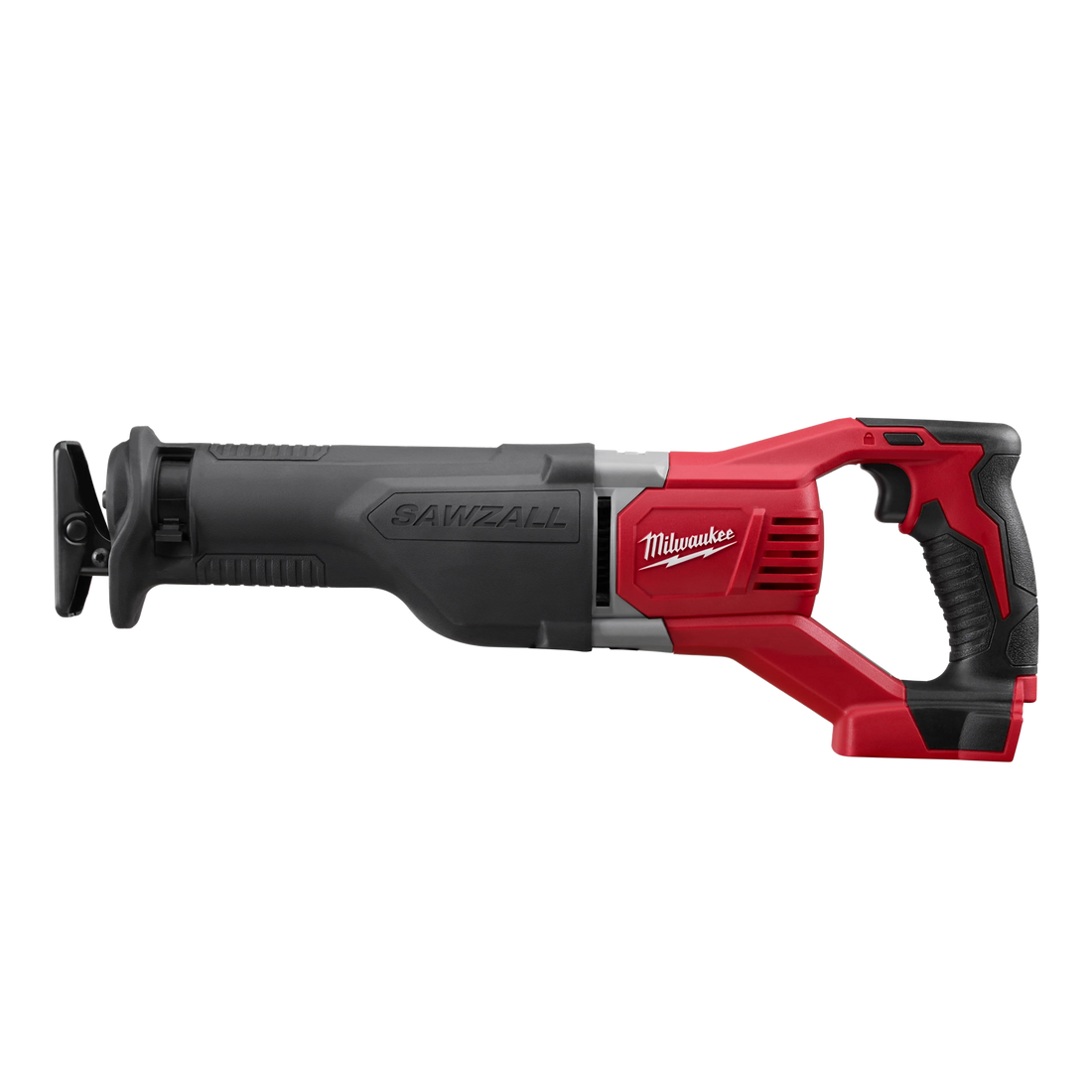
Why Your Reciprocating Saw Blade Keeps Falling Out (and How to Fix It)
Four things eject a reciprocating saw blade: a dirty or worn blade clamp, a blade that wasn't fully seated on insertion, debris packed into the clamp slot, or — the one most guides skip entirely — a blade with an undersized or worn shank that never properly engaged the clamp in the first place. Start with the clamp. Clean it, reseat the blade, do a firm hand-tug before you trigger. If it still ejects, swap in a fresh name-brand blade before you assume the saw needs service. Most "saw problem" calls turn out to be a blade problem.
The Four Causes — and How to Diagnose Yours
| Cause | Quick sign | First fix |
|---|---|---|
| Dirty or worn clamp | Blade wobbles or pulls free by hand | Clean bore; check spring |
| Incomplete insertion | Falls out on very first stroke | Re-seat until click; tug-test |
| Debris packed in slot | Won't seat fully or seats with extra resistance | Compressed air, tool off |
| Undersized blade shank | Clicks in but ejects under load | Swap to a name-brand blade |
1. Dirty or Worn Blade Clamp
What it looks like: The blade has visible side-to-side wobble when locked, or you can pull it free with light hand pressure.
Fix: Clear debris from the clamp slot with compressed air or a stiff brush. Sawdust and metal shavings pack into the bore and stop the clamp spring from fully seating. If wobble persists after a thorough cleaning, the clamp spring or collar is worn — see the replacement section below.
2. Release Button Not Fully Pressed on Insertion
What it looks like: Blade looks locked, falls out on the very first stroke.
Fix: Press and hold the release lever *completely* before inserting the blade. Push the shank all the way in until you hear or feel a definite click — that's the clamp spring snapping into the engagement groove. Then release the lever. If you let go of the button before the shank is fully seated, the clamp grabs partway, feels solid, and fails under load. Hand-tug every time before pulling the trigger.
3. Debris Packed Into the Clamp Slot
What it looks like: The blade won't seat all the way, or seats with noticeably more resistance than usual.
Fix: Tool off — and pull the battery on a cordless. Hit the clamp bore with compressed air. On saws doing heavy demo work, sawdust and rust flakes compact in there fast. This is a maintenance item, not a warranty issue.
4. Undersized or Worn Blade Shank (The One Guides Miss)
What it looks like: The clamp clicks, the blade *feels* locked, but it walks or ejects under load — especially when there's lateral pressure on the cut.
Fix: Swap in a blade from a different pack — ideally a name brand. If that blade holds under the same cut conditions, the shank on your original blades is out of spec or worn. Discard that set. Budget blades from unknown brands frequently have shanks that are slightly narrow, clearing the bore just enough to click but not gripping under load. The clamp isn't broken; the blade was wrong.
When Does the Clamp Itself Need Replacing?
If you've cleaned the clamp, you're using name-brand blades, and multiple fresh blades from different brands all eject — the clamp is the problem.
Grip a locked blade close to the clamp and try rocking it side to side. Noticeable lateral play — roughly 1 mm or more — is a field-service flag that the spring or collar has worn out. (That's a rule of thumb from service work, not a published tolerance.)
Clamp assemblies are a replaceable wear part. OEM clamp assemblies run $15–$40 — Milwaukee's 14-46-1011 lists at $16.99 and DeWalt's N389789 at $15.79. Pull the model number off the plate on your saw body and order the OEM part. Don't replace a good saw over a $25 part.
Does Blade Brand Matter? (The Shank Compatibility Answer)
Yes — mostly at the low end.
Every major brand's blades use the same T-shank interface. Milwaukee SAWZALL blades fit DeWalt saws. Bosch fits Milwaukee. Diablo fits everything. That interoperability is real and reliable across name brands.
Budget blades are where it breaks down. Shank tolerances get sloppy enough that a blade clears the bore but won't hold under load. If you've been running an unknown-brand value pack and your saw suddenly "has a clamp problem," test with a Milwaukee or DeWalt blade first. Nine times out of ten that test tells the story.
The 12-piece SAWZALL demolition set covers wood, nail-embedded wood, and general demo with blades spec'd to tolerances worth trusting. For cutting pipe, conduit, and structural steel, step up to the 16-piece metal-cutting set. For how to choose between blade types by application, our SAWZALL blade guide has the breakdown.
Milwaukee SAWZALL and DeWalt keyless blade clamps work the same way mechanically — these fixes apply to both platforms. For a head-to-head on blade performance across brands, see our Milwaukee vs. DeWalt blade comparison.
How to Insert a Recip Saw Blade Correctly
1. Power off. On cordless saws, pull the battery. On corded, unplug. 2. Press and hold the blade-release lever (or collar) fully. Don't half-press. 3. Push the blade shank into the clamp slot until you feel a click or snap. If you stop short of that, the blade isn't seated. 4. Release the lever. 5. Tug the blade firmly by hand. Should not pull free. If it does, go back to step 2.
*Older screw-collar saws use a hex key to tighten a threaded collar rather than a lever. Same principle — shank fully in before tightening — but there's no click to feel. Tighten until snug, then tug-test.*
Teeth direction: Orientation is job-dependent — teeth can face upward or downward. On most standard cuts, teeth face toward the shoe, which pulls the workpiece against the shoe and keeps the cut controlled. For plunge cuts, teeth-up is the recommended orientation.
FAQ
Why does my SAWZALL blade keep coming out? Four causes: dirty or worn clamp, blade not fully seated on insertion, debris in the clamp slot, or a budget blade with an undersized shank. Clean the clamp first, reseat the blade, tug-test it, then try a name-brand blade before sending the saw in for service.
Do all reciprocating saw blades fit all saws? Any blade with a universal shank — used by Milwaukee, DeWalt, Bosch, Makita, Diablo, and most other major brands — fits any current recip saw. Budget blades from no-name sources sometimes have out-of-spec shanks that engage the clamp lightly but won't hold under load.
How do I know if my recip saw clamp is worn out? Lock a blade in, grip it close to the clamp, and try rocking it side to side. Noticeable lateral play — around 1 mm or more — or a blade you can pull free by hand indicates a worn clamp spring or collar. Clean the bore first; packed debris creates the same symptoms.
Can a bad blade cause it to fall out? Yes. Undersized or worn shanks — common in budget blade packs — grip the clamp lightly and eject under lateral pressure. Swap in a name-brand blade. If that one holds, the blade was the problem.
How do you properly insert a reciprocating saw blade? Press and hold the release lever, push the shank fully into the slot until it clicks, then release. Hand-tug before triggering — always.
Should reciprocating saw blade teeth face up or down? For most standard cuts, teeth face up (toward the shoe), though the right orientation is job-dependent — it can vary based on the type of cut. Consult your saw's operator manual for the recommended direction for your specific application.
How long do reciprocating saw blade clamps last? No published service interval, but heavy professional use can wear a clamp noticeably over a few years. OEM replacement clamp assemblies are an affordable wear item — pull the model number off your saw's plate and order the correct part directly from the manufacturer. Replace the part, not the saw.
If the clamp checked out and it was the blade all along, that's the right diagnosis. A blade set built to proper shank tolerances won't cost you the blade mid-stroke. Browse the Milwaukee SAWZALL blade lineup in our Milwaukee collection.