
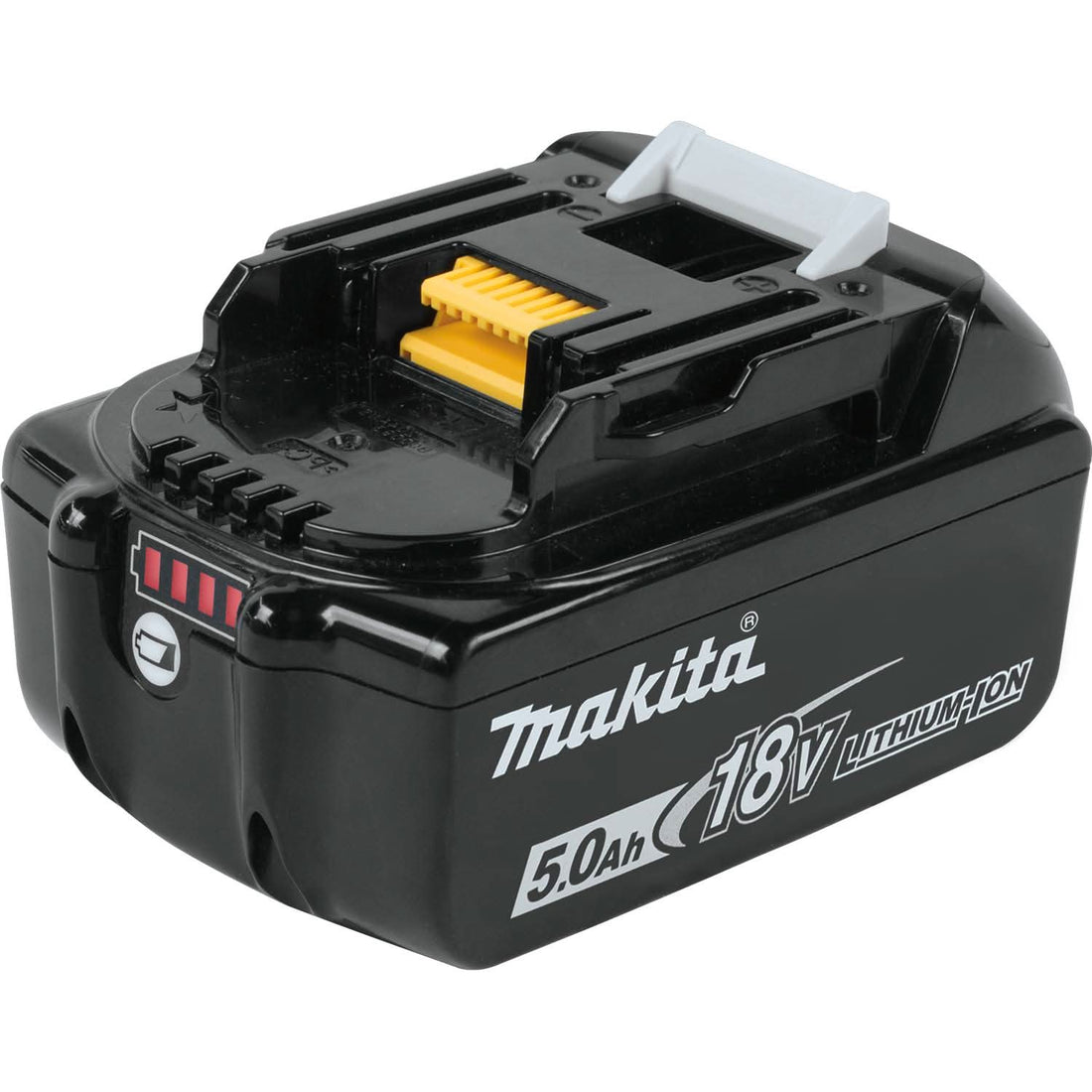
Is It Bad to Run a Power Tool Battery All the Way Dead?
Running your Milwaukee M18 or DeWalt 20V MAX battery until the tool quits is fine. The battery's BMS (battery management system) shuts the tool off before the cells reach a damaging voltage — so "running it dead" in practice means the tool stopped, not that the cells were emptied. Modern Li-ion has no memory effect. The real danger is leaving a discharged pack sitting in your bag for weeks or months without plugging it in. Do that, and you'll see permanent capacity loss. Run it down on the jobsite and recharge it the same day — no damage done.
What "Dead" Actually Means for a Li-ion Tool Battery
The BMS Voltage Floor — The Tool Stops Before the Cells Do
Every Milwaukee REDLITHIUM (M12 and M18) and DeWalt 20V MAX battery has a BMS that monitors cell voltage in real time. When the pack drops to its programmed cutoff threshold, the BMS kills power to the tool. The pack isn't empty at that point — it's been stopped early on purpose.
Why? Li-ion cells sustain permanent damage when cell voltage falls below a critical minimum threshold. Neither Milwaukee nor DeWalt publishes their exact cutoff voltage, but both confirm over-discharge protection in their REDLITHIUM and 20V MAX documentation. The cutoff sits safely above the damage threshold. When the tool stops, there's still protective headroom left in the cells.
A standard Milwaukee M18 pack runs 5 Li-ion cells in series — 18V nominal, 3.6–3.7V per cell nominal. DeWalt 20V MAX packs are the same architecture: 5 cells in series, 18V nominal. (The "20V" refers to peak charged voltage, not the operating voltage.) The BMS logic is consistent across both platforms.
For a broader look at how Milwaukee and DeWalt battery specs compare, see battery compatibility across platforms.
Why Old NiCad "Full Discharge" Advice Doesn't Apply to Li-ion
NiCad batteries developed memory effect — repeatedly charging from a partial state caused them to lose capacity at that charge level. The fix was to run them fully dead before recharging.
Li-ion doesn't work that way. No memory effect. Topping off a Milwaukee M18 at 40% is fine. Charging a DeWalt pack after a short run is fine. Waiting until the tool stops to charge isn't harmful, but it's also not required. Charge whenever it's convenient.
What Actually Kills a Lithium-Ion Tool Battery
Time at Low State of Charge — The Chemistry Behind It
This is the part most battery advice gets wrong. The real damage mechanism isn't running a Li-ion battery down — it's leaving it at a low state of charge for an extended period.
When a Li-ion cell sits near empty, chemical changes accumulate: lithium plating on the anode, electrolyte decomposition at the electrode surfaces. These changes aren't reversible. Each day a discharged pack sits without being recharged, a small amount of capacity is permanently gone. It's time-dependent — not a single-event failure.
How Long Is Too Long to Leave a Discharged Pack Sitting?
A few hours after the tool stops: no meaningful harm. Overnight: fine. A few days: still largely fine for most packs. Weeks to months at low charge: this is where runtime shrinks, fault lights appear, and packs stop reaching a full charge state.
Neither Milwaukee nor DeWalt publishes a precise number, but industry literature (Battery University BU-702) places significant degradation at multi-week exposure to sub-20% state of charge. The practical rule: plug it in the same day you run it flat. That's it.
Whether leaving a charged pack on the charger is a problem is a separate question — covered in what happens when you leave batteries on the charger.
For long-term storage (several months or more), aim for a partial charge state — neither fully depleted nor fully topped off. See storage guidelines for tool batteries for the full breakdown.
How Heat Speeds Up Battery Damage at Low Charge
A discharged pack left in a hot truck bed is worse than one left in a cool shop. Heat accelerates the chemical degradation at low state of charge — lithium plating and electrolyte breakdown both move faster at higher temperatures.
When the job's done and packs are low, get them out of direct sun and off hot surfaces. Environmental stress compounds the time-at-low-SoC risk. For how temperature affects charging from the opposite direction, see charging in cold weather.
How to Tell If Your Battery Was Already Damaged by Sitting Dead
Three signs that a pack has taken a hit:
- Charger fault or defect light. Instead of a normal charge indicator, the charger shows a fault — meaning the pack either won't accept a charge or triggered the BMS protection response.
- Noticeably shorter runtime. Not "maybe a little shorter" — meaningfully shorter. A pack that used to handle two hours of drilling and now quits at forty-five minutes has lost real capacity.
- Won't reach a full charge state. Some damaged packs charge but plateau well below full. The charger may show "done" when the pack is sitting at 60–70% of its original capacity.
Can You Revive a Tool Battery That Won't Charge After Sitting Dead?
Sometimes. Many Milwaukee and DeWalt chargers attempt a slow trickle wake-up cycle on a deeply discharged pack before declaring it a lost cause. Put the pack on the charger and give it 30–60 minutes before assuming the worst.
If the charger still shows a fault or defect light after that cycle, the cells are too far gone to recover. Replace the pack — don't trickle-charge indefinitely or try storing it and checking again later.
For Milwaukee-specific charger fault codes and what they mean, see troubleshooting Milwaukee charging issues.
Frequently Asked Questions
Does running a power tool battery all the way dead ruin it? No. The BMS stops the tool before cells reach a damaging voltage. What ruins a Li-ion battery is leaving it discharged for weeks or months without plugging it in.
Should I fully discharge a lithium-ion battery before charging? No. That's advice for old NiCad batteries. Li-ion has no memory effect — charge it whenever it's convenient. Waiting for the tool to quit provides no benefit.
What happens if a power tool battery completely dies? The BMS cuts the tool off. Plug it into the charger within a day or two and it's fine. Leave it sitting discharged for months, and you'll see permanent capacity loss.
Can a completely dead tool battery be revived? Sometimes. If a pack sat discharged long enough to trigger a charger fault, many Milwaukee and DeWalt chargers will attempt a slow wake-up cycle before declaring the pack dead. If the charger still shows a defect fault after that cycle, the cells are gone — the pack needs to be replaced.
Is it bad to leave a tool battery dead overnight? No. Overnight is fine. A few days is still largely fine. The risk accumulates over weeks and months at low charge, not hours.
What is the best charge level to store a tool battery? For long-term storage — several months or more — both Milwaukee and DeWalt recommend storing packs at a partial charge state, neither fully depleted nor fully topped off. For short-term storage — a few weeks — a full charge is fine.
If your pack is already showing shortened runtime or the charger won't clear a fault, it's time to replace it. Milwaukee M18 users: the M18 REDLITHIUM extended-capacity battery is a solid mid-range replacement, and the full M18 battery collection lineup covers every capacity option. DeWalt 20V MAX users: the DeWalt collection has current pack options. Everything else on the M18 platform is at the full Milwaukee collection.