
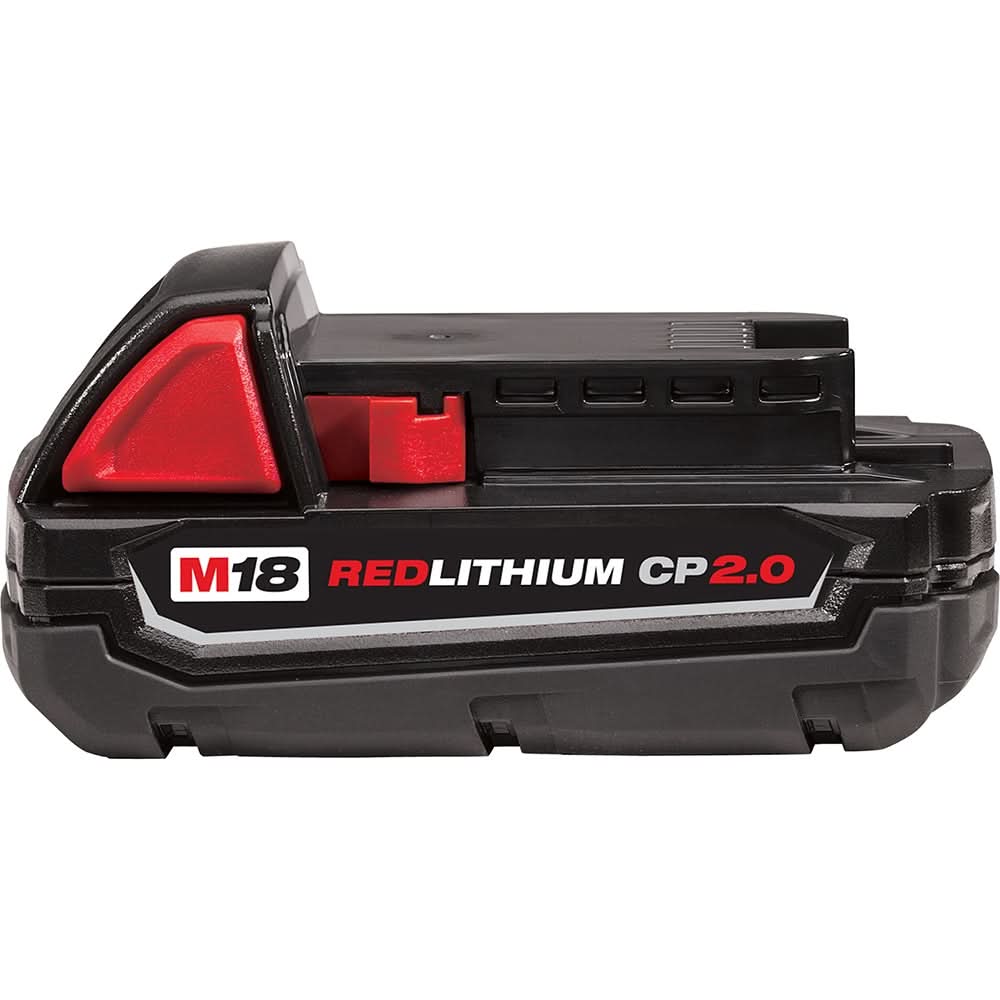
Charging a Lithium-Ion Power Tool Battery in Cold Weather: What You Need to Know
Don't charge a lithium-ion power tool battery when it's below 40°F (4°C). Most chargers — Milwaukee M18, M12, and DeWalt 20V MAX included — will refuse to start or fault out when they detect a cold battery. The reason isn't arbitrary: cold forces lithium ions through thicker electrolyte, spikes internal resistance, and triggers lithium plating on the anode. That last part causes permanent capacity loss. The fix is straightforward: warm the battery to at least 40°F before you plug it in. Here's what's actually happening, what your charger's lights mean, and how to keep working on a cold jobsite.
Why Does Cold Kill Lithium-Ion Charging?
What Happens Inside the Cell Below 40°F
Lithium-ion cells work by moving ions between electrodes through liquid electrolyte. Cold makes that electrolyte more viscous — think honey versus water. Ion transfer slows, internal resistance climbs, and the charging current can't distribute evenly across the anode.
That uneven distribution causes lithium plating: metallic lithium deposits on the graphite anode surface instead of intercalating into it the way it should. Those deposits don't reverse. Every cold-charge event etches a little more capacity off the battery permanently.
Capacity loss from cold ≠ permanent damage by default. A battery that reads weak after sitting in a 20°F truck bed often recovers most of its capacity once it warms to room temperature and completes a full charge cycle. Lithium plating from *charging* in the cold is a different story — that loss sticks.
Why Do Voltage Readings Lie in the Cold?
A cold battery reads lower open-circuit voltage than it actually holds. Your charger may interpret this as a deeply discharged or dead cell. It's not — it's a cold cell. Once the battery warms, voltage comes up to where it belongs. This is recoverable. Lithium plating is not.
What Is Your Charger Actually Doing in the Cold?
Milwaukee M18 and M12 Charger Cold-Weather Behavior
Milwaukee builds a temperature-sensing circuit into the battery pack itself, not just the charger. When the M18 or M12 battery is too cold, the charger reads that signal and responds.
On the Milwaukee M18 Rapid Charger (48-59-1801), the LED sequence works as follows: continuous red indicates charging, continuous green indicates charge complete, flashing red indicates a temperature delay, and a flashing red-plus-green pattern indicates a fault condition.
On the Milwaukee M12 charger (48-59-2401), a flashing red LED indicates the battery is too hot or too cold; charging will begin automatically when the battery reaches the correct charging temperature (40°F to 105°F).
What Milwaukee chargers *typically* do in cold conditions: the charge indicator flashes red or shows an alternating pattern rather than a steady charging light. Some Milwaukee chargers will enter a conditioning mode — a low-current trickle — rather than hard-faulting. If the light is flashing and the battery is cold, the charger is doing its job. It will resume normal charging once the pack warms up. This is not a broken charger.
DeWalt 20V MAX Charger Cold-Weather Behavior

DeWalt chargers have their own temperature-delay response. When the pack is outside the acceptable charge window, the charger pauses and indicates a temperature condition via LED. On the DCB115 and DCB107 chargers, the left LED blinks red during normal charging and goes solid red when charging is complete. During a temperature delay, the left LED blinks red while the right LED illuminates solid yellow. A fast-flashing red left LED indicates a communication error. Once the battery reaches an appropriate temperature, the yellow light turns off and charging resumes automatically.
Same principle as Milwaukee: the charger is not broken, and the battery is not dead. It's a protection circuit working as designed.
How Do You Safely Warm Up a Battery Before Charging?
Follow these three steps before connecting a cold battery to a charger.
Step 1: Remove the battery from the tool or charger and bring it inside. A heated truck cab works. A job trailer, a shop, a house — anywhere above 40°F. Don't leave it on the charger and hope for the best; some chargers will fault-loop; others will trickle-charge before the pack is ready, which stresses the cells.
Step 2: Let it warm up at room temperature. Neither Milwaukee nor DeWalt specifies a required warm-up duration in their OEM documentation. Milwaukee does suggest using the tool in a light application until the buzzing stops as a warm-up method, but gives no time guidance; DeWalt provides no warm-up guidance at all.
General guidance: 30–60 minutes at 65–70°F is typically enough to bring a pack up from below-freezing to a safe charge temperature. Don't rush it.
Step 3: Confirm the battery feels close to room temperature before connecting. You don't need a thermometer. If the case still feels significantly cold to the touch after 30 minutes, give it more time. Once it's at roughly room temp, connect to the charger in a warm environment and complete the charge cycle there.
What NOT to Do
- No heat guns. Concentrated heat damages the cell casing and can cause thermal runaway.
- No car-heater vents blowing directly on the pack. Uneven, too fast.
- No charging in the truck bed at 20°F because "it'll start eventually." If the charger's protection circuit is bypassed or if it enters conditioning mode at too low a temp, you risk plating the anode. The fact that a charge *completes* doesn't mean it completed safely.
- No microwaves. That one should be obvious, but it gets asked.
Can You Run the Tool in Cold Weather Even If You Can't Charge?
Yes. Discharging in cold weather is significantly less damaging than charging in cold. You'll see reduced runtime and power output — the same viscosity issue slows ion movement during discharge too — but you're not plating the anode the same way. Run the tool if you need to; just recharge once you're back somewhere warm.
Milwaukee M18 REDLITHIUM batteries are rated for discharge operation down to below 0°F / -18°C, so you can keep working in extreme cold — just don't try to charge at those temperatures. DeWalt 20V MAX batteries are similarly rated for operation across a wide cold-weather range, though discharge performance will be reduced in extreme cold; recharge only once the pack has warmed to a safe temperature.
Is the Battery Permanently Damaged?
Run this test: fully warm the battery (30–60 min at room temp), complete a full charge cycle in a warm environment, and then put it to work. If runtime comes back to near-normal, you likely had temporary capacity suppression — not permanent damage.
Signs of actual lithium-plating damage:
- Capacity doesn't recover after a proper warm-charge cycle
- Pack runs noticeably shorter than other same-capacity packs on the same platform
- Battery gets warm during charging even when ambient temps are normal
- Any swelling of the pack — stop using it immediately
One cold-charge event is unlikely to ruin a battery. Repeated cold charging compounds the damage each time. If you've got an M18 pack behaving strangely after a cold event and you're not sure if it's the battery model or the weather damage, cross-reference what normal behavior looks like for your pack: comparing Milwaukee M18 battery chemistry options. For DeWalt, check how different DeWalt battery platforms stack up to compare degradation patterns.
When to replace: if capacity doesn't recover and the pack is outside warranty, replace it. A damaged pack running on a tool that draws high current is harder on the tool's electronics too.
How Do You Build a Cold-Weather Charging Workflow on the Jobsite?
Don't just manage cold-weather problems — design around them.
Rotate batteries. Keep one pack inside (heated cab, trailer, building) charging while the other is on the tool. Never let both packs get cold simultaneously.
Charge in the truck via inverter. This is the most practical jobsite solution. A 150W power inverter running off your vehicle plugs into standard chargers and lets you charge Milwaukee M18 or DeWalt 20V MAX packs from your truck's battery in a warm cab.
- Milwaukee M18 platform: power inverter for M18 batteries — 150W, 120V outlet plus USB ports
- DeWalt 20V MAX platform: 150W power inverter for Max XR batteries — same 150W spec
For more on how long a tool battery can actually power an inverter setup, see how to calculate runtime when powering devices from a power tool battery.
Store overnight at room temperature. Never leave packs in the truck bed overnight in winter. A garage sitting at 35°F is marginal. A heated shop or your house is correct. Store at roughly 50% charge for longer-term storage.
Insulated battery pouches help slow temperature drop between cab and the work area — we don't stock those currently, but the rest of your Milwaukee platform accessories are available, as well as DeWalt options.
FAQ — Cold-Weather Battery Charging Questions
What is the minimum temperature to charge a lithium-ion battery?
Most lithium-ion power tool batteries — including Milwaukee M18/M12 and DeWalt 20V MAX — should not be charged below 40°F (4°C). Charging below this temperature risks lithium plating, which permanently reduces capacity. Warm the battery to at least 40°F before connecting to a charger.
Can you charge a Milwaukee M18 battery in cold weather?
Not safely below 40°F. Milwaukee M18 chargers include a temperature-sensing circuit and will fault or enter a conditioning mode when the pack is too cold. The charger is protecting the cells. Bring the battery above 40°F, reconnect, and it will charge normally.
What does a flashing light on my charger mean in cold weather?
On Milwaukee and DeWalt chargers, a flashing or alternating LED pattern — rather than a steady charging indicator — in cold conditions means the charger has detected the battery is below safe charging temperature and has paused. It is not broken. Warm the battery and reconnect.
On the Milwaukee 48-59-1801, a flashing red LED specifically signals a temperature delay; a flashing red-plus-green pattern signals a fault. On the DeWalt DCB115/DCB107, a blinking red left LED combined with a solid yellow right LED indicates a temperature delay, while a fast-flashing red left LED indicates a communication error.
Will a cold battery damage my charger?
No. The charger's temperature-sensing circuit protects both battery and charger from a bad charge cycle. The risk is entirely to the battery's cells — specifically lithium plating on the anode. The charger hardware itself is not at risk.
How long does a lithium-ion battery need to warm up before charging?
Generally 30–60 minutes at indoor room temperature (65–70°F) is enough to bring a pack up from below-freezing to safe charging temperature. Neither Milwaukee nor DeWalt specifies a required warm-up duration in their OEM documentation, so treat that 30–60 minute range as practical field guidance rather than a manufacturer requirement.
Can you use a lithium-ion battery in cold weather even if you can't charge it?
Yes. Running the tool in cold weather is far less damaging than charging in cold. You'll see reduced runtime and power, but no permanent cell damage from discharge alone. Recharge once you're back in a warm environment.
Is a battery ruined if it was charged in freezing temperatures?
Not necessarily from a single event. Fully warm the battery, run a complete charge cycle at room temperature, and test runtime. If capacity comes back, damage was temporary. If runtime stays short and doesn't recover, lithium plating has occurred and capacity loss is permanent. Repeated cold-charging compounds the damage.
How should I store lithium-ion batteries in winter?
Store at room temperature — 50–70°F is ideal. Charge to roughly 50% before extended storage. Never leave packs in a vehicle overnight in freezing temps. A cold garage is marginal; a heated space is right.
If you're on the Milwaukee platform and need a charger or inverter that handles your pack correctly, start here: Milwaukee tools and accessories. DeWalt users: DeWalt tools and accessories.