
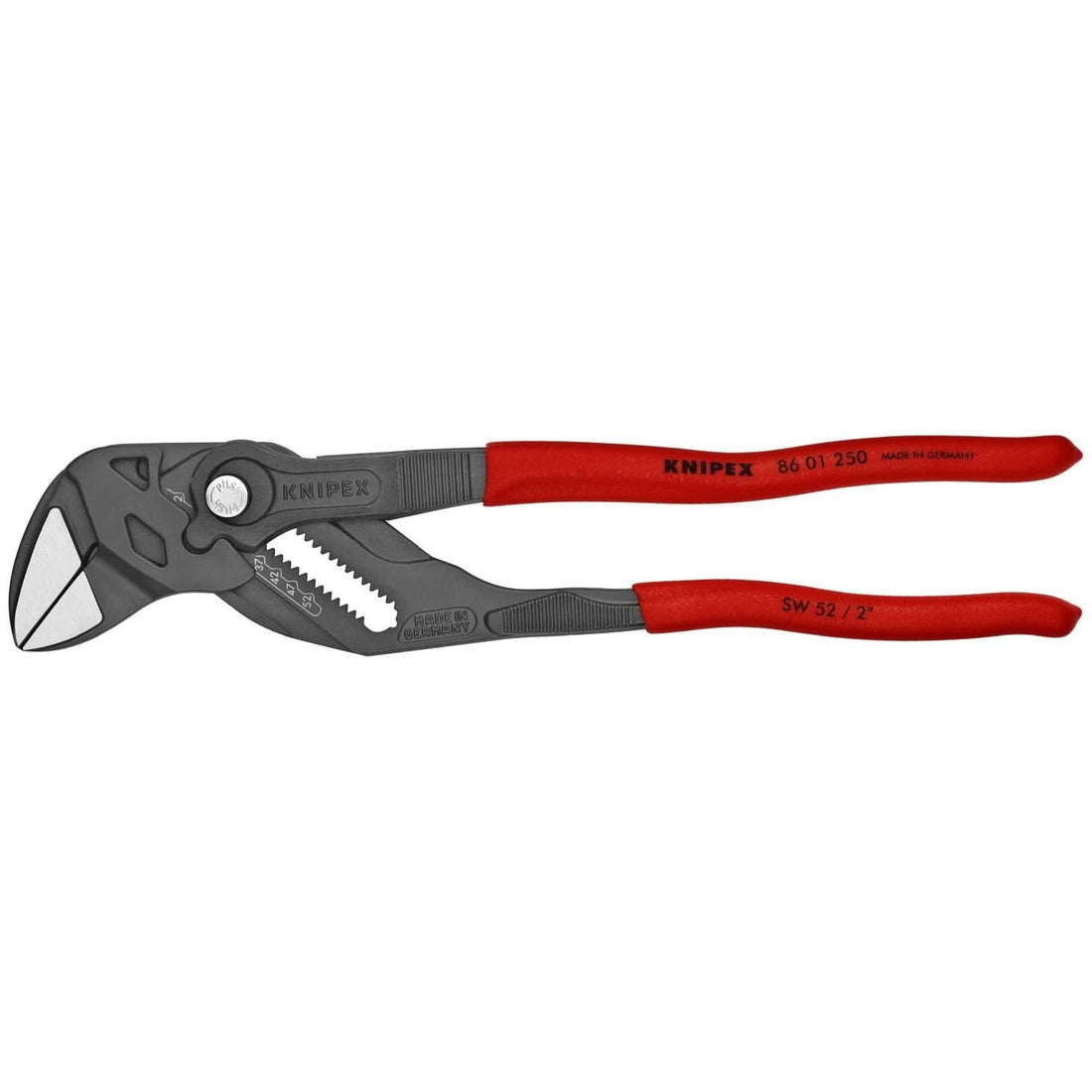
Is the Knipex Pliers Wrench Worth It? (An Honest Breakdown)
The short answer: yes — if you do finish plumbing, chrome valves, or any work where jaw marks matter. The Knipex Pliers Wrench (86-series) grips with parallel, smooth jaws that won't chew up chrome or polished fittings. That one feature pays for itself the first time it saves you from a scratched angle stop or a marred escutcheon. If your work is rough-in only, or you'll reach for pliers five times a year, a good pair of Channellocks is the honest answer. Here's how to decide.
What Is the Knipex Pliers Wrench? (And How It Differs from the Cobra)
A lot of "Knipex review" content lumps the Pliers Wrench and the Cobra together under "both are great, buy either." That's not useful. They're different tools built for different jobs.
Parallel Jaw Design — Why It Matters
The defining feature of the 86-series is jaw geometry: both jaws stay parallel to each other at every opening, like a wrench, not like standard slip-joint pliers where the jaws angle in as they widen. The jaws are also smooth — no teeth, no serrations. That combination means the tool grips flat stock (hex fittings, valve bodies, compression nuts) without concentrating force on sharp points that gouge the surface.
On chrome supply lines and polished valves, this is the difference between a fitting that looks untouched and one with a ring of bite marks. Chrome vanadium steel (CrV), oil-hardened and tempered with induction-hardened jaws — the jaw precision reflects that spec.
86-Series vs 87-Series: The Line You Need to Know
- 86-series (Pliers Wrench): Parallel smooth jaws. Built for hex fittings, compression nuts, chrome valves, finished surfaces. Does not grip round pipe reliably.
- 87-series (Cobra): Tongue-and-groove mechanism, pointed nose, toothed jaws. Built for round pipe and irregular shapes. Does not protect finished surfaces.
If you're cross-shopping these two, this detailed breakdown goes deeper on the Cobra's strengths and where Channellock competes with it.
The Jobs Where It's Genuinely Worth the Premium
Finish Plumbing and Chrome Supply Lines
Under a bathroom vanity or behind a toilet, you're tightening compression fittings on chrome risers that are visible when the cabinet door is open. Slip-joint pliers with teeth — even taped ones — leave marks. The Pliers Wrench doesn't. Plumbers who do finish work buy one and don't go back.
Chrome Valves, Angle Stops, and Escutcheon Plates
Angle stops and supply valves sit in plain sight, and they're soft chrome over brass — exactly the material that shows every jaw mark. One careless grip with a toothed plier and you're explaining to a homeowner why the fitting they paid you to install looks beat up. The 180mm handles angle stops and most supply valves without issue.
Hex Fittings Where Marring Is Unacceptable
Food-service equipment, marine hardware, exposed HVAC fittings — anywhere a scratch either creates a contamination risk or looks unprofessional. The flat parallel jaws grip hex stock the same way an open-end wrench does, without rounding corners the way a worn open-end can.
Tradespeople Who Reach for Pliers Constantly
If you're a plumber or HVAC tech pulling out pliers 20 or 30 times a day, the price-per-use math shifts fast. The 86 03 180 retails for roughly $58.83 — spread that over a career of daily use and it's noise. The tool will outlast you if you don't lose it.
When the Knipex Pliers Wrench Isn't Worth It
Rough-In and Demo Work
Cutting out old drain assemblies, muscling corroded galvanized fittings, grabbing ABS pipe — none of that needs smooth jaws. Toothed slip-joint pliers actually bite better here. Bringing a Pliers Wrench to a demo job is overkill.
Homeowners Who Use Pliers a Few Times a Year
If the tool sits in a drawer for ten months and comes out to tighten a supply line under the kitchen sink, a Channellock 440 (around $21.92) does that job. The Knipex is better, but the difference in results on two jobs a year doesn't justify 3–5× the cost. Upgrade when you're using pliers weekly.
When a Fixed Wrench Is Actually the Right Tool
The Pliers Wrench grips like a wrench, but it's not a torque wrench or a socket set. On critical fasteners — gas line connections, flare fittings, anything with a specified torque value — use the right wrench. The Pliers Wrench excels where "hand tight plus a quarter turn" is the standard, not where you need a calibrated number.
Which Size Knipex Pliers Wrench Should You Buy?
Most reviews show one size and move on. Here's the actual breakdown across all four models, based on Knipex product specs:
| Model | Length | Jaw Capacity | Weight | Best For |
|---|---|---|---|---|
| 86 03 150 | 150 mm (6") | 25 mm | 175 g | Tight spaces, electrical conduit fittings, compact work |
| 86 03 180 | 180 mm (7") | 32 mm | ~230 g | Most plumbing: angle stops, supply lines, compression nuts — the first buy |
| 86 03 250 | 250 mm (10") | 46 mm | ~380 g | HVAC, larger fittings, bigger valve bodies — the HVAC default |
| 86 03 300 | 300 mm (12") | 52 mm | — | Large-format work; specialty, not a starter tool |
The 150mm model weighs 175 g; the 300mm weight is not listed in the official product specifications.
Start with the 180mm. It handles the majority of finish plumbing, covers most compression and supply fittings, and fits in a tool bag without eating space. Add the 250mm when you're regularly working on HVAC or larger fittings. The 300mm is a deliberate buy for specific work, not an everyday carry.
Frequently Asked Questions
Is Knipex worth the money?
For finish work and any job where marring matters, yes. Parallel smooth jaws prevent the bite marks that toothed pliers leave on chrome and polished brass. For rough-in-only work or occasional home use, a quality Channellock handles most of those jobs for a fraction of the price.
What's the difference between the Knipex Cobra and the Knipex Pliers Wrench?
The Cobra (87-series) uses a tongue-and-groove mechanism with toothed jaws — right for round pipe and irregular shapes. The Pliers Wrench (86-series) has parallel smooth jaws that lock without marring — right for hex fittings, chrome, and finished surfaces. They're not interchangeable. Read our Cobra vs Channellock guide for the full comparison.
What size Knipex Pliers Wrench should I get?
Start with the 180mm (7"). It covers most plumbing and electrical work. Move to the 250mm (10") if you're regularly on HVAC or larger fitting work. The 150mm is a secondary buy for tight-space work; the 300mm is specialty.
Are Knipex tools made in Germany?
Yes. Knipex has been manufacturing in Wuppertal, Germany since 1882. See knipex.com/company/about-knipex.
Can the Knipex Pliers Wrench replace a wrench?
For most pipe, valve, and fitting work, yes — the parallel jaws grip flats cleanly and won't round fasteners the way standard pliers can. It's not a substitute for a torque wrench or socket set on critical fasteners, but it handles the vast majority of plumbing and fitting work a wrench would.
Is Channellock as good as Knipex?
Different tools for different standards. Channellock (especially the 440) is a workhorse for rough work at a fraction of the price. Knipex wins on jaw precision, no-mar grip, and tolerance quality. Most working plumbers own both and reach for each in the right situation.
Can the Knipex Pliers Wrench grip round pipe?
Not reliably. The flat parallel jaws are built for hex and flat stock. On round pipe they'll slip. For round pipe, use the Cobra (87-series) or a pipe wrench.
What's the Knipex warranty?
Knipex tools carry a Lifetime Limited Warranty covering defects in material and workmanship — Knipex will repair or replace any tool that qualifies. Tool bags are covered by a separate 1-year Limited Warranty.
The Knipex Pliers Wrench earns its keep for anyone doing finish plumbing, chrome fittings, or any work where jaw marks create a callback or a scratch matters. The 180mm is the right first buy for most tradespeople and serious DIYers. If your work is all rough-in, or the tool would sit unused most of the year, a Channellock 440 is a perfectly honest alternative.
For current pricing, check Home Depot or Amazon for the Knipex 86 03 180 and 86 03 250. If you're cross-shopping the Cobra instead, see our Cobra comparison for the full breakdown.